
awesome product with amazing prices enjoy ordering from this company they satisfy me

Most diluent gets treated like an afterthought. Researchers obsess over the peptide and then store it with whatever water shipped in a flimsy plastic bottle. That's backwards. Your bacteriostatic reconstitution solution touches every sample you prepare — so the vial it lives in, and how clean that solution actually is, matters just as much as what you're dissolving.
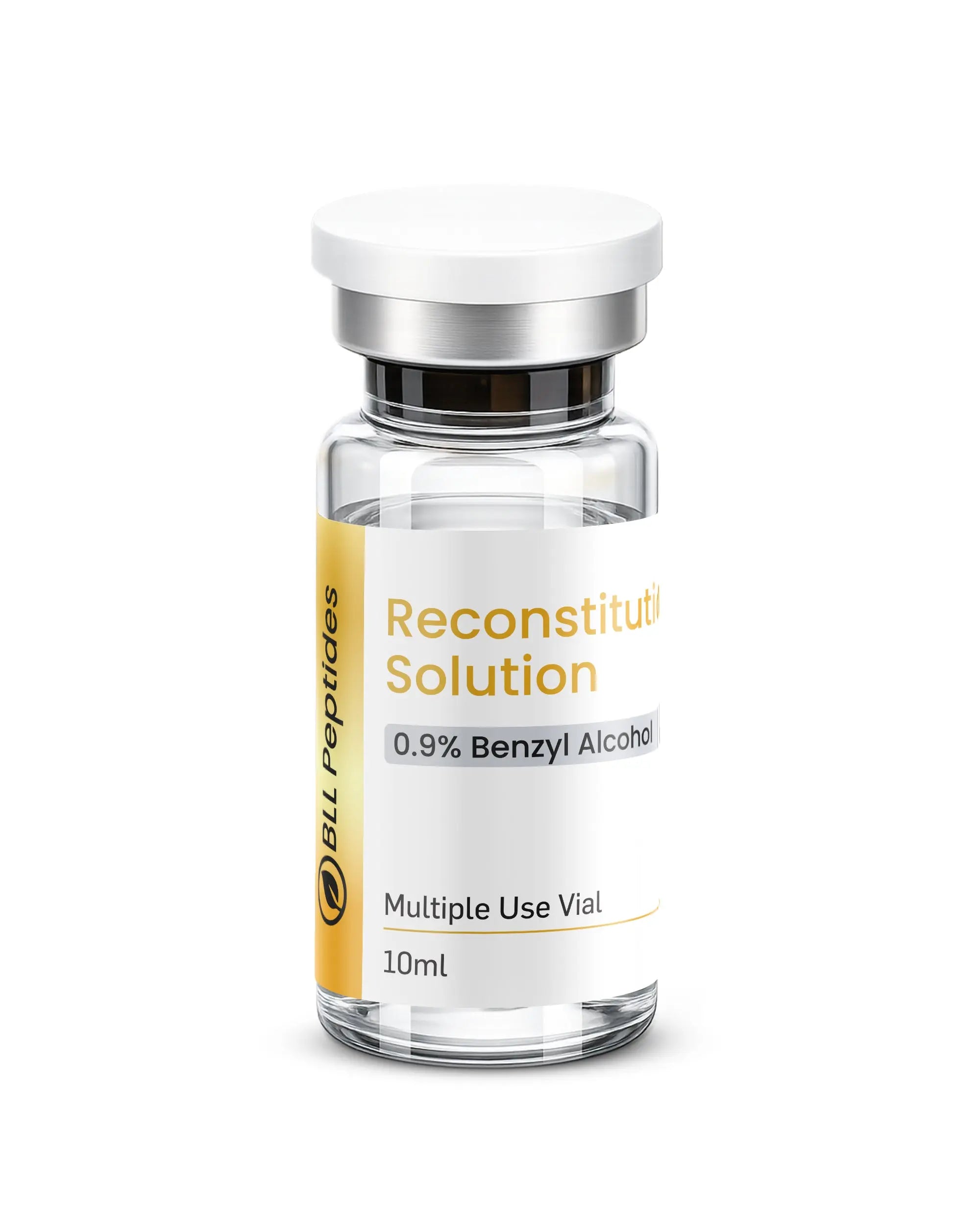
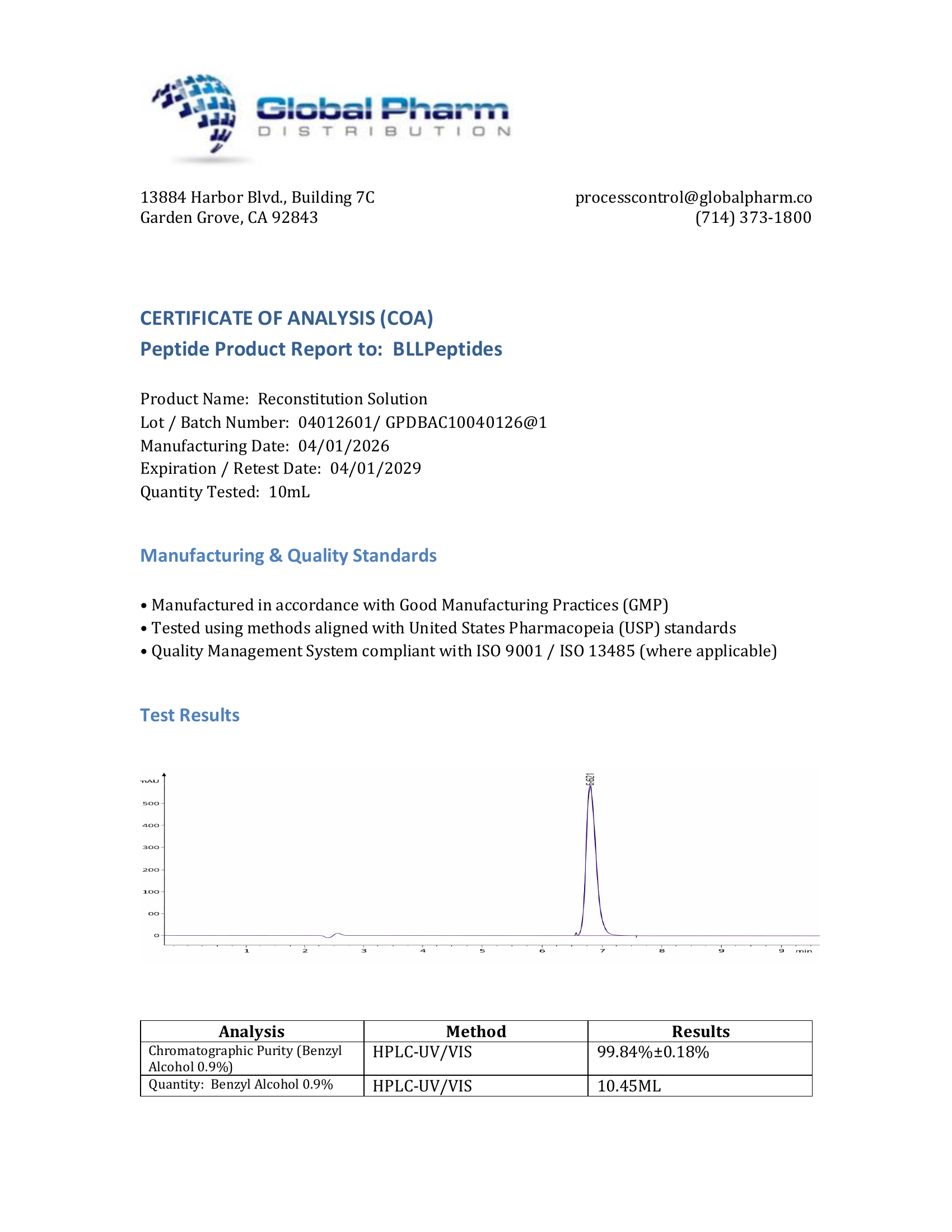
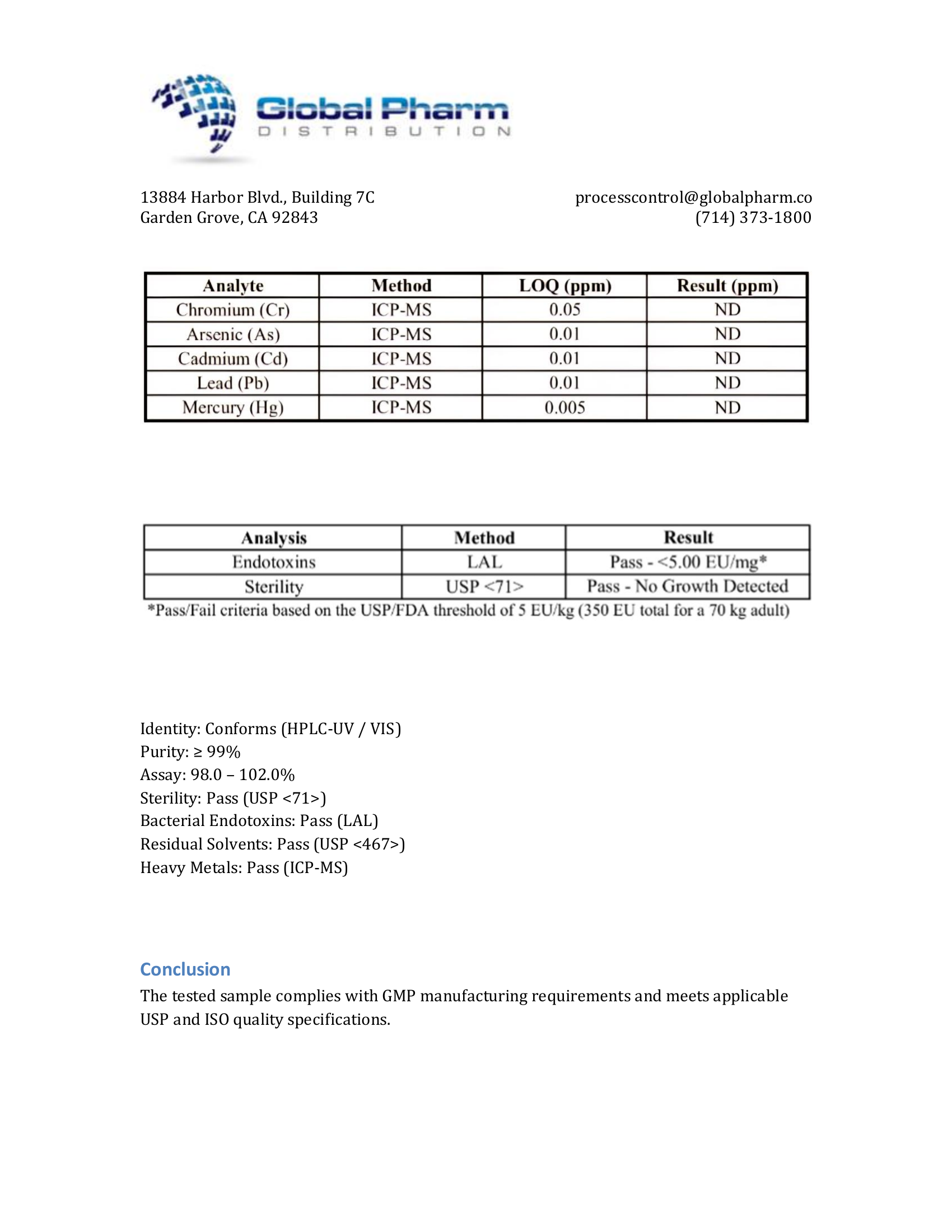
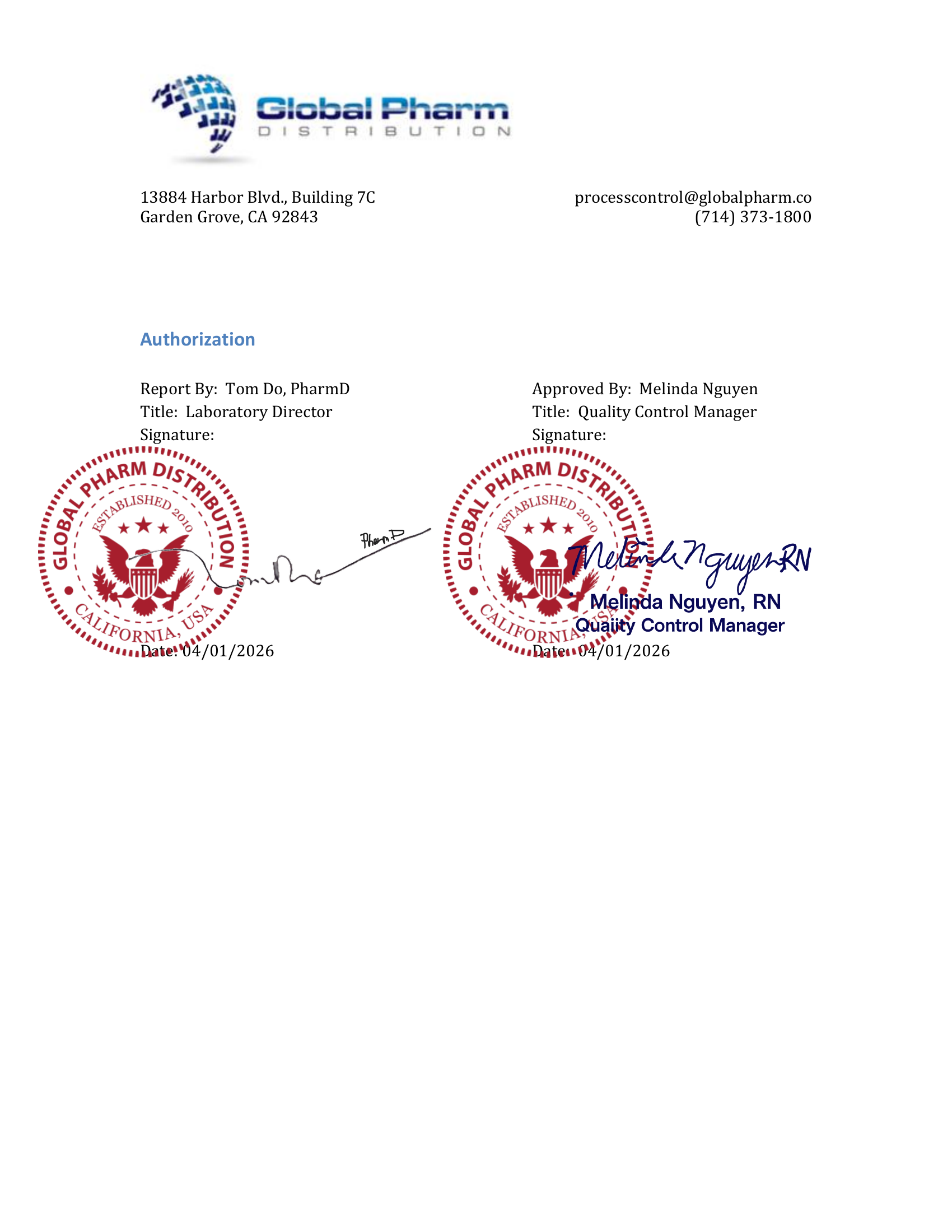
Bacteriostatic reconstitution solution (also called bacteriostatic water or BAC water) is an aqueous diluent containing 0.9% benzyl alcohol (BZA), used to dissolve lyophilized (freeze-dried) research peptides and proteins in a controlled laboratory setting. This formulation is packaged in triple-sealed 10 mL glass vials: clear glass so you can actually inspect what you're working with, sealed three ways so contamination doesn't get a vote. Every batch is independently third-party tested — view the Certificate of Analysis (COA) (pg. 2 · pg. 3).
The right diluent depends on your research workflow. Bacteriostatic water (this product) contains 0.9% benzyl alcohol (BZA), which inhibits bacterial growth and allows a single vial to be accessed multiple times — making it the preferred choice for most peptide reconstitution protocols in research lab settings. Sterile water contains no preservative and is intended for single-use reconstitution only, since each needle puncture introduces contamination risk. If your protocol requires repeated draws from the same vial, bacteriostatic reconstitution solution is the appropriate choice.
It is used to dissolve lyophilized (freeze-dried) research peptides, proteins, and other compounds into a liquid form suitable for use in laboratory and in vitro research settings. The benzyl alcohol content inhibits microbial contamination, which is critical when a vial will be accessed multiple times.
Bacteriostatic water contains 0.9% benzyl alcohol (BZA) as a preservative, allowing multi-use access to a single vial while reducing contamination risk. Sterile water contains no preservative and should only be used for single-draw reconstitution. For most peptide research protocols requiring repeated access, bacteriostatic reconstitution solution is the standard choice.
Stability varies by compound, storage temperature, and other factors specific to each research protocol. In general, reconstitution with bacteriostatic water and storage at 2–8°C (refrigerated) is associated with longer compound stability than sterile water, due to the benzyl alcohol preservative. Always consult the relevant literature for your specific compound.
High-clarity laboratory glass allows visual inspection for particulates or discoloration, does not leach plasticizers or other contaminants into the solution the way some plastics can, and provides a more inert storage environment. The triple-sealed design (glass + rubber stopper + aluminum crimp cap) also provides superior contamination resistance compared to most plastic containers.
No. This product is intended exclusively for laboratory and scientific research. It is not a drug or medical device and is not intended to diagnose, treat, cure, or prevent any disease, nor for use in humans or animals.
Yes. "BAC water," "bacteriostatic water," and "bacteriostatic reconstitution solution" all refer to the same type of product: an aqueous solution containing a low concentration of benzyl alcohol (typically 0.9%) used as a diluent for research compounds. This product contains 99.1% ultra-pure water and 0.9% benzyl alcohol.
Research Use Only. This product is intended exclusively for laboratory and scientific research. It is not a drug or medical device and is not intended to diagnose, treat, cure, or prevent any disease, nor for human or veterinary use.
Overall rating: 4.9 / 5 from 106 reviews.
awesome product with amazing prices enjoy ordering from this company they satisfy me
Never shipped it to me!!!! no response at all from your customer service!!! absolutely worst customer service I've ever experienced.
Bacteriostatic Reconstitution Solution — 10 mL Triple-Sealed Glass Vials, Lab-Grade
Bacteriostatic Reconstitution Solution — 10 mL Triple-Sealed Glass Vials, Lab-Grade
Love them
Bacteriostatic Reconstitution Solution — 10 mL Triple-Sealed Glass Vials, Lab-Grade
Bacteriostatic Reconstitution Solution — 10 mL Triple-Sealed Glass Vials, Lab-Grade
Bacteriostatic Reconstitution Solution — 10 mL Triple-Sealed Glass Vials, Lab-Grade
Bacteriostatic Reconstitution Solution — 10 mL Triple-Sealed Glass Vials, Lab-Grade
Bacteriostatic Reconstitution Solution — 10 mL Triple-Sealed Glass Vials, Lab-Grade
Everything i get from u guys is always very great i do & will always do my shopping here no matter wut it is
Bacteriostatic Reconstitution Solution — 10 mL Triple-Sealed Glass Vials, Lab-Grade
Bacteriostatic Reconstitution Solution — 10 mL Triple-Sealed Glass Vials, Lab-Grade
Bacteriostatic Reconstitution Solution — 10 mL Triple-Sealed Glass Vials, Lab-Grade
Bacteriostatic Reconstitution Solution — 10 mL Triple-Sealed Glass Vials, Lab-Grade
Bacteriostatic Reconstitution Solution — 10 mL Triple-Sealed Glass Vials, Lab-Grade
Bacteriostatic Reconstitution Solution — 10 mL Triple-Sealed Glass Vials, Lab-Grade
Bacteriostatic Reconstitution Solution — 10 mL Triple-Sealed Glass Vials, Lab-Grade
Excellent product, arrives in good condition.
Bacteriostatic Reconstitution Solution — 10 mL Triple-Sealed Glass Vials, Lab-Grade
Bacteriostatic Reconstitution Solution — 10 mL Triple-Sealed Glass Vials, Lab-Grade
Bacteriostatic Reconstitution Solution — 10 mL Triple-Sealed Glass Vials, Lab-Grade
Bacteriostatic Reconstitution Solution — 10 mL Triple-Sealed Glass Vials, Lab-Grade
Bacteriostatic Reconstitution Solution — 10 mL Triple-Sealed Glass Vials, Lab-Grade
Ordered and received the item ahead of schedule.
Bacteriostatic Reconstitution Solution — 10 mL Triple-Sealed Glass Vials, Lab-Grade
Love this product
Bacteriostatic Reconstitution Solution — 10 mL Triple-Sealed Glass Vials, Lab-Grade
Bacteriostatic Reconstitution Solution — 10 mL Triple-Sealed Glass Vials, Lab-Grade
Bacteriostatic Reconstitution Solution — 10 mL Triple-Sealed Glass Vials, Lab-Grade
Bacteriostatic Reconstitution Solution — 10 mL Triple-Sealed Glass Vials, Lab-Grade
Bacteriostatic Reconstitution Solution — 10 mL Triple-Sealed Glass Vials, Lab-Grade
Bacteriostatic Reconstitution Solution — 10 mL Triple-Sealed Glass Vials, Lab-Grade
Bacteriostatic Reconstitution Solution — 10 mL Triple-Sealed Glass Vials, Lab-Grade
Bacteriostatic Reconstitution Solution — 10 mL Triple-Sealed Glass Vials, Lab-Grade
Bacteriostatic Reconstitution Solution — 10 mL Triple-Sealed Glass Vials, Lab-Grade
Bacteriostatic Reconstitution Solution — 10 mL Triple-Sealed Glass Vials, Lab-Grade
Bacteriostatic Reconstitution Solution — 10 mL Triple-Sealed Glass Vials, Lab-Grade
Bacteriostatic Reconstitution Solution — 10 mL Triple-Sealed Glass Vials, Lab-Grade
Bacteriostatic Reconstitution Solution — 10 mL Triple-Sealed Glass Vials, Lab-Grade
Bacteriostatic Reconstitution Solution — 10 mL Triple-Sealed Glass Vials, Lab-Grade
Bacteriostatic Reconstitution Solution — 10 mL Triple-Sealed Glass Vials, Lab-Grade
Bacteriostatic Reconstitution Solution — 10 mL Triple-Sealed Glass Vials, Lab-Grade
Bacteriostatic Reconstitution Solution — 10 mL Triple-Sealed Glass Vials, Lab-Grade
Bacteriostatic Reconstitution Solution — 10 mL Triple-Sealed Glass Vials, Lab-Grade
Overall rating: 4.9 / 5 from 106 reviews.
awesome product with amazing prices enjoy ordering from this company they satisfy me
Never shipped it to me!!!! no response at all from your customer service!!! absolutely worst customer service I've ever experienced.
Bacteriostatic Reconstitution Solution — 10 mL Triple-Sealed Glass Vials, Lab-Grade
Bacteriostatic Reconstitution Solution — 10 mL Triple-Sealed Glass Vials, Lab-Grade
Love them
Bacteriostatic Reconstitution Solution — 10 mL Triple-Sealed Glass Vials, Lab-Grade
Bacteriostatic Reconstitution Solution — 10 mL Triple-Sealed Glass Vials, Lab-Grade
Bacteriostatic Reconstitution Solution — 10 mL Triple-Sealed Glass Vials, Lab-Grade
Bacteriostatic Reconstitution Solution — 10 mL Triple-Sealed Glass Vials, Lab-Grade
Bacteriostatic Reconstitution Solution — 10 mL Triple-Sealed Glass Vials, Lab-Grade
Everything i get from u guys is always very great i do & will always do my shopping here no matter wut it is
Bacteriostatic Reconstitution Solution — 10 mL Triple-Sealed Glass Vials, Lab-Grade
Bacteriostatic Reconstitution Solution — 10 mL Triple-Sealed Glass Vials, Lab-Grade
Bacteriostatic Reconstitution Solution — 10 mL Triple-Sealed Glass Vials, Lab-Grade
Bacteriostatic Reconstitution Solution — 10 mL Triple-Sealed Glass Vials, Lab-Grade
Bacteriostatic Reconstitution Solution — 10 mL Triple-Sealed Glass Vials, Lab-Grade
Bacteriostatic Reconstitution Solution — 10 mL Triple-Sealed Glass Vials, Lab-Grade
Bacteriostatic Reconstitution Solution — 10 mL Triple-Sealed Glass Vials, Lab-Grade
Excellent product, arrives in good condition.
Bacteriostatic Reconstitution Solution — 10 mL Triple-Sealed Glass Vials, Lab-Grade
Bacteriostatic Reconstitution Solution — 10 mL Triple-Sealed Glass Vials, Lab-Grade
Bacteriostatic Reconstitution Solution — 10 mL Triple-Sealed Glass Vials, Lab-Grade
Bacteriostatic Reconstitution Solution — 10 mL Triple-Sealed Glass Vials, Lab-Grade
Bacteriostatic Reconstitution Solution — 10 mL Triple-Sealed Glass Vials, Lab-Grade
Ordered and received the item ahead of schedule.
Bacteriostatic Reconstitution Solution — 10 mL Triple-Sealed Glass Vials, Lab-Grade
Love this product
Bacteriostatic Reconstitution Solution — 10 mL Triple-Sealed Glass Vials, Lab-Grade
Bacteriostatic Reconstitution Solution — 10 mL Triple-Sealed Glass Vials, Lab-Grade
Bacteriostatic Reconstitution Solution — 10 mL Triple-Sealed Glass Vials, Lab-Grade
Bacteriostatic Reconstitution Solution — 10 mL Triple-Sealed Glass Vials, Lab-Grade
Bacteriostatic Reconstitution Solution — 10 mL Triple-Sealed Glass Vials, Lab-Grade
Bacteriostatic Reconstitution Solution — 10 mL Triple-Sealed Glass Vials, Lab-Grade
Bacteriostatic Reconstitution Solution — 10 mL Triple-Sealed Glass Vials, Lab-Grade
Bacteriostatic Reconstitution Solution — 10 mL Triple-Sealed Glass Vials, Lab-Grade
Bacteriostatic Reconstitution Solution — 10 mL Triple-Sealed Glass Vials, Lab-Grade
Bacteriostatic Reconstitution Solution — 10 mL Triple-Sealed Glass Vials, Lab-Grade
Bacteriostatic Reconstitution Solution — 10 mL Triple-Sealed Glass Vials, Lab-Grade
Bacteriostatic Reconstitution Solution — 10 mL Triple-Sealed Glass Vials, Lab-Grade
Bacteriostatic Reconstitution Solution — 10 mL Triple-Sealed Glass Vials, Lab-Grade
Bacteriostatic Reconstitution Solution — 10 mL Triple-Sealed Glass Vials, Lab-Grade
Bacteriostatic Reconstitution Solution — 10 mL Triple-Sealed Glass Vials, Lab-Grade
Bacteriostatic Reconstitution Solution — 10 mL Triple-Sealed Glass Vials, Lab-Grade
Bacteriostatic Reconstitution Solution — 10 mL Triple-Sealed Glass Vials, Lab-Grade
Bacteriostatic Reconstitution Solution — 10 mL Triple-Sealed Glass Vials, Lab-Grade
Share and get 15% off!
Simply share this product on one of the following social networks and you will unlock 15% off!