
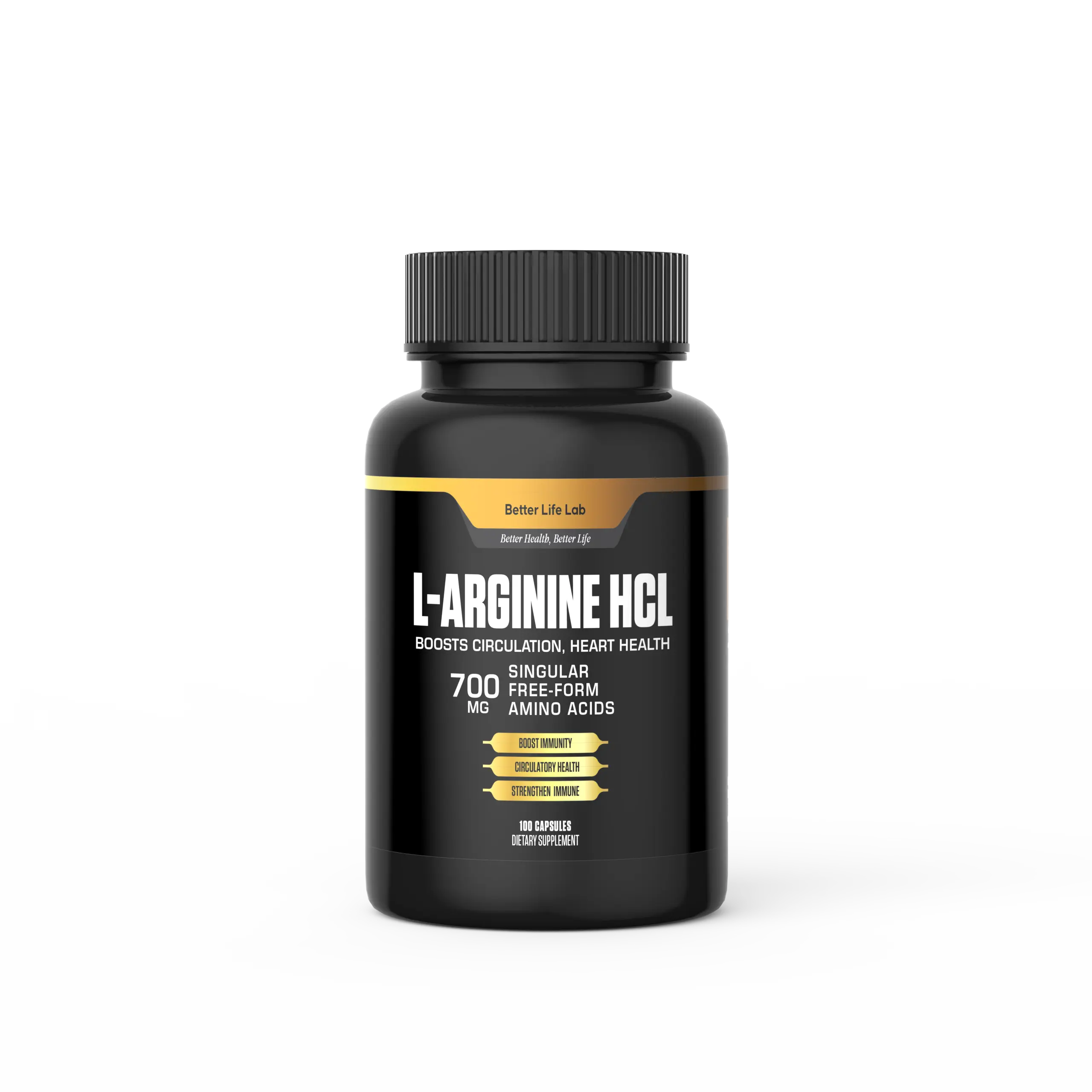
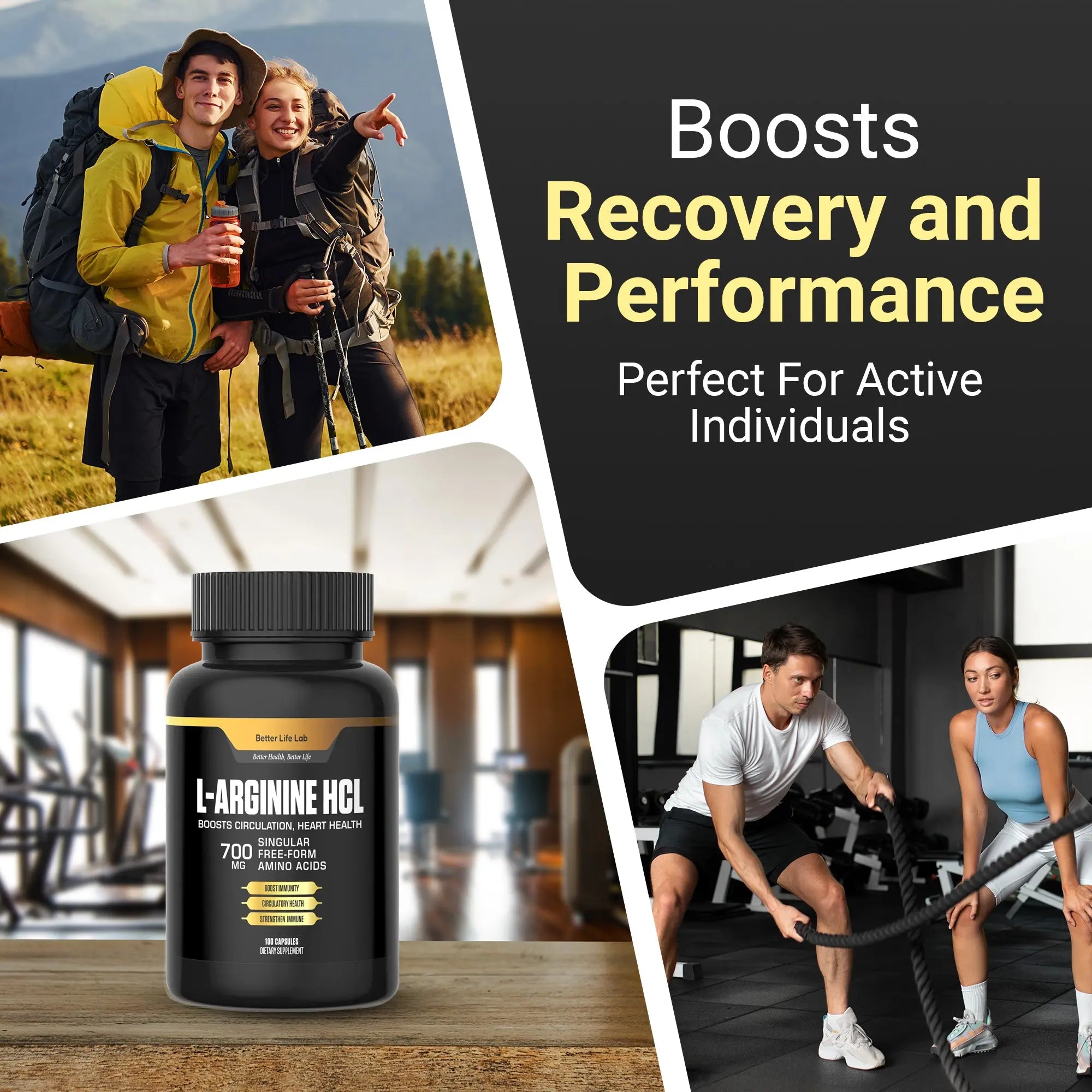
L-Arginine HCl is a highly bioavailable form of L-Arginine, a conditionally essential amino acid that becomes especially important during periods of physical stress, injury, illness, or restricted nutrition—when the body’s natural production may fall short. The hydrochloride (HCl) form offers superior solubility and absorption compared to standard L-Arginine, making it an efficient choice for targeted metabolic and circulatory support.
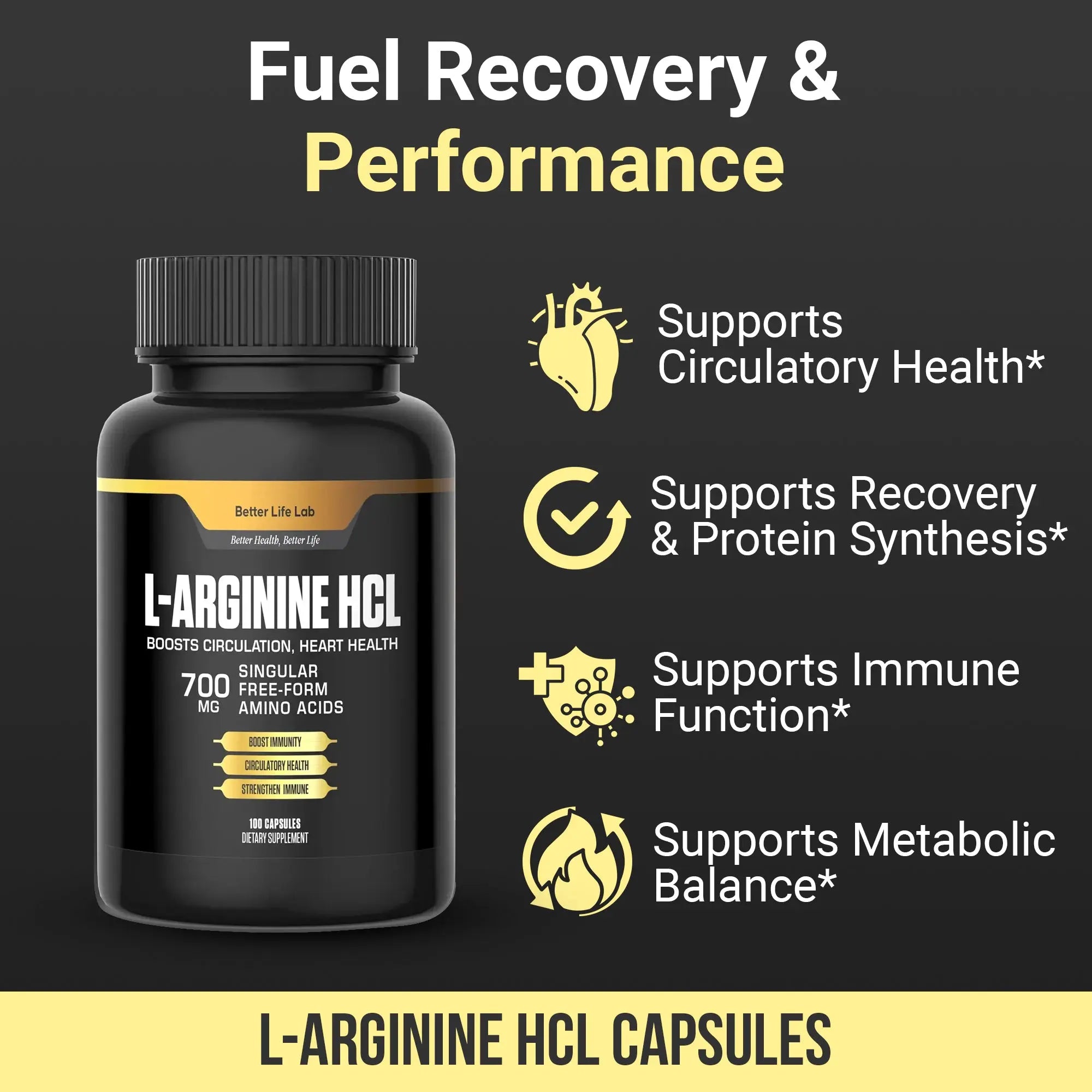
L-Arginine HCl plays a key role in endothelial function, helping support healthy blood flow and circulation. It also contributes to protein synthesis and anabolic activity, making it valuable during recovery from physical stress, trauma, surgery, or intense training. In addition, L-Arginine supports the urea cycle, assisting the body in ammonia detoxification and nitrogen balance—critical for metabolic efficiency and overall wellness.
This versatile amino acid is widely used to support immune function, wound healing, and growth hormone activity, and has been studied for its role in insulin signaling and post-stress nitrogen retention. These benefits make L-Arginine HCl a popular choice among athletes, individuals under metabolic stress, and those focused on recovery and performance optimization.
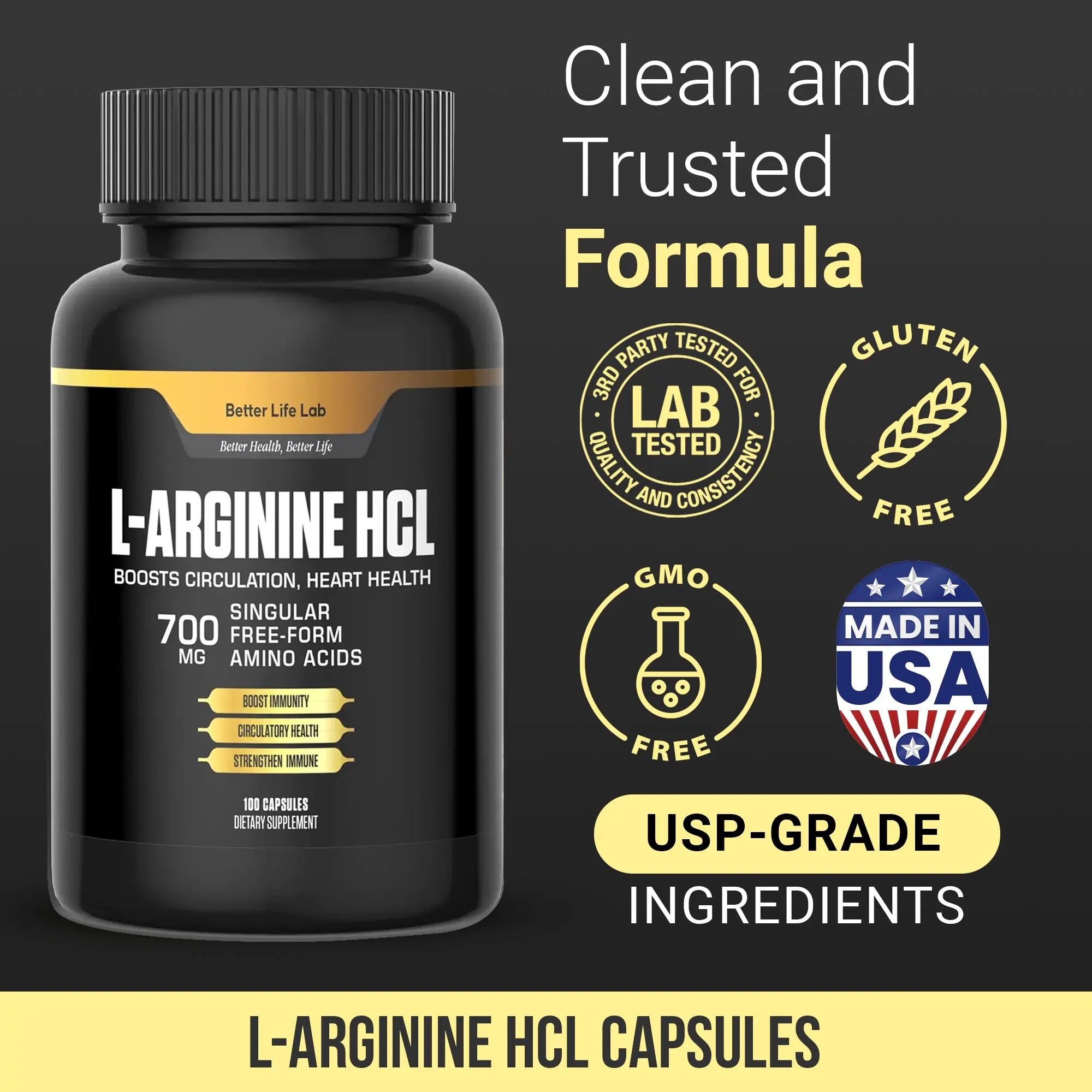
Manufactured in the USA using pharmaceutical-grade ingredients in a GMP-approved facility, L-Arginine HCl contains no fillers, binders, dyes, or artificial additives, and has no known side effects when used as directed.
Who L-Arginine HCl Is For
-
Individuals experiencing physical or metabolic stress
-
Those recovering from injury, surgery, or intense exercise
-
Athletes seeking circulation and performance support
-
Adults focused on immune health and recovery
-
Anyone looking to support healthy blood flow and protein metabolism
Directions
Take 1–3 capsules daily, or as directed by your healthcare provider.
For optimal support, pair with vitamins and minerals. GPD’s MVM (Multivitamin) is recommended.
Powder equivalent: 1 capsule ≈ ¼ level teaspoon.
Key Benefits of L-Arginine HCl
-
Supports Circulatory Health
Helps promote healthy blood flow and endothelial function -
Supports Recovery & Protein Synthesis
Aids anabolic activity during physical stress or catabolic states -
Supports Immune Function
Plays a role in immune response and tissue repair -
Supports Metabolic Balance
Assists the urea cycle and ammonia detoxification
References
- Barbul A. (1986). “Arginine: Biochemistry, physiology, and therapeutic implications.” Journal of Parenteral and Enteral Nutrition, NIH.
- Wu G, Morris SM Jr. (1998). “Arginine metabolism: Nitric oxide and beyond.” Biochemical Journal, NIH.
- Morris SM Jr. (2004). “Regulation of arginine availability and its impact on NO synthesis.” Current Opinion in Clinical Nutrition & Metabolic Care, NIH.
- Evoy D, et al. (1998). “Immunonutrition: The role of arginine.” Nutrition, NIH.
- Bode BP, et al. (2002). “Arginine transport in catabolic disease states.” Journal of Surgical Research, NIH.
These statements have not been evaluated by the Food and Drug Administration. This product is not intended to diagnose, treat, cure, or prevent any disease. Consult a doctor or medical professional before use, especially if you have underlying health conditions or are taking other medications.
Additional Information The following points provide insight into L-Arginine’s plasma levels and their association with various health conditions, reflecting its role in metabolism:
- Normal Range: 4.6-15 micromol/100 ml.
-
Conditions Associated with Low Levels:
- Immune Deficiency Syndrome (e.g., AIDS)
-
Conditions Associated with High Levels:
- Decompensated diabetes (due to increased gluconeogenesis and protein catabolism)
- Sepsis or critical illness (from elevated nitric oxide production and metabolic stress)
- Hyperammonemia (from urea cycle overload)
- Postprandial states or high-protein intake (transient elevation from dietary absorption)
Notes: L-Arginine is a conditionally essential amino acid, becoming critical during stress, injury, or starvation. It is synthesized from citrulline in the kidneys and supports the urea cycle, protein synthesis, and nitric oxide production. Its transport is shared with lysine and ornithine, and high liver arginase activity limits plasma availability. Intravenous doses (e.g., 30 g in adults) can stimulate growth hormone secretion, while it enhances wound healing and insulin response. Low levels may indicate immune compromise, as seen in AIDS, due to reduced nitric oxide or protein synthesis capacity. High levels are often linked to metabolic dysregulation or acute stress, where increased catabolism releases arginine into circulation. These associations are correlative and require further research for causal confirmation. Consult a doctor or medical professional before use, especially if you have underlying health conditions or are taking other medications.
¡Comparte y obtén un 15% de descuento!
¡Simplemente comparte este producto en una de las siguientes redes sociales y desbloquearás un 15% de descuento!