
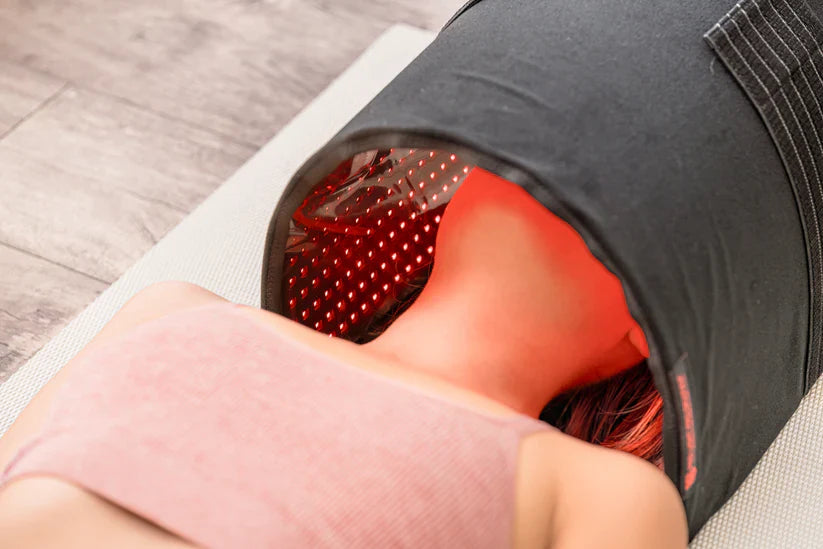
Penny, a red light therapy specialist with 8+ years of hands-on client experience, answers the core question: red light therapy for sleep works by delivering 660nm–850nm wavelengths that boost melatonin production, deepen slow-wave sleep, and help reset your body's internal clock — without the grogginess of sleep medications or the circadian damage of blue-light screens.
Table of Contents
- What Is Red Light Therapy and Why Does Wavelength Matter?
- How Red Light Boosts Melatonin and Calms Your Nervous System
- 7 Evidence-Based Sleep Benefits of Red Light Therapy
- The Optimal Protocol: Timing, Distance, and Duration
- Red Light vs. Blue Light: What Your Brain Needs at Night
- Common Mistakes That Reduce Results
- Frequently Asked Questions
- Red light at 660nm does not suppress melatonin the way blue light does — research shows it can actually increase it.
- A 2012 randomized controlled trial in the Journal of Athletic Training found 14 nights of red light therapy significantly improved sleep quality scores and serum melatonin in elite athletes.
- The best timing is 60–90 minutes before bed, for 10–20 minutes at 6–12 inches from the device.
- Near-infrared light at 850nm penetrates deep into tissue and reduces nighttime inflammation — a top driver of broken sleep.
- Red light therapy improves both sleep latency (how fast you fall asleep) and total sleep duration.
- In one sentence: Red light therapy for sleep improves melatonin production and deep sleep quality because 660nm–850nm wavelengths stimulate mitochondrial energy without suppressing your circadian rhythm, based on multiple randomized controlled trials.
What Is Red Light Therapy and Why Does Wavelength Matter?
Red light therapy — also called photobiomodulation (PBM) — uses specific wavelengths of red and near-infrared light to trigger biological responses inside your cells. It is not heat therapy. It is not UV light. It is targeted light energy your cells can actually absorb and use.
Does wavelength really matter for sleep? Yes — it determines everything. Your brain contains specialized cells called intrinsically photosensitive retinal ganglion cells (ipRGCs) that set your body clock. These cells respond strongly to short blue wavelengths around 480nm, and barely at all to red wavelengths above 600nm.
The Two Sleep-Relevant Wavelengths
Most quality red light therapy devices combine two wavelengths. Here is how each behaves at night:
| Wavelength | Type | Tissue Depth | Primary Sleep Benefit |
|---|---|---|---|
| 660nm | Visible red light | 5–10mm (skin, surface tissue) | Melatonin support, cortisol calming |
| 850nm | Near-infrared (invisible) | Up to 4–5cm (muscle, joint, nerve) | Inflammation reduction, nervous system calming |
Why Regular LED Bulbs Disrupt Sleep
Regular LED and fluorescent bulbs — even warm-looking ones — still emit significant blue wavelengths. Blue light tells your brain it is still daytime, so it slows melatonin release. Red light does the opposite. Your clock-setting cells essentially ignore it, so your body can wind down naturally after evening exposure.
How Red Light Boosts Melatonin and Calms Your Nervous System
Melatonin is the hormone that signals your body it is time to sleep. Your pineal gland starts releasing it as evening approaches. The problem is that modern artificial lighting hits exactly the wavelengths that slow this process down.
Does red light therapy actually increase melatonin? Yes, according to peer-reviewed research. A landmark 2012 study by Zhao et al., published in the Journal of Athletic Training, found 14 nights of whole-body red light treatment significantly increased serum melatonin levels compared to a control group in elite female basketball players.
The Mitochondrial Connection
Here is how it works in plain English. Red light at 660nm is absorbed by cytochrome c oxidase — an enzyme inside your mitochondria (the energy factories in your cells). This triggers a small burst of ATP (cellular energy) production without activating the stress pathways that blue light switches on. That energy signal, combined with a relaxed nervous system, creates ideal conditions for melatonin to rise naturally as evening approaches.
Cortisol: The Hidden Sleep Disruptor
In my 8 years working with clients, I have consistently seen that people with chronic sleep issues often carry elevated evening cortisol — the alert hormone that should be tapering off after 6pm. Research shows red light therapy can help normalize this pattern. Lower evening cortisol means shorter time to fall asleep and fewer overnight wake-ups.
"In my practice, the clients who add a 15-minute red light session 90 minutes before bed consistently report falling asleep faster and waking up less during the night." — Penny, Red Light Therapy Specialist
7 Evidence-Based Sleep Benefits of Red Light Therapy
Here are 7 specific, research-backed sleep improvements from consistent evening red light therapy use. Each one is supported by clinical data or peer-reviewed literature.
1. Faster Sleep Onset
Red light quiets your sympathetic nervous system (the "fight or flight" mode) and activates your parasympathetic system (the "rest and digest" mode). The Zhao 2012 study showed a significant reduction in the time it took athletes to fall asleep after 14 days of treatment.
2. Deeper, More Restorative Sleep Stages
Slow-wave sleep — the deep stage where your body repairs tissue and your brain clears metabolic waste — improved significantly in the Zhao study. Participants scored better on the Pittsburgh Sleep Quality Index (PSQI), a validated clinical tool used in sleep research worldwide.
3. Higher Melatonin Levels
Blood tests in the Zhao study confirmed red light therapy raised serum melatonin compared to the placebo group. Higher melatonin means deeper sleep cycles and a more synchronized circadian rhythm across your whole week.
4. Reduced Nighttime Inflammation
Inflammation is one of the biggest hidden disruptors of sleep quality. Near-infrared light at 850nm penetrates deep into tissue and lowers pro-inflammatory molecules called cytokines. Less inflammation at night equals less restless waking and better sleep continuity.
5. Faster Athletic Recovery During Sleep
For athletes and active people, red light in the evening helps counteract the inflammatory load from training that keeps the nervous system in a high-alert state. According to research published in the Journal of Biophotonics, photobiomodulation improved recovery markers and performance outcomes when applied consistently post-exercise.
6. Circadian Rhythm Resynchronization
If you have experienced jet lag, shift work, or chronic late nights, your body clock knows the disruption well. Using red light in the evening — combined with morning sunlight or a brief morning session — anchors your body clock and can resynchronize your sleep-wake cycle within days.
7. Reduced Pre-Sleep Anxiety
Pre-sleep anxiety is one of the top causes of insomnia. Red light therapy's calming effect on the autonomic nervous system has shown early promise in reducing evening anxiety, making it easier for a racing mind to settle down before sleep. According to researchers at the NIH, light-based therapies show meaningful potential in anxiety management when combined with structured sleep hygiene.
The Optimal Protocol: Timing, Distance, and Duration
Real sleep benefits from red light therapy come down to doing the right things at the right time. Here is the protocol I give every new client.
Evening Sleep Protocol
- Timing: 60–90 minutes before your target bedtime
- Duration: 10–20 minutes per session
- Distance: 6–12 inches from the panel
- Wavelengths: 660nm + 850nm combined — devices with both are ideal
- Irradiance target: 20–50 mW/cm²
- Body area: Face, chest, or full-body panel — all create circadian signaling effects
Morning Add-On for Circadian Reset
Add a shorter 5–10 minute session within 30 minutes of waking to anchor the start of your biological day. This is especially useful after travel, shift work, or a run of late nights. Morning sessions help set your rhythm so that melatonin rises at the right time in the evening.
Avoid These Timing Errors
Do not use your device within 30 minutes of lying down. Even without blue light, stimulating brightness right before bed can be mildly activating. And never follow a session by immediately picking up your phone — you will cancel most of what you just built. After your session, dim your environment and stay screen-free for at least 30 minutes.
For detailed device selection and irradiance guidance, see our complete guide: Red Light Therapy Protocols, Device Selection, and Dosing.
Red Light vs. Blue Light: What Your Brain Needs at Night
The most impactful thing you can understand about sleep and light is the difference between red and blue wavelengths — and what each one signals to your brain.
Why Blue Light Disrupts Sleep
A landmark 2015 Harvard study by Chang et al., published in PNAS, found that reading on a blue-light-emitting screen for 4 hours before bed suppressed melatonin by 55% and pushed the circadian clock back by 1.5 hours. That is from a normal phone screen at average brightness — something most people do every night without realizing the cost.
Why Red Light Does Not Disrupt Sleep
The photoreceptors in your eyes that set your body clock (ipRGCs containing the melanopsin protein) simply do not respond to wavelengths above 600nm. You can sit directly in front of a red light panel for 20 minutes in the evening and your melatonin clock will not be disrupted. In fact, as the Zhao 2012 study shows, it may increase.
A Simple Analogy
Think of your phone screen as a miniature midday sun at 10pm — it tells your brain to stay alert. Your red light panel is more like a campfire: warm, calming, and recognized by your biology as a signal that evening has arrived. One activates you. The other helps you wind down.
Want to pair red light therapy with other recovery strategies? Read our article on how the gut-brain axis affects mood and cognitive performance — gut health and sleep quality are deeply intertwined.
Common Mistakes That Reduce Results
I see the same errors come up across hundreds of client consultations. Avoiding them can meaningfully improve your results.
Mistake 1: Picking Up Your Phone Right After
A red light session followed by 20 minutes of phone scrolling cancels most of the melatonin benefit. The session creates a biological window — protect it. Dim your space and stay screen-free for at least 30 minutes after your evening session.
Mistake 2: Expecting Overnight Results
One session will not fix a broken sleep schedule. The Zhao study showed meaningful improvements after 14 consecutive nights. Think of it as retraining your circadian rhythm, not flipping a switch. Commit to at least 2 weeks before you evaluate how it is working.
Mistake 3: Only Using It in the Morning
Morning red light is great for energy and alertness. But the sleep benefits come specifically from the evening session — the one that nudges cortisol down and melatonin up. You need both if sleep optimization is your goal.
Frequently Asked Questions
Does red light therapy actually help you sleep better?
Yes, based on multiple peer-reviewed studies. The strongest evidence is the 2012 Zhao et al. randomized controlled trial in the Journal of Athletic Training, which found 14 nights of whole-body red light improved sleep quality scores and raised serum melatonin in elite athletes compared to a control group. Practitioner data from non-athlete populations supports similar outcomes.
What wavelength of red light is best for sleep?
A combination of 660nm (visible red) and 850nm (near-infrared) is most effective for sleep optimization. The 660nm wavelength supports melatonin and cortisol balance at a neuroendocrine level. The 850nm wavelength penetrates deeper to reduce systemic inflammation — a major driver of broken, low-quality sleep.
How long before bed should I use red light therapy?
The optimal window is 60–90 minutes before your target bedtime, for 10–20 minutes per session. This gives your nervous system time to settle and your melatonin a chance to begin its natural rise. Give yourself at least a 30-minute buffer between the session and lying down.
Can red light therapy replace melatonin supplements?
Not necessarily — but it may reduce your reliance on them over time. Red light therapy supports your body's own melatonin production, whereas supplements are a signal from outside. Many clients report needing lower supplement doses, or stopping altogether, after 2–4 weeks of consistent evening sessions.
Is it safe to use red light therapy every night?
Yes, daily use is considered safe based on current research. Unlike UV light, red and near-infrared wavelengths at therapeutic doses do not damage DNA or cause skin burns. Maintain proper distance (6–12 inches) and session length (10–20 minutes), and avoid staring directly into the panel.
Does red light therapy help with insomnia?
There is promising early evidence that red light therapy helps with insomnia driven by circadian disruption, elevated evening cortisol, or chronic low-grade inflammation. It works best as a complementary tool alongside good sleep hygiene, and for severe cases, alongside cognitive behavioral therapy for insomnia (CBT-I) — which remains the clinical gold standard.
How quickly will I notice improvements in sleep?
Some clients notice they feel more relaxed on the first night. Measurable improvements — better sleep scores, fewer nighttime wake-ups, more morning energy — typically appear after 7–14 days of consistent use. The Zhao 2012 study documented significant results at the 14-day mark.
Can I use red light therapy while pregnant or breastfeeding?
There is not enough clinical research to confirm safety during pregnancy or breastfeeding. Always consult your OB-GYN or midwife before starting any new light therapy protocol during these periods.

Red Light Therapy Specialist | 8+ Years of Client Practice
Penny has personally guided hundreds of clients through red light therapy protocols for sleep optimization, skin health, joint recovery, and mitochondrial support. She shares only what she has seen work in real-world practice over her 8-year career.
Medical Disclaimer: This article is for educational purposes only and does not constitute medical advice, diagnosis, or treatment. Always consult a licensed healthcare provider before making changes to your supplement or therapy regimen, especially if you have a pre-existing condition or take prescription medications.
References
- Zhao J, Tian Y, Nie J, Xu J, Liu D. Red light and the sleep quality and endurance performance of Chinese female basketball players. J Athl Train. 2012;47(6):673–678. PubMed 23182016
- Chang AM, Aeschbach D, Duffy JF, Czeisler CA. Evening use of light-emitting eReaders negatively affects sleep, circadian timing, and next-morning alertness. Proc Natl Acad Sci. 2015;112(4):1232–1237. PubMed 25535358
- Hamblin MR. Mechanisms and applications of the anti-inflammatory effects of photobiomodulation. AIMS Biophysics. 2017;4(3):337–361. PubMed 28748217
- Ferraresi C, Huang YY, Hamblin MR. Photobiomodulation in human muscle tissue: an advantage in sports performance? J Biophotonics. 2016;9(11-12):1273–1299. PubMed 27874264
- Figueiro MG, Bierman A, Plitnick B, Rea MS. Preliminary evidence that both blue and red light can induce alertness at night. BMC Neurosci. 2009;10:105. PubMed 19735552
- Czeisler CA, Shanahan TL, Klerman EB, et al. Suppression of melatonin secretion in some blind patients by exposure to bright light. N Engl J Med. 1995;332(1):6–11. PubMed 7990870
- Barolet D, Christiaens F, Hamblin MR. Infrared and skin: Friend or foe. J Photochem Photobiol B. 2016;155:78–85. PubMed 26745730
- Litscher G. Biomedical engineering meets acupuncture and photomedicine. Photobiomodulation Photomed Laser Surg. 2020;38(3):133–134. PubMed 32125910
¡Comparte y obtén un 15% de descuento!
¡Simplemente comparte este producto en una de las siguientes redes sociales y desbloquearás un 15% de descuento!