
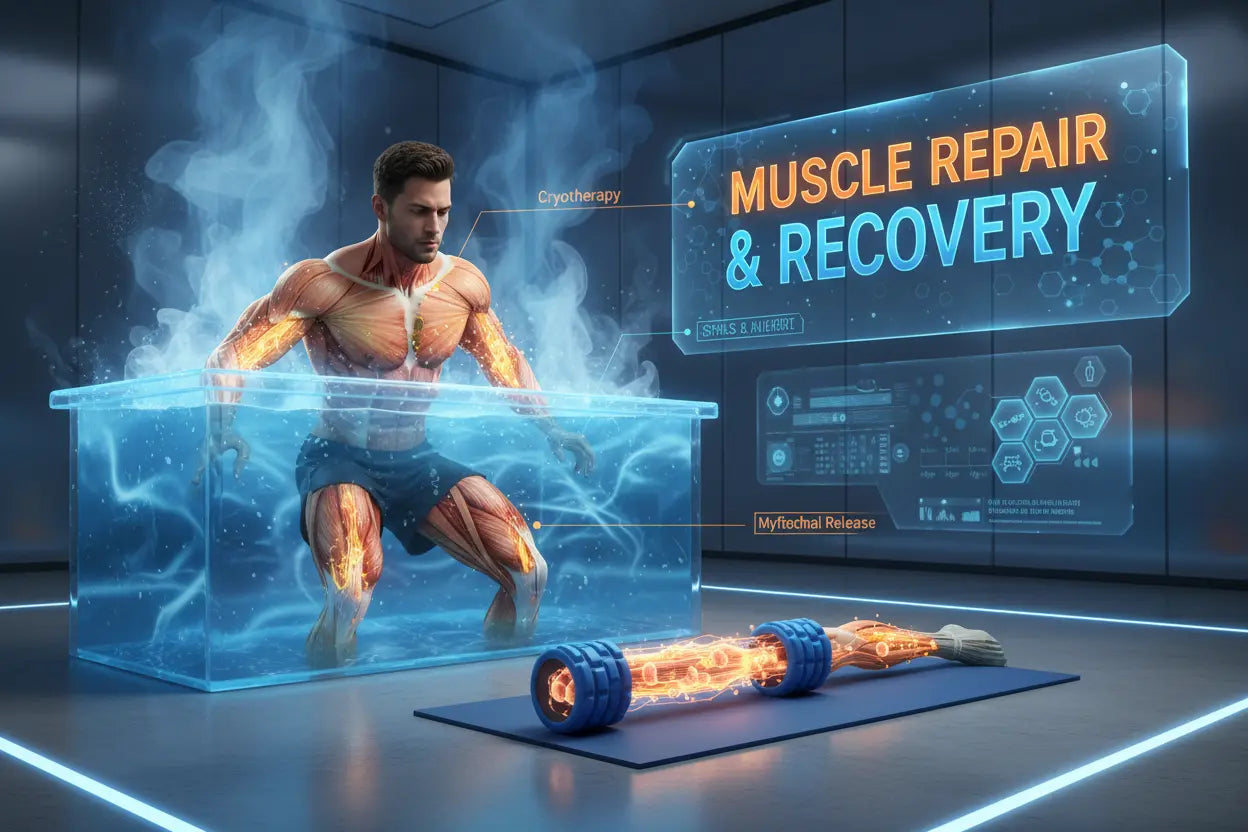
If you train hard but aren't seeing the results you expect, the 24 hours after your workout may be the most important window you're ignoring. According to research published in the Journal of Physiology, muscular adaptation — including strength gains, endurance improvements, and mitochondrial growth — occurs almost entirely after the training session ends, not during it. The workout is the trigger; recovery is the actual adaptation. This guide walks through exactly what your body does in each phase of the post-workout window — from the acute inflammatory response in the first two hours to the hormonal repair that only happens during deep sleep — written in plain language anyone can follow and act on.
Key Takeaways
- Muscular adaptation from training occurs almost entirely after the session ends — training is the stimulus, recovery is the adaptation
- The post-exercise inflammatory cascade is necessary for repair, but excessive inflammation delays return to performance
- The anabolic window for protein synthesis is wider than commonly believed: 24–48 hours, not just 30 minutes post-workout
- Mitochondrial biogenesis — the creation of new mitochondria — peaks 12–24 hours post-exercise and is the primary mechanism of aerobic adaptation
- Sleep-stage-specific processes including growth hormone secretion and memory consolidation make sleep the highest-leverage recovery intervention available
Reviewed by Dr. James Nguyen, MD — Yale-trained, board-certified neurosurgeon. This guide covers the complete post-exercise physiology window from the moment training ends through the full 24-hour recovery cycle, with evidence-based protocols for each phase.
Table of Contents
- Hours 0–2: The Acute Inflammatory Response
- Hours 2–6: Glycogen and Protein Synthesis Initiation
- Hours 6–12: Mitochondrial Signaling and Repair
- Hours 12–24: Sleep and Hormonal Consolidation
- Supplements That Support Each Phase
- The Most Common Recovery Mistakes
- Frequently Asked Questions
Hours 0–2: The Acute Inflammatory Response
The moment exercise stops, the body initiates a coordinated inflammatory cascade that is both necessary and, if poorly managed, counterproductive. During intense exercise, mechanical stress causes microscopic tears in myofibrils — the contractile units within muscle fibers — and depletes ATP reserves, generating reactive oxygen species (ROS) as mitochondria operate near maximum capacity.
Within minutes of exercise cessation, damaged cells release damage-associated molecular patterns (DAMPs) that recruit neutrophils to the site of muscle damage. Neutrophil infiltration peaks at 2–6 hours post-exercise and serves a necessary purpose: phagocytosing cellular debris and secreting signaling molecules that initiate repair. Interleukin-6 (IL-6), which rises dramatically during exercise, acts as both a pro-inflammatory and anti-inflammatory signal — triggering local repair while simultaneously stimulating systemic anti-inflammatory responses.
What to do in hours 0–2:
- Avoid NSAIDs (ibuprofen, naproxen) immediately post-workout. A 2019 meta-analysis in European Journal of Applied Physiology found that NSAIDs in the acute post-exercise window blunt the inflammatory signals required for muscular adaptation, reducing long-term strength gains by up to 25%.
- Consume 20–40g of high-quality protein within 2 hours to initiate protein synthesis. Leucine content is the critical variable — at least 2–3g of leucine is needed to maximally activate mTORC1 signaling.
- Rehydrate to replace sweat losses (approximately 1.5L per kg of body weight lost).
- Cold water immersion (10–15 minutes at 10–15°C) reduces neutrophil-driven soreness effectively but may also blunt hypertrophic signaling — appropriate for performance athletes managing multi-day competition schedules, but potentially counterproductive for pure hypertrophy goals.
Hours 2–6: Glycogen and Protein Synthesis Initiation
Glycogen resynthesis is the most time-sensitive recovery process after high-intensity training. Muscle glycogen — the primary fuel for anaerobic exercise — is replenished at a rate of 5–7% per hour under optimal conditions. GLUT4 transporter activity peaks in the first 2 hours post-exercise, driven by exercise-induced AMPK activation independent of insulin. This insulin-independent glycogen uptake window closes at approximately 4–6 hours post-exercise.
Protein synthesis, initiated by the leucine-driven mTORC1 activation in the first hours, continues to accelerate. A 2017 review in the Journal of the International Society of Sports Nutrition confirmed that muscle protein synthesis remains elevated for 24–48 hours post-exercise in trained individuals — dispersing the "anabolic window" myth that protein must be consumed within 30 minutes of training.
What to do in hours 2–6:
- Consume a mixed meal of carbohydrates and protein: 1.0–1.2 g/kg carbohydrate and 0.3–0.4 g/kg protein. Whole food sources (rice, potato, lean meat) are preferable to supplements for this window due to co-ingested micronutrients.
- Prioritize sleep if the training session was morning or afternoon — the glycogen synthesis advantage is not worth sacrificing the sleep-driven adaptation window described below.
Hours 6–12: Mitochondrial Signaling and Repair
The 6–12 hour window is dominated by mitochondrial processes. Exercise activates PGC-1α (peroxisome proliferator-activated receptor-gamma coactivator 1-alpha) — the master regulator of mitochondrial biogenesis — and peak PGC-1α activity occurs in this window, driving the creation of new mitochondria and increasing existing mitochondria's oxidative capacity.
This is also the window in which oxidative damage from exercise-generated ROS is repaired by the body's endogenous antioxidant systems: superoxide dismutase (SOD), catalase, and glutathione peroxidase. Excessive exogenous antioxidant supplementation in this window (high-dose vitamin C and E) has been shown to blunt the ROS signaling that drives mitochondrial adaptations — mirroring the NSAID problem in the inflammatory window.
Methylene blue's role in this window is particularly relevant. As a mitochondrial electron shuttle, methylene blue can accept electrons from NADH and FADH₂ and donate them directly to cytochrome c, bypassing damaged segments of the electron transport chain. In stressed post-exercise mitochondria, this bypass mechanism maintains ATP production during the repair window, preventing the cellular energy deficit that slows recovery.
Red light therapy in this same window supports the same mitochondrial pathway through a complementary mechanism: near-infrared light at 850 nm activates cytochrome c oxidase through photonic stimulation — boosting ATP production and reducing ROS in stressed post-exercise muscle cells. Multiple RCTs show that NIR treatment reduces creatine kinase (a marker of muscle fiber damage) by 30–55%, with pre-exercise application showing the strongest protective effect. For the complete clinical protocol, see Red Light Therapy for Muscle Recovery.
What to do in hours 6–12:
- If using pharmaceutical-grade methylene blue, the morning dose (taken pre-workout or with breakfast) continues supporting mitochondrial function through this window without additional dosing needed.
- Red light therapy (850 nm NIR panel, 15–20 minutes) applied to trained muscle groups during this window supports the mitochondrial repair and biogenesis processes underway.
- Avoid high-dose vitamin C or E supplementation immediately post-training if adaptation is the goal. These are better taken at other times of day.
- Light movement (walking, gentle cycling) at 30–40% of max heart rate during this window promotes blood flow without creating additional muscle damage, accelerating metabolite clearance.
Hours 12–24: Sleep and Hormonal Consolidation
Sleep is not a passive state. During the 12–24 hour post-exercise window, the physiological events that determine whether adaptation occurs are concentrated in sleep:
- Growth hormone secretion: 70–75% of daily growth hormone output occurs during slow-wave sleep (deep sleep stages 3 and 4). Growth hormone is the primary anabolic signal driving muscle protein synthesis and fat oxidation during recovery. Missing deep sleep does not just make you tired — it directly reduces the hormonal output that rebuilds damaged muscle tissue.
- IGF-1 production: Insulin-like growth factor 1, which drives satellite cell proliferation for muscle fiber repair, peaks during nocturnal growth hormone pulses.
- Cortisol regulation: Cortisol — which is catabolic (breaks down muscle tissue) — is suppressed during sleep and rises in the pre-dawn hours. Disrupted sleep truncates cortisol suppression, extending catabolic signaling into the recovery window.
- Motor memory consolidation: Skill-based training adaptations (movement patterns, coordination) are consolidated during REM sleep through hippocampal replay mechanisms. Athletes learning new movement skills lose adaptation disproportionately from REM disruption.
What to do in hours 12–24 (sleep optimization):
- Target 7–9 hours of sleep, with consistent bed and wake times to protect circadian rhythm integrity.
- Keep the bedroom below 19°C (66°F) — core body temperature must drop 1–2°C to enter deep sleep stages.
- Avoid alcohol. Even moderate alcohol (2–3 drinks) suppresses REM sleep by up to 40% and growth hormone secretion by 70–75%, negating most of the hormonal recovery window.
- Magnesium glycinate (300–400mg before bed) has demonstrated efficacy in improving sleep quality and reducing nocturnal cortisol in multiple RCTs.
Supplements and Modalities That Support Each Phase
| Window | Priority Interventions | Purpose |
|---|---|---|
| 0–2h | Whey protein (20–40g), electrolytes | Initiate protein synthesis, rehydration |
| 2–6h | Mixed meal + creatine monohydrate (3–5g) | Glycogen replenishment, phosphocreatine restoration |
| 6–12h | Pharmaceutical-grade methylene blue, CoQ10, red light therapy (850 nm, 15–20 min) | Mitochondrial electron transport support, photonic cytochrome c oxidase activation |
| 12–24h | Magnesium glycinate (300–400mg), tart cherry extract (480mg) | Sleep quality, nocturnal inflammation resolution |
The Most Common Recovery Mistakes
Training again before recovery is complete. "Training through soreness" as a virtue has no scientific basis. DOMS (delayed onset muscle soreness) peaking at 24–72 hours indicates that the inflammatory repair cascade is still active. Resistance training during peak DOMS adds mechanical stress to tissue already under repair, slowing adaptation.
Treating sleep as optional. No supplement protocol compensates for inadequate sleep. Growth hormone secretion, IGF-1 production, and motor memory consolidation are sleep-dependent processes with no supplement-based substitutes at equivalent efficacy.
Taking NSAIDs or high-dose antioxidants in the acute window. Both blunt the inflammatory and oxidative signaling that drives adaptation. Reserve NSAIDs for genuine injury management, not routine soreness.
Alcohol post-training. A post-workout drink is one of the most effective ways to negate the adaptation from training. The growth hormone suppression alone eliminates the primary hormonal driver of overnight muscle repair.
Frequently Asked Questions
Is the anabolic window (30 minutes post-workout) real?
The concept is real but the timeframe is exaggerated. For trained individuals, muscle protein synthesis is elevated for 24–48 hours post-exercise. Consuming protein within a few hours is beneficial, but missing the 30-minute mark is not the catastrophe supplement marketing suggests.
Should I do active recovery or complete rest the day after hard training?
Active recovery at low intensity (30–40% max heart rate) promotes blood flow, metabolite clearance, and lymphatic drainage without creating additional muscle damage. It is generally superior to complete rest for recovery speed, provided intensity stays genuinely low.
Does methylene blue help with muscle recovery specifically?
Yes, through its mitochondrial electron transport support mechanism. By maintaining mitochondrial ATP output during the post-exercise repair phase, pharmaceutical-grade methylene blue supports the energy-intensive processes of cellular cleanup, protein synthesis, and mitochondrial biogenesis that constitute recovery at the cellular level.
How many days of recovery does a hard training session require?
It depends on training volume, intensity, and individual recovery capacity. For high-volume resistance sessions targeting a major muscle group, 48–72 hours before re-training that muscle group is the minimum for most trained adults. Elite athletes with optimized recovery protocols can reduce this; untrained individuals require longer.
Related Reading
- Red Light Therapy for Muscle Recovery — Clinical evidence, RCT data, and athlete protocols from 8 years of practice by Penny
- What Is Red Light Therapy? — Complete guide to photobiomodulation mechanisms, wavelengths, and applications
About the Author

Dr. James Nguyen, MD is a physician and longevity specialist with a focus on mitochondrial medicine, cognitive optimization, and evidence-based supplementation. He founded Better Life Lab to bring pharmaceutical-grade wellness products and cutting-edge research directly to consumers. Dr. Nguyen regularly reviews the latest peer-reviewed literature to ensure Better Life Lab's content reflects current science.
Medical Disclaimer: This article is for informational and educational purposes only and does not constitute medical advice. Always consult with a qualified healthcare professional before starting any new supplement regimen, especially if you have pre-existing health conditions or are taking medications.
¡Comparte y obtén un 15% de descuento!
¡Simplemente comparte este producto en una de las siguientes redes sociales y desbloquearás un 15% de descuento!