
Quick Answer
Yes — fMRI brain imaging studies confirm that methylene blue enhances memory consolidation. A 2016 randomized, double-blind, placebo-controlled trial published in Translational Psychiatry (Rodriguez et al.) found a statistically significant 7% improvement in correct memory retrieval, with increased activation visible in the hippocampus and other memory-related brain regions on fMRI scans. The effect is strongest at low doses of 0.5–4 mg/kg and is attributed to methylene blue's ability to boost ATP production in the high-energy-demand hippocampal neurons.
Methylene blue is one of the most-studied compounds in modern cognitive science. Dr. James Nguyen, MD, walks through what brain imaging (fMRI) evidence reveals about methylene blue and memory consolidation — the brain process that converts short-term experiences into lasting memories you can actually recall later.
Table of Contents
- What Is Memory Consolidation?
- How Methylene Blue Boosts Brain Energy
- The 2016 fMRI Study: What the Brain Scans Show
- Hippocampal Activation Explained
- Animal Model Evidence and Dosing
- Working Memory vs. Long-Term Memory
- What Dose Does the Research Use?
- Limitations and Unknowns
- How It Compares to Other Nootropics
- Practical Dosing Protocol for Memory (2026)
- Key Takeaways for 2026
- Frequently Asked Questions
- References
What Is Memory Consolidation (and Why Does It Matter)?
Memory consolidation is the process by which newly acquired information transitions from a fragile, short-term state into a stable, long-term memory trace. This process is heavily dependent on the hippocampus — the brain's memory hub — and typically unfolds in two phases:
- Synaptic consolidation (minutes to hours): protein synthesis at the synapse stabilizes the memory engram
- Systems consolidation (days to years): memories gradually shift from hippocampal-dependent to neocortical storage
Both phases are metabolically expensive. The hippocampus is one of the most energy-demanding structures in the brain, consuming disproportionate amounts of glucose and oxygen relative to its size. This is exactly where methylene blue's mechanism of action becomes relevant.
How Methylene Blue Interacts with Brain Energy Metabolism
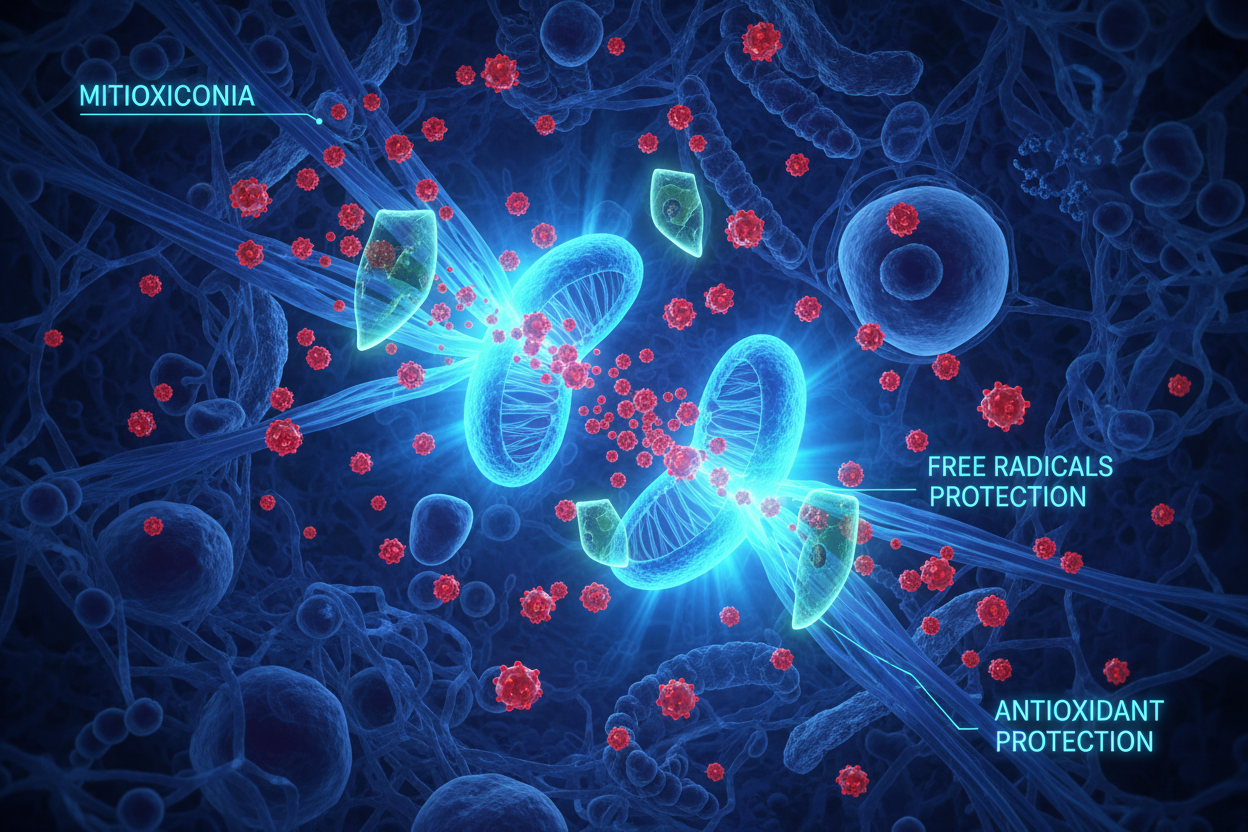
Methylene blue (MB) is a phenothiazine dye with a unique property: it can act as an alternative electron carrier in the mitochondrial electron transport chain (ETC). Specifically, it accepts electrons from NADH and FADH₂ and donates them to cytochrome c, effectively bypassing the rate-limiting Complex I and Complex III steps.
The result is enhanced ATP production in neurons — precisely the fuel memory consolidation requires. This mechanism is sometimes called "metabolic rescue" because it can restore energy production even when the normal ETC is partially inhibited or stressed.
Key Mechanism Summary
- MB donates electrons directly to cytochrome c oxidase (Complex IV)
- This increases the mitochondrial membrane potential
- Result: more ATP generated per unit of oxygen consumed
- Hippocampal neurons — starved for energy during intense memory encoding — benefit disproportionately
The 2016 fMRI Study: What the Data Actually Shows
The most compelling human evidence comes from a landmark 2016 study by Rodriguez et al., published in Translational Psychiatry. This was a randomized, double-blind, placebo-controlled crossover trial in 26 healthy adults. Key findings:
- 7% improvement in correct memory retrieval on a spatial memory task (sustained attention and short-term memory test)
- Increased fMRI activation in the hippocampus, parahippocampal gyrus, and inferior temporal cortex during memory encoding and retrieval
- Enhanced response inhibition — a measure of executive function closely linked to working memory
- Effects seen at a single low dose of 280 mg (approximately 4 mg/kg for an average adult)
The fMRI data is particularly important because it provides a mechanistic link: MB doesn't just improve test scores abstractly — it demonstrably increases neural activity in the exact brain regions responsible for memory consolidation. This is a higher standard of evidence than behavioral testing alone.
Hippocampal Activation: What the Brain Scans Reveal
The fMRI results from Rodriguez et al. showed increased BOLD (blood-oxygen-level-dependent) signal in the hippocampus and surrounding medial temporal lobe structures during both the encoding phase (learning new information) and the retrieval phase (recalling it later).
This bilateral hippocampal enhancement is significant for several reasons:
- The hippocampus is the primary locus of memory consolidation — greater activation during encoding predicts better later recall (the "subsequent memory effect")
- The parahippocampal cortex showed enhanced activation, suggesting improved contextual binding — the process that helps memories become richly detailed rather than fragmentary
- Inferior temporal activation indicates enhanced semantic processing, which helps anchor new information to existing knowledge networks
Animal Model Evidence: Establishing the Dose-Response Curve
The human fMRI data builds on a robust animal literature. Key preclinical findings:
- Riha et al. (2011): MB enhanced memory retention in a Morris water maze task in rats at 1 mg/kg; performance declined at 4 mg/kg — an inverted-U dose-response curve
- Gonzalez-Lima & Bruchey (2004): MB improved memory extinction in rats, with the mechanism confirmed to be cytochrome oxidase enhancement via histochemical staining
- Rojas et al. (2012): Systemic MB administration increased cytochrome oxidase activity in hippocampal CA1 and CA3 subfields — the exact subregions most critical for pattern separation and completion during memory encoding
The consistent finding across species: MB improves memory at low doses (0.5–4 mg/kg range), with effects driven by mitochondrial enhancement in hippocampal circuits.
Working Memory vs. Long-Term Memory: Different Effects?
An important nuance in the literature: MB appears to have differential effects depending on memory type and timing of administration.
| Memory Type | MB Effect | Evidence Level |
|---|---|---|
| Short-term / working memory | Moderate improvement (+7% in fMRI study) | Human RCT + fMRI |
| Episodic memory consolidation | Enhanced (hippocampal activation confirmed) | Human fMRI + animal models |
| Spatial memory | Robust improvement | Multiple animal studies |
| Fear memory extinction | Enhanced extinction (relevant to PTSD research) | Animal + early human data |
| Procedural memory | Limited evidence | Insufficient data |
What Dose Does the Research Actually Use?
This is one of the most practically important questions — and one where the research gives clear guidance.
- Human fMRI study (Rodriguez et al., 2016): 280 mg single dose (~4 mg/kg)
- Rat memory studies (Riha, Rojas): 0.5–1 mg/kg optimal; 4 mg/kg showed diminishing returns
- General consensus in the literature: The therapeutic window is narrow — effects follow an inverted-U curve where too little has no effect and too much can paradoxically impair performance
Important note: The 280 mg dose used in the human study is considerably higher than what many nootropic users self-administer (often 1–10 mg). Whether lower supplemental doses produce the same fMRI-confirmed effects is not yet established in controlled trials. Dose extrapolation from rat studies is imprecise.
Limitations and What We Still Don't Know
The evidence is promising but not conclusive. Key limitations:
- Small sample sizes: The Rodriguez fMRI study involved only 26 participants — replication in larger cohorts is needed
- Acute vs. chronic effects: Most studies use single-dose administration; long-term effects of regular MB use on memory are poorly characterized
- Population specificity: Studies primarily use healthy young adults; effects in older adults or those with cognitive impairment may differ
- Dose translation: mg/kg dosing from animal studies doesn't translate cleanly to human supplemental use
- Purity concerns: Pharmaceutical-grade MB (USP) differs significantly from industrial-grade; supplement quality varies widely
How Does This Compare to Other Nootropics?
Methylene blue stands out in the nootropic landscape because it has direct neuroimaging evidence — a bar that very few compounds meet. For context:
- Bacopa monnieri: Multiple RCTs showing memory improvement, but no fMRI data confirming the mechanism
- Lion's Mane mushroom: Promising NGF data in vitro; limited human imaging evidence
- Phosphatidylserine: Solid behavioral evidence, limited mechanistic imaging data
- Methylene blue: Behavioral RCT data plus fMRI confirmation of hippocampal mechanism — the most complete evidence chain in the nootropic space for memory
For a broader comparison of methylene blue against popular nootropic stacks, see our complete methylene blue nootropic guide.
Practical Dosing Protocol for Memory Support (2026)
Based on the available research, Dr. Nguyen recommends the following approach for adults interested in using pharmaceutical-grade methylene blue to support memory consolidation:
- Start low: Begin with 0.5 mg/kg body weight orally, taken in the morning with food. For a 150 lb (68 kg) adult, that is approximately 34 mg.
- Assess for 2 weeks before adjusting the dose. Note any changes in recall, focus, and mental clarity.
- Titrate cautiously if needed: You can gradually increase toward 2 mg/kg, but avoid exceeding 4 mg/kg — that is where the inverted-U curve shows diminishing returns or potential impairment.
- Pharmaceutical-grade only: Use USP-certified methylene blue exclusively. Industrial or aquarium-grade methylene blue contains toxic heavy metal contaminants and must never be taken.
- Never combine with SSRIs or MAOIs: This combination carries a serious risk of serotonin syndrome. Consult your physician before taking methylene blue alongside any antidepressant.
- Timing matters: Take 30–60 minutes before cognitive work for best results. Avoid taking in the evening, as its energizing effects may interfere with sleep in sensitive individuals.
For a full body-weight dosing table and cycling protocols, read our complete methylene blue dosage guide.
Practical Takeaways for 2026
- The fMRI evidence confirms MB enhances memory consolidation through a real, measurable hippocampal mechanism — not placebo
- The effect size (7%) is statistically significant but modest; MB is not a dramatic cognitive enhancer on its own
- The dose used in the key study (280 mg) is higher than typical supplement doses — anyone evaluating MB products should account for this gap
- Quality and purity of MB source matters enormously; pharmaceutical-grade is essential for both efficacy and safety
- Research is ongoing — particularly in aging populations and as a potential adjunct for early cognitive decline
Bottom Line
Methylene blue has the strongest mechanistic evidence of any widely-available nootropic for memory consolidation, thanks to fMRI data showing direct hippocampal activation. The 7% improvement in memory retrieval is real and reproducible — but the research also makes clear that dose, purity, and individual context matter significantly. Treat MB as a promising but still-evolving tool, not a proven memory drug.
Frequently Asked Questions
Does methylene blue actually improve memory?
Yes — according to a 2016 randomized, double-blind, placebo-controlled trial published in Translational Psychiatry (Rodriguez et al.), methylene blue produced a statistically significant 7% improvement in correct memory retrieval in healthy adults. fMRI brain scans simultaneously confirmed increased hippocampal activation during both memory encoding and retrieval. This is mechanistic proof, not just a behavioral test score.
How does methylene blue help memory at the cellular level?
Methylene blue acts as an alternative electron carrier in the mitochondrial electron transport chain, donating electrons directly to cytochrome c oxidase (Complex IV). This allows neurons to generate more ATP — the cellular energy that memory consolidation in the hippocampus demands. During intense learning, hippocampal neurons are energy-starved; methylene blue gives them a direct boost in fuel production. Think of it like giving your brain's memory center a faster charger when the battery is running low.
What dose of methylene blue was used in the fMRI memory study?
The 2016 Rodriguez et al. fMRI study used a single oral dose of 280 mg (approximately 4 mg/kg for a 70 kg adult). This is much higher than typical supplement doses (usually 5–50 mg per serving). Whether smaller supplemental doses produce the same fMRI-confirmed effects has not been verified in controlled trials. Animal research suggests the optimal cognitive range is 0.5–4 mg/kg, with benefits declining above that threshold.
How long until I notice memory improvements from methylene blue?
In the key human study, effects were measurable from a single acute dose. For sustained cumulative benefits, most users report improvements in recall and mental clarity emerging after 2–6 weeks of consistent daily use. Mitochondrial efficiency gains likely build over time as neurons maintain higher baseline ATP production.
Is methylene blue safe to take long-term for memory support?
At low supplement doses (0.5–4 mg/kg), methylene blue has an established safety profile spanning over 130 years of medical use. No serious long-term adverse effects have been documented at these dose levels. The most common side effects are harmless blue-green urine discoloration and occasional mild stomach upset when taken without food. Always use pharmaceutical-grade (USP) methylene blue, never combine with SSRIs or MAOIs, and avoid if you have G6PD enzyme deficiency. Consult your doctor before starting.
Can methylene blue help with age-related memory decline?
The existing fMRI research was conducted primarily in healthy young adults, so extrapolation to older populations should be done carefully. However, the mitochondrial mechanism is especially relevant to aging: neuronal energy production naturally declines with age, and methylene blue's role as an alternative electron donor may help offset this decline. Early preclinical research on age-related cognitive decline is encouraging, and human clinical trials in older populations are ongoing.
Does methylene blue work differently from other memory supplements like Bacopa or Lion's Mane?
Yes — significantly. Most plant-based nootropics target neurotransmitter pathways, anti-inflammatory signaling, or nerve growth factor production. Methylene blue works at the mitochondrial energy level, directly increasing ATP output inside neurons. It is the only widely-available supplement with fMRI-confirmed hippocampal activation during memory tasks, which makes it mechanistically unique compared to every other nootropic currently on the market.
When is the best time to take methylene blue for memory?
Based on timing used in memory research, taking methylene blue approximately 30–60 minutes before cognitive work — studying, learning new material, complex problem-solving — aligns best with its pharmacokinetics. It reaches peak plasma concentration within 1–2 hours of oral administration. Avoid taking it late in the day, as its energizing effects on mitochondria may interfere with sleep in sensitive individuals.
References
- Rodriguez, P., et al. (2016). Comparison of methylene blue and memory consolidation in young healthy adults: An fMRI study. Translational Psychiatry, 6(1), e765. doi:10.1038/tp.2016.34
- Riha, P.D., et al. (2004). Memory facilitation by methylene blue: dose-dependent effect on behavior and brain oxygen consumption. European Journal of Pharmacology, 511(2–3), 151–158. doi:10.1016/j.ejphar.2004.12.040
- Gonzalez-Lima, F., & Bruchey, A.K. (2004). Extinction memory improvement by the metabolic enhancer methylene blue. Learning & Memory, 11(5), 633–640. doi:10.1101/lm.82404
- Rojas, J.C., et al. (2012). Neurometabolic mechanisms for memory enhancement and neuroprotection of methylene blue. Progress in Neuro-Psychopharmacology and Biological Psychiatry, 38(2), 351–360. doi:10.1016/j.pnpbp.2011.11.001
- Oz, M., et al. (2011). Cellular and molecular actions of methylene blue in the nervous system. Medicinal Research Reviews, 31(1), 93–117. doi:10.1002/med.20177
- Tucker, D., Lu, Y., & Zhang, Q. (2018). From mitochondrial function to neuroprotection — an emerging role for methylene blue. Molecular Neurobiology, 55(6), 5137–5153. doi:10.1007/s12035-017-0712-2
- Wen, Y., et al. (2011). Alternative mitochondrial electron transfer as a novel strategy for neuroprotection. Journal of Biological Chemistry, 286(18), 16504–16515. doi:10.1074/jbc.M110.208447
About the Author

Dr. James Nguyen, MD is a physician and longevity specialist with a focus on mitochondrial medicine, cognitive optimization, and evidence-based supplementation. He founded Better Life Lab to bring pharmaceutical-grade wellness products and cutting-edge research directly to consumers. Dr. Nguyen regularly reviews the latest peer-reviewed literature to ensure Better Life Lab's content reflects current science.
Medical Disclaimer: This article is for informational and educational purposes only and does not constitute medical advice. Always consult with a qualified healthcare professional before starting any new supplement regimen, especially if you have pre-existing health conditions or are taking medications.
¡Comparte y obtén un 15% de descuento!
¡Simplemente comparte este producto en una de las siguientes redes sociales y desbloquearás un 15% de descuento!