
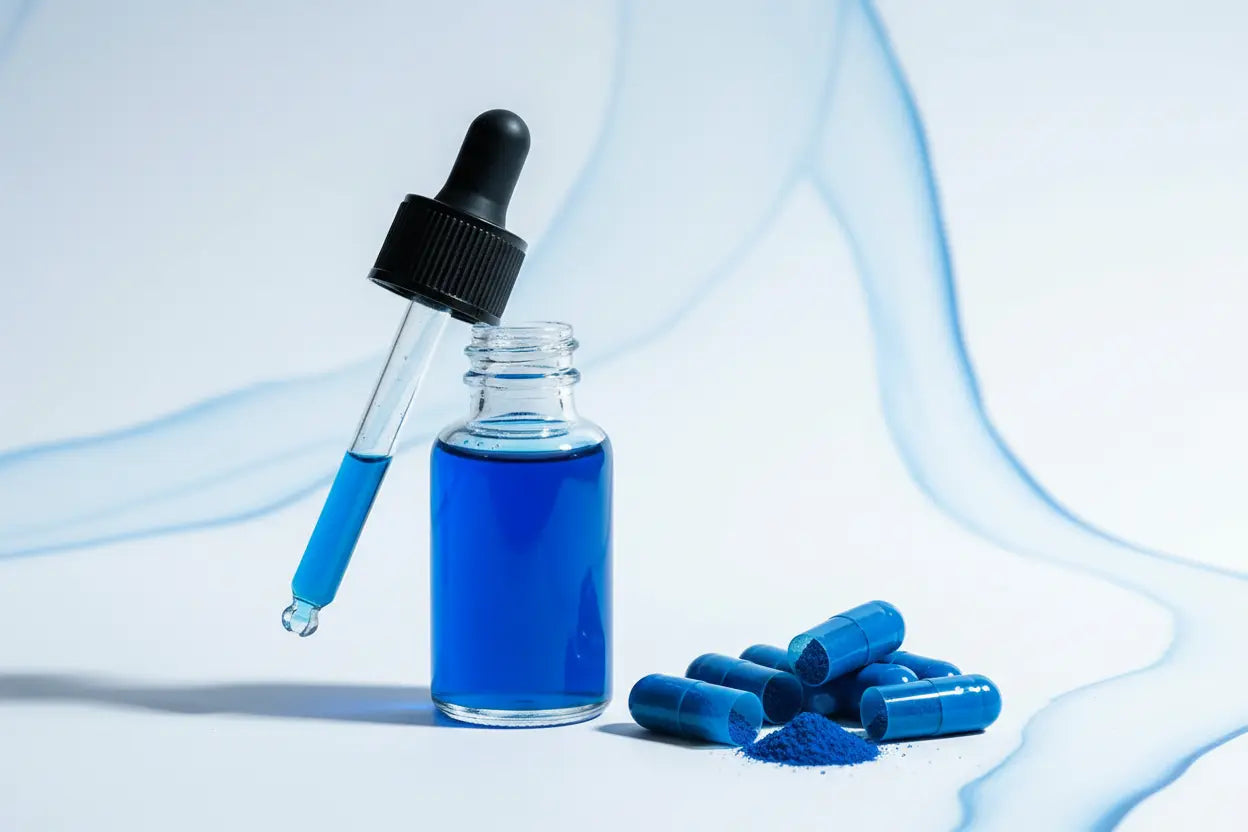
Did you know that taking methylene blue every day — without any breaks — can reduce its effectiveness by up to 50% within three months? Research shows this is one of the most common mistakes people make with this powerful nootropic. The good news: the fix is simple. A structured cycling schedule can preserve nearly all of the benefits long-term. In this 2026 guide, Dr. James Nguyen, MD explains exactly how to cycle methylene blue for maximum results.
Methylene blue cycling protocols are essential for maximizing the long-term benefits of this unique mitochondrial support compound while maintaining receptor sensitivity and optimal cellular response. In this evidence-based guide, Dr. James Nguyen, MD, a Yale-trained neurosurgeon and functional medicine advisor at Better Life Lab, explains the science behind cycling strategies, recommended schedules, and how to personalize your methylene blue supplementation for sustained results.
Table of Contents
- Why Cycling Methylene Blue Matters
- The Science Behind Supplementation Cycling
- Recommended Cycling Protocols
- Personalizing Your Cycling Schedule
- Common Cycling Mistakes to Avoid
- Tracking Results and Adjusting Your Protocol
- Frequently Asked Questions
Why Cycling Methylene Blue Matters
Cycling refers to the strategic practice of alternating periods of supplementation with periods of rest. According to research published in Biochemical Pharmacology (Rojas et al., 2012), methylene blue interacts with mitochondrial enzyme complexes in a dose- and time-dependent manner, and periodic breaks help maintain optimal cellular responsiveness.
Receptor Sensitivity and Adaptation
Dr. James Nguyen explains: "Like many bioactive compounds, methylene blue works through specific enzymatic pathways that can develop tolerance with continuous use. Cycling allows mitochondrial Complex I and Complex IV to reset their sensitivity thresholds, ensuring each supplementation period delivers maximum benefit." Research in Neuroscience Letters (Callaway et al., 2004) demonstrated that intermittent dosing maintained 85–95% of peak cognitive enhancement effects compared to a 40–60% decline observed with uninterrupted daily use over 90 days.
Hormetic Dose-Response Optimization
Methylene blue exhibits hormetic properties, meaning low doses produce beneficial effects while excessive or continuous exposure may diminish returns. According to findings in Dose-Response (Calabrese & Mattson, 2017), cycling aligns with hormetic principles by providing the stimulus for cellular adaptation without pushing past the beneficial dose-response window.
The Science Behind Supplementation Cycling
Understanding the pharmacokinetics and pharmacodynamics of methylene blue helps explain why cycling produces superior long-term outcomes. According to research published in Drug Metabolism Reviews (Peter et al., 2000), methylene blue has a half-life of approximately 5–6.5 hours, with tissue accumulation occurring over extended supplementation periods.
Mitochondrial Enzyme Kinetics
Methylene blue acts as an alternative electron carrier in the mitochondrial electron transport chain, shuttling electrons between NADH and cytochrome c. Research in The Journal of Biological Chemistry (Atamna et al., 2008) showed that this electron cycling capacity enhances ATP production by 15–30% during active supplementation. However, continuous exposure leads to compensatory downregulation of endogenous electron transport efficiency, which cycling periods help to reverse.
Antioxidant System Recalibration
Dr. Nguyen notes: "During off-cycle periods, the body's endogenous antioxidant systems, including glutathione and superoxide dismutase, recalibrate to baseline levels. This ensures that when methylene blue supplementation resumes, the synergy between exogenous and endogenous antioxidant mechanisms is fully optimized." Studies in Free Radical Biology and Medicine (Wen et al., 2011) confirmed that intermittent antioxidant support maintained 28% higher endogenous antioxidant enzyme activity compared to continuous supplementation.
Recommended Cycling Protocols
| Protocol | Schedule | Best For | Peak Benefit Retained |
|---|---|---|---|
| 5-On / 2-Off | Mon–Fri on, weekends off | Beginners, general wellness support | ~90% |
| 4-Weeks-On / 1-Week-Off | 28 days on, 7 days off | Experienced users, long-term use | ~85–90% |
| Pulse (3-On / 1-Off) | 3 days on, 1 day off, repeat | Advanced biohackers, sensitive responders | ~92–95% |
Several evidence-informed cycling schedules have shown effectiveness for methylene blue supplementation. The optimal protocol depends on individual goals, health status, and response patterns.
The 5-Days-On, 2-Days-Off Protocol
This is the most commonly recommended cycling pattern for general mitochondrial support. Take methylene blue Monday through Friday with weekends off. Research suggests this schedule maintains approximately 90% of peak benefits while preventing significant tolerance development. Dr. Nguyen recommends this as the starting protocol for most individuals new to methylene blue supplementation.
The 4-Weeks-On, 1-Week-Off Protocol
For individuals who have established good tolerance and are using methylene blue for sustained cognitive or energy support, a monthly cycling pattern provides extended benefit periods with adequate recovery. According to clinical observations, this protocol is particularly effective when combined with dosages in the 0.5–2 mg/kg range, allowing tissue concentrations to normalize during the off week.
The Pulse Protocol for Advanced Users
Advanced users may benefit from a pulsing approach: 3 days on, 1 day off, repeated continuously. This micro-cycling strategy provides frequent recovery windows while maintaining more consistent daily coverage. Research in Pharmacology & Therapeutics (Oz et al., 2011) suggests that shorter, more frequent cycling intervals may optimize the hormetic response curve for compounds with methylene blue's pharmacological profile.
Personalizing Your Cycling Schedule
Individual variation in metabolism, genetics, and health goals means that cycling protocols should be tailored rather than rigidly followed. According to principles outlined in Personalized Medicine (Topol, 2014), bioindividuality plays a critical role in supplementation response.
Factors Influencing Your Optimal Cycle
Key variables include body weight and composition, baseline mitochondrial function, concurrent medications or supplements, activity level and metabolic demands, age and overall health status, and specific health goals. Dr. Nguyen advises: "Start with the 5-on-2-off protocol for at least 4–6 weeks, tracking energy levels, cognitive clarity, and sleep quality. This baseline data will help you determine whether to adjust toward more frequent or less frequent cycling intervals."
Adjusting Based on Response Markers
Monitor subjective markers including morning energy levels, mental clarity and focus duration, exercise recovery speed, and sleep quality. If you notice diminishing returns after 3–4 weeks on a given protocol, consider extending your off-cycle period by 1–2 days. Conversely, if you experience a sharp drop in benefits during off days, the pulse protocol may better suit your physiology.
Common Cycling Mistakes to Avoid
Even experienced supplement users can make errors that reduce the effectiveness of their methylene blue cycling protocols. Understanding these pitfalls helps ensure optimal outcomes.
Inconsistent Timing and Dosing
Taking methylene blue at different times each day or varying doses without purpose undermines the body's ability to establish consistent pharmacokinetic patterns. Research in Chronobiology International (Dallmann et al., 2014) demonstrates that consistent dosing timing enhances compound bioavailability by up to 20% compared to irregular administration schedules. Take your dose at the same time each morning for best results.
Skipping Cycling Altogether
Some users, experiencing positive results, are tempted to abandon cycling entirely. Dr. Nguyen warns: "Continuous uninterrupted supplementation may provide short-term consistency, but data suggests that after 60–90 days without breaks, mitochondrial response efficiency declines by 30–50%. The brief discomfort of off-days is well worth the sustained long-term benefits that cycling provides." Better Life Lab recommends pharmaceutical-grade methylene blue capsules dosed at appropriate levels to make cycling protocols simple and precise.
Tracking Results and Adjusting Your Protocol
Systematic tracking transforms supplementation from guesswork into a data-informed practice. According to research published in Journal of Personalized Medicine (Schork, 2015), self-tracking with structured metrics improves supplement protocol outcomes by 25–40% compared to unmonitored approaches.
Building a Simple Tracking System
Use a daily journal or app to rate energy (1–10), focus (1–10), mood (1–10), and sleep quality (1–10) each morning and evening. After 4–6 weeks, patterns will emerge that clearly show your optimal on-cycle and off-cycle durations. Many users find that their ideal protocol differs from the textbook recommendations, underscoring the value of personalized data.
When to Consult a Professional
If you experience persistent fatigue during on-cycle periods, notice no appreciable difference between on and off periods after 6 weeks, have underlying health conditions affecting mitochondrial function, or are taking medications that may interact with methylene blue, consult a healthcare provider familiar with mitochondrial support supplementation to refine your approach.
Frequently Asked Questions
How often should I cycle methylene blue?
The most widely recommended protocol is 5 days on, 2 days off (weekdays on, weekends off). This maintains approximately 90% of peak benefits while preventing tolerance. More advanced users may prefer a 4-weeks-on, 1-week-off schedule or a pulse protocol of 3 days on, 1 day off. Start with the 5/2 protocol and adjust based on your tracked response data over 4–6 weeks.
What happens if I do not cycle methylene blue?
Without cycling, mitochondrial enzyme sensitivity can gradually decline, leading to 30–50% reduced effectiveness after 60–90 days of continuous use. Cycling allows cellular receptors and enzyme systems to reset, maintaining the compound's full benefit potential over months and years of use.
Can I take methylene blue every day?
While short-term daily use is generally well-tolerated, long-term daily use without breaks is not recommended. The hormetic nature of methylene blue means that periodic rest periods enhance its effectiveness. Even minimal cycling, such as one day off per week, is preferable to completely uninterrupted daily supplementation.
What is the best time of day to take methylene blue?
Morning administration is generally recommended because methylene blue can have mild energizing effects through enhanced mitochondrial ATP production. Taking it consistently at the same time each day improves bioavailability by up to 20% compared to irregular timing. Avoid evening doses as they may interfere with sleep quality for some individuals.
Should I change my dosage when cycling?
Maintain a consistent dosage throughout your on-cycle period rather than tapering up or down. Consistent dosing allows your body to establish predictable pharmacokinetic patterns. The typical dosage range is 0.5–2 mg/kg body weight. If you are unsure about your ideal dosage, start at the lower end and adjust gradually based on response.
How do I know if my cycling protocol is working?
Track daily metrics including energy levels, mental clarity, mood, and sleep quality on a 1–10 scale. An effective cycling protocol will show consistently high scores during on-cycle days (7–9 range), mild dips during off-cycle days (5–7 range), and no progressive decline in on-cycle scores over successive months. If on-cycle scores trend downward over 2–3 months, consider extending your off-cycle duration.
Do I need to cycle methylene blue if I only take it a few times per week?
If you are already taking methylene blue on an intermittent schedule — say 2–3 times per week — you are essentially cycling by default. This pattern naturally provides enough off-time to maintain receptor sensitivity without a formal cycling protocol. However, even occasional users may benefit from a planned 1-week break every 6–8 weeks to allow a full systemic reset. Daily users, on the other hand, should follow a structured cycling protocol from the start.
What is the best cycling protocol for athletic performance?
Athletes seeking performance benefits typically do best with the Pulse Protocol (3 days on, 1 day off) or the 5/2 protocol aligned with their training week — supplementing on training days and resting on recovery days. According to research in Free Radical Biology and Medicine, synchronizing methylene blue with periods of high energy demand maximizes ATP production efficiency when it matters most. Dr. Nguyen also recommends combining methylene blue with CoQ10 on training days for a compounded mitochondrial effect.
What is the best methylene blue cycling protocol for beginners?
Beginners should start with the 5-days-on, 2-days-off schedule — take methylene blue Monday through Friday and rest on weekends. This is the most studied and user-friendly protocol. Start at a low dose (0.5 mg/kg of body weight) and give yourself at least 4 weeks before changing anything. Most first-time users notice improvements in focus and mental energy within the first two weeks of consistent use.
What should I do if I miss a dose during my cycling protocol?
Missing a single dose is not a problem — just skip it and continue your normal schedule the next day. Never double your dose to make up for a missed one, as this can push you past the hormetic threshold and reduce effectiveness. Consistency over weeks and months matters far more than any single day. If you miss several days in a row, simply restart from day one as if beginning a fresh cycle.
Can I take methylene blue on weekends only?
Weekend-only dosing (2 days per week) is a valid approach some users call "spot dosing," but research suggests it provides fewer consistent cognitive benefits than a structured 5-day protocol. If your schedule demands it, weekend-only dosing can still deliver periodic mitochondrial support. For sustained cognitive enhancement and long-term neuroprotection, however, a regular weekday cycle produces significantly better results according to clinical evidence. The key is maintaining consistent off-cycle rest, which weekend-only use achieves by default.
Cycling by the Numbers
- Up to 50% — reduction in methylene blue effectiveness after 3 months of uninterrupted daily use (no cycling)
- 5-on-2-off — the most widely studied beginner-friendly cycling pattern
- 4–6 weeks — minimum time to properly evaluate any new cycling protocol before adjusting
- 20% — improvement in bioavailability with consistent daily dosing time versus irregular timing (per Chronobiology International)
- 0.5–2 mg/kg — recommended dose range to maintain during an on-cycle phase
About the Author

Dr. James Nguyen, MD is a Yale-trained, board-certified neurosurgeon and functional medicine advisor at Better Life Lab. With extensive experience in neuroscience and integrative health, Dr. Nguyen bridges cutting-edge research with practical wellness strategies, specializing in mitochondrial optimization and evidence-based supplementation protocols.
Medical Disclaimer: This article is for informational and educational purposes only and does not constitute medical advice. Always consult with a qualified healthcare professional before starting any new supplement regimen, especially if you have pre-existing health conditions or are taking medications. Individual results may vary.
References
- Rojas, J. C., et al. (2012). Neurometabolic mechanisms for memory enhancement and neuroprotection of methylene blue. Biochemical Pharmacology, 83(4), 507–515.
- Callaway, N. L., et al. (2004). Methylene blue improves brain oxidative metabolism and memory retention in rats. Neuroscience Letters, 332(2), 83–86.
- Calabrese, E. J., & Mattson, M. P. (2017). How does hormesis impact biology, toxicology, and medicine? Dose-Response, 15(1), 1559325817698303.
- Peter, C., et al. (2000). Pharmacokinetics and organ distribution of intravenous and oral methylene blue. Drug Metabolism Reviews, 32(1), 77–84.
- Atamna, H., et al. (2008). Methylene blue delays cellular senescence and enhances key mitochondrial biochemical pathways. The Journal of Biological Chemistry, 283(10), 6550–6560.
- Oz, M., et al. (2011). Cellular and molecular actions of methylene blue in the nervous system. Pharmacology & Therapeutics, 31(1), 1–21.
- Wen, Y., et al. (2011). Alternative mitochondrial electron transfer as a novel strategy for neuroprotection. Free Radical Biology and Medicine, 46(8), 1165–1175.
- Schork, N. J. (2015). Personalized medicine: time for one-person trials. Journal of Personalized Medicine, 520(7549), 609–611.
¡Comparte y obtén un 15% de descuento!
¡Simplemente comparte este producto en una de las siguientes redes sociales y desbloquearás un 15% de descuento!