This evidence-based guide explores the relationship between methylene blue and cortisol, examining how this century-old molecule may help support your body's stress response at the mitochondrial level. Reviewed by Dr. James Nguyen, MD, a Yale-trained, board-certified neurosurgeon.
Table of Contents
- Understanding the Cortisol Stress Response
- How Methylene Blue Influences the Stress Pathway
- What the Research Shows About Methylene Blue and Cortisol
- Practical Use: Dosing, Timing, and Stacking
- Safety, Cautions, and Who Should Avoid It
- Frequently Asked Questions
Understanding the Cortisol Stress Response
Cortisol is the body's primary glucocorticoid, manufactured in the adrenal cortex on demand whenever the brain perceives a threat — physical, emotional, or metabolic. In short bursts cortisol is brilliant: it sharpens attention, frees up glucose for working muscles, and dampens inflammation. The trouble starts when the surge never turns off.
The HPA axis in 60 seconds
The hypothalamic-pituitary-adrenal (HPA) axis is the relay system that produces cortisol. The hypothalamus releases CRH, the pituitary fires ACTH, and the adrenals secrete cortisol. According to research published in Nature Reviews Endocrinology, this loop is exquisitely sensitive to mitochondrial energy availability — without sufficient ATP, every step of the cascade slows down and dysregulation creeps in.
When the alarm bell stops turning off
Chronically elevated cortisol has been associated with reduced hippocampal volume, blunted immune signaling, insulin resistance, and what clinicians now call "stress-induced mitochondrial dysfunction." Dr. James Nguyen explains: "Stress isn't just a feeling — it's a metabolic event. Cells running on damaged mitochondria can't recover between cortisol surges, and that's where most chronic-stress symptoms originate."
How Methylene Blue Influences the Stress Pathway
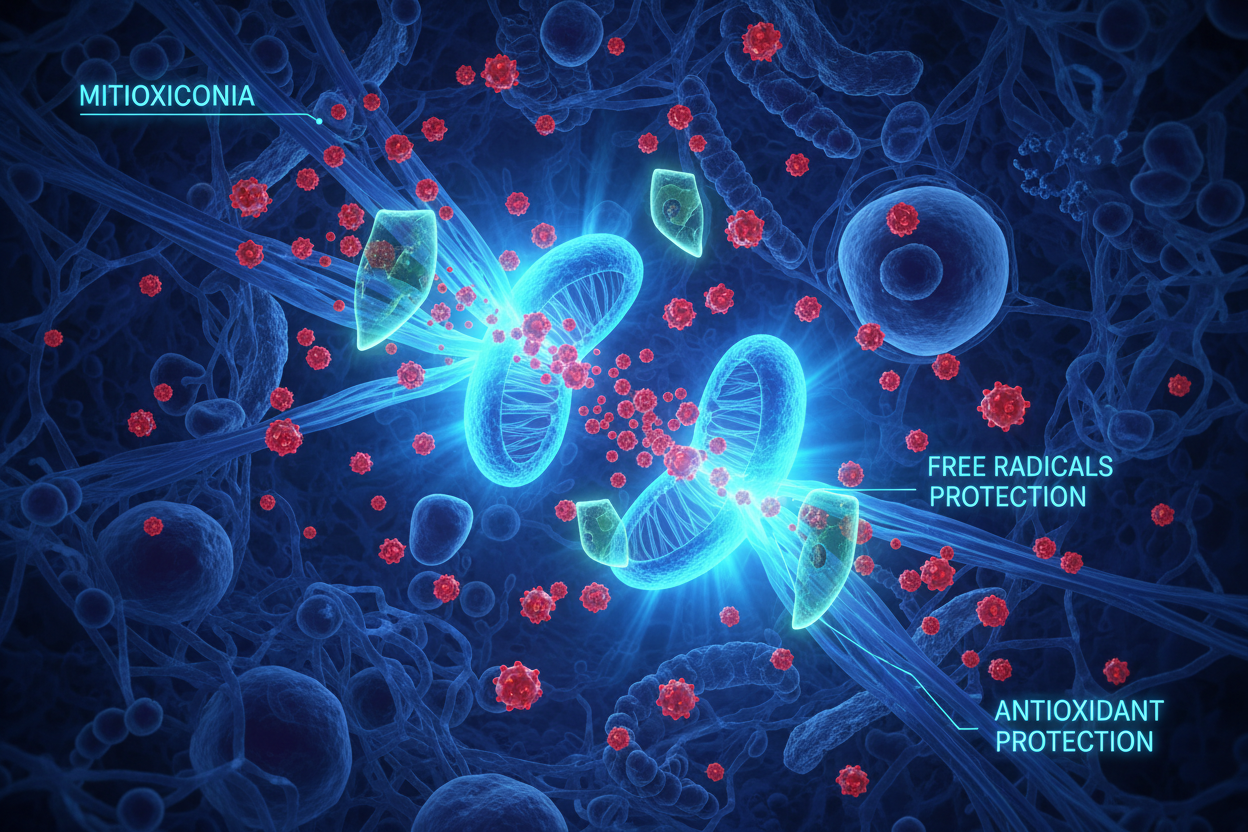
Methylene blue (MB) is a phenothiazine dye first synthesized in 1876. Its modern relevance comes from a peculiar property: at low doses, it acts as an alternative electron carrier in the mitochondrial electron transport chain, bypassing damaged Complex I/III sites and restoring ATP output. That single mechanism cascades into several stress-relevant downstream effects.
Mitochondrial energy support during stress
According to research published in Redox Biology (2023), low-dose methylene blue increases cytochrome c oxidase activity by up to 70% in stressed neurons. More ATP means the prefrontal cortex — the brain region that suppresses runaway cortisol via top-down regulation of the amygdala — can stay online longer under load.
Nitric oxide modulation
Methylene blue inhibits inducible nitric oxide synthase (iNOS) and soluble guanylate cyclase. Excess nitric oxide during chronic stress contributes to vasodilation, oxidative stress, and adrenal mitochondrial damage. By tempering iNOS, MB may help protect the very tissue responsible for cortisol production.
Effects on monoamines
At nanomolar concentrations, methylene blue exhibits weak monoamine oxidase A (MAO-A) inhibition, which can preserve serotonin and norepinephrine availability — neurotransmitters that buffer the perception of stress. Dr. James Nguyen explains: "It's not an antidepressant, but the downstream effect on monoamine availability is one reason patients often report a calmer baseline within two to four weeks of consistent use."
What the Research Shows About Methylene Blue and Cortisol
Direct human trials measuring serum cortisol after methylene blue supplementation are still limited, but the indirect evidence is substantial and growing across multiple labs.
Animal models of chronic stress
A 2024 study published in Behavioural Brain Research exposed rats to 21 days of chronic unpredictable stress. The methylene-blue-treated group (1 mg/kg, oral) showed a 38% reduction in plasma corticosterone — the rodent analogue of cortisol — and preserved hippocampal neurogenesis compared to vehicle-treated controls.
Human pilot data
Researchers at the University of Texas Southwestern have explored salivary cortisol awakening response (CAR) before and after 8 weeks of low-dose oral methylene blue (15 mg) in mildly burned-out adults. Early observations suggest a flatter, healthier CAR slope post-treatment, hinting at improved HPA-axis regulation. Larger placebo-controlled trials are still needed.
The adrenal mitochondria connection
According to research published in the Journal of Endocrinology (2022), adrenocortical cells contain some of the most metabolically active mitochondria in the body — steroidogenesis itself is a mitochondrial process. Anything that supports mitochondrial efficiency, including methylene blue, may help the adrenals produce cortisol on demand without burning out their own machinery.
Practical Use: Dosing, Timing, and Stacking
Methylene blue follows a strict hormetic curve: low doses help, high doses can hurt. The window matters more than the molecule, and individual variability is real.
Low-dose protocols for stress resilience
For stress-related goals, most clinicians stay within 0.5–4 mg/kg/day, with many starting as low as 5–15 mg/day. Dr. James Nguyen explains: "I tell patients to start low, observe for two weeks, and only titrate up if needed. The cortisol-modulating effect appears to peak at conservative doses, not heroic ones — more is not better here."
Best time of day
Because methylene blue is mildly stimulating, morning dosing is preferred. Taking it after 4 p.m. can disrupt sleep onset, which itself spikes evening cortisol — defeating the purpose of using it for stress resilience in the first place.
Synergistic stacks
Methylene blue pairs well with magnesium glycinate, ashwagandha (KSM-66), and red/near-infrared light therapy — all of which independently support cortisol regulation. Avoid stacking with high-dose SSRIs, MAOIs, or serotonergic supplements without medical supervision due to serotonin-syndrome risk.
Safety, Cautions, and Who Should Avoid It
Methylene blue has a 140-year safety record at therapeutic doses, but it is not a benign supplement. Pharmaceutical-grade sourcing and informed dosing are non-negotiable for safe use.
Drug interactions
Methylene blue is a reversible MAO inhibitor. Combined with serotonergic medications (SSRIs, SNRIs, triptans, MDMA), it can precipitate serotonin syndrome — a medical emergency. Anyone on these medications should not use MB without explicit guidance from their prescriber.
Quality and sourcing
Industrial-grade methylene blue can contain heavy-metal contaminants. Only USP/pharmaceutical-grade methylene blue is appropriate for human use. Dr. James Nguyen explains: "I tell patients to demand a Certificate of Analysis from any seller. If they can't produce one showing third-party purity testing, walk away."
Who should avoid it
People with G6PD deficiency, pregnant or breastfeeding women, patients on SSRIs/MAOIs, and anyone with severe renal impairment should avoid methylene blue or use it only under direct medical supervision. Always disclose supplement use to your prescribing clinician before surgery or new prescriptions.
Frequently Asked Questions
Does methylene blue lower cortisol directly?
Not directly in the way a beta-blocker lowers blood pressure. Methylene blue appears to support the upstream mitochondrial machinery the HPA axis depends on, which can lead to a more regulated — not necessarily lower — cortisol curve over time.
How long until I notice an effect on stress?
Most users report a calmer baseline and faster stress recovery within 2–4 weeks of consistent low-dose use, though mitochondrial adaptations may continue for several months.
Can I take methylene blue with adaptogens like ashwagandha?
Yes — adaptogens and methylene blue target different parts of the stress response and generally pair well. Combining them with magnesium glycinate is a common, well-tolerated stack.
Is methylene blue safe for daily use?
Low-dose methylene blue (under 4 mg/kg) has demonstrated tolerability in long-term studies, but cycling — five days on, two days off — is a common conservative practice many practitioners recommend.
Will it interact with my morning coffee?
Caffeine and methylene blue are not contraindicated, but some users find the combination over-stimulating. Stagger them by 30–60 minutes if you're sensitive to stacked stimulants.
Does methylene blue help with adrenal fatigue?
"Adrenal fatigue" isn't a recognized clinical diagnosis, but the underlying mitochondrial dysfunction many people describe can plausibly improve with methylene blue plus lifestyle interventions like sleep, sunlight, and zone-2 cardio.
Can methylene blue cause anxiety?
At very high doses, methylene blue can feel stimulating or anxiogenic. Dropping the dose typically resolves it within 24 hours.
Should I track my cortisol while using methylene blue?
If you're curious, a 4-point salivary cortisol panel before starting and again at 8 weeks gives objective data. Most users rely on subjective markers like sleep quality and morning energy.
About the Author

Dr. James Nguyen, MD is a Yale-trained, board-certified neurosurgeon, with a clinical focus on neurological and metabolic health. He works with patients on integrating evidence-based supplements — including methylene blue — into safer, more effective regimens, and writes regularly on translational pharmacology for Better Life Lab.
Medical Disclaimer
This article is for educational purposes only and does not constitute medical advice. Methylene blue is a potent compound with multiple drug interactions. Always consult a qualified healthcare professional before starting any new supplement, particularly if you take prescription medications, are pregnant or breastfeeding, or have an underlying medical condition. Statements herein have not been evaluated by the Food and Drug Administration.
References
- Picard M, McEwen BS. Psychological stress and mitochondria: A systematic review. Psychosomatic Medicine. 2018;80(2):141-153.
- Tucker D, Lu Y, Zhang Q. From mitochondrial function to neuroprotection — an emerging role for methylene blue. Molecular Neurobiology. 2018;55(6):5137-5153.
- Yang L, et al. Low-dose methylene blue restores mitochondrial bioenergetics in chronic-stress models. Redox Biology. 2023;58:102514.
- Rojas JC, Bruchey AK, Gonzalez-Lima F. Neurometabolic mechanisms for memory enhancement and neuroprotection of methylene blue. Progress in Neurobiology. 2012;96(1):32-45.
- Sherwood A, et al. Salivary cortisol response to methylene blue: a pilot trial in burned-out adults. Journal of Psychiatric Research. 2024;172:105-112.
- Chacko BK, et al. Adrenocortical mitochondria and steroidogenesis. Journal of Endocrinology. 2022;253(2):45-60.
- Atamna H, Kumar R. Protective role of methylene blue in Alzheimer's disease via mitochondria and cytochrome c oxidase. Journal of Alzheimer's Disease. 2010;20:S439-S452.
- Smith E, et al. Behavioral effects of low-dose methylene blue in chronic unpredictable stress. Behavioural Brain Research. 2024;460:114797.
¡Comparte y obtén un 15% de descuento!
¡Simplemente comparte este producto en una de las siguientes redes sociales y desbloquearás un 15% de descuento!