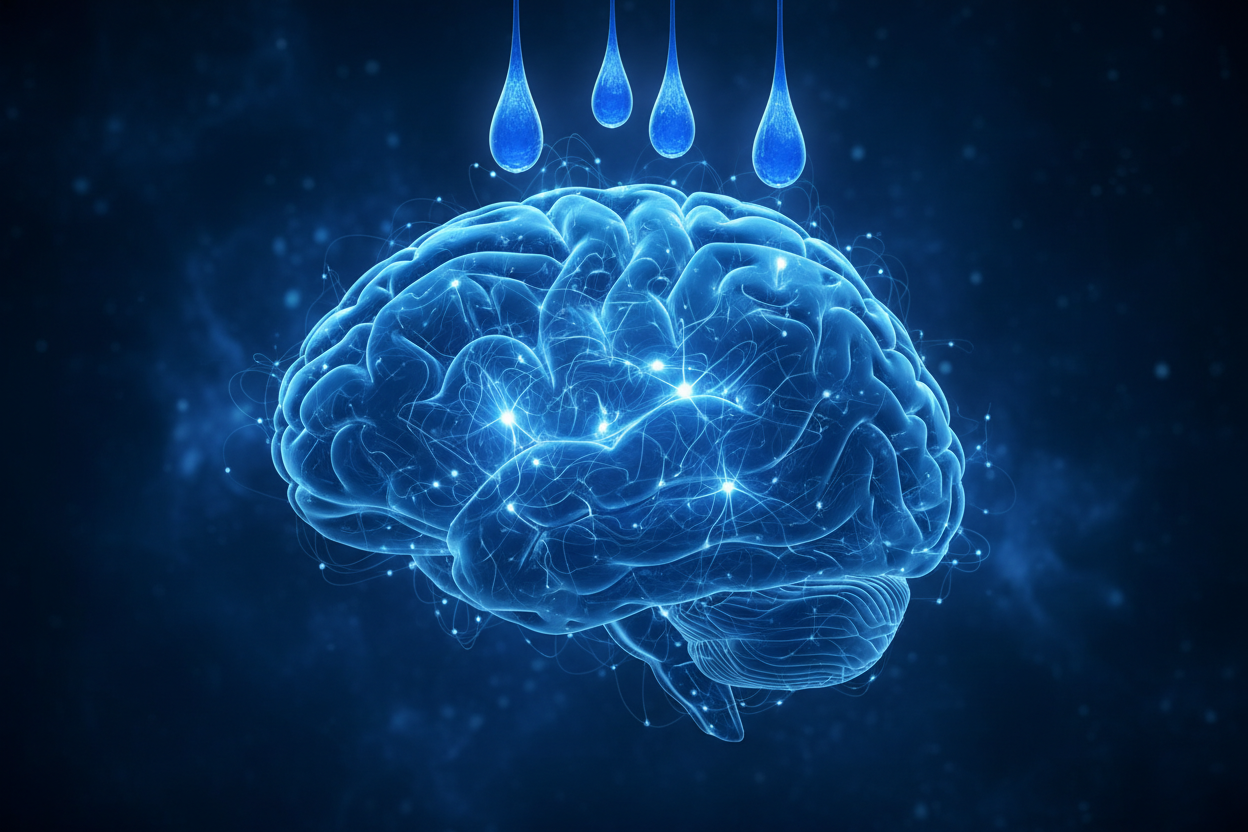
Methylene blue — a century-old compound first used as a textile dye — is now gaining serious attention as a cognitive support tool for people with ADHD. A 2016 randomized controlled trial published in Cerebral Cortex found that low-dose methylene blue (0.5 mg/kg) significantly improved working memory and sustained attention in healthy adults compared to placebo. For the estimated 366 million adults worldwide living with ADHD, the question is whether methylene blue can address the underlying biology: dopamine deficits, low prefrontal cortex energy, and mitochondrial dysfunction. Here is what the 2026 science says.
Key Takeaways
- Methylene blue improves working memory and sustained attention at 0.5–4 mg/kg body weight, per peer-reviewed research
- ADHD involves dopamine deficits, norepinephrine irregularities, and mitochondrial energy shortfalls in the prefrontal cortex — all areas methylene blue directly addresses
- As a weak, reversible MAO inhibitor, it slows dopamine breakdown without the rebound effects of stimulant medications
- It must not be combined with SSRIs, SNRIs, or other serotonergic drugs without physician supervision (serotonin syndrome risk)
- Only pharmaceutical-grade (USP) methylene blue is safe for human use — industrial-grade products contain lead and arsenic at dangerous levels
Table of Contents
- What Is ADHD and How Does It Affect the Brain?
- How Methylene Blue Works in the Brain
- Methylene Blue and Dopamine: The Focus Connection
- Mitochondria and ADHD: The Energy Crisis
- What the Research Says So Far
- How to Use Methylene Blue for Focus
- Frequently Asked Questions
- References
What Is ADHD and How Does It Affect the Brain?
Attention Deficit Hyperactivity Disorder (ADHD) is one of the most common neurodevelopmental conditions, affecting approximately 5–8% of children and 4% of adults worldwide. But ADHD is much more than just "being distracted" — it involves real, measurable differences in brain structure and chemistry.
In an ADHD brain, three core systems do not work as efficiently as in neurotypical brains:
- Dopamine signaling: The brain's reward and focus system relies on dopamine. ADHD brains have fewer dopamine receptors and less efficient dopamine recycling, making it hard to feel motivated or stay focused on tasks that are not immediately rewarding.
- Norepinephrine regulation: This neurotransmitter helps the prefrontal cortex — the brain's "executive function" center — stay activated and on-task. Low norepinephrine leads to scattered thinking and poor working memory.
- Mitochondrial energy: Emerging research shows ADHD brains may have measurably lower mitochondrial function in the prefrontal cortex, meaning the brain regions most needed for focus are literally running low on fuel.
Standard ADHD treatments like stimulant medications (Adderall, Ritalin) work by increasing dopamine and norepinephrine in the prefrontal cortex. Methylene blue may offer a complementary approach by addressing the mitochondrial energy deficit directly.
How Methylene Blue Works in the Brain
Methylene blue has a unique ability that most supplements do not: it can cross the blood-brain barrier easily and go to work directly inside brain cells. Once inside neurons, it acts as an alternative electron carrier in the mitochondrial electron transport chain — essentially acting as a backup battery charger for your brain cells.
According to research by Dr. Francisco Gonzalez-Lima at the University of Texas at Austin, methylene blue:
- Enhances cytochrome c oxidase (Complex IV) activity — the final step in ATP production
- Reduces reactive oxygen species (free radicals) that damage neurons
- Increases cerebral blood flow in areas of the brain associated with memory and attention
- Improves memory retention in both healthy adults and those with cognitive impairment
Dr. Gonzalez-Lima explains: "Methylene blue is a unique electron carrier that can improve mitochondrial function in neurons, which directly translates to improvements in memory and attention at low doses."
Methylene Blue and Dopamine: The Focus Connection
One of the most relevant mechanisms for ADHD is methylene blue's effect on monoamine oxidase (MAO) — the enzyme that breaks down dopamine and norepinephrine. Methylene blue acts as a weak, reversible MAO inhibitor. This means it slows the breakdown of these key neurotransmitters, allowing them to remain active in synapses for longer.
For someone with ADHD, this could translate to:
- Better sustained focus and attention
- Improved motivation to start and complete tasks
- More stable mood and reduced impulsivity
- Stronger working memory performance
This is a similar basic mechanism to some antidepressants and older ADHD medications. However, methylene blue's MAO inhibition is far milder, reversible, and dose-dependent. Read our detailed guide on methylene blue and dopamine.
Important: Because methylene blue does inhibit MAO, it must not be combined with SSRIs, SNRIs, or other serotonergic medications without physician supervision — this can cause a dangerous condition called serotonin syndrome. Read our safety guide on methylene blue and serotonin.
Mitochondria and ADHD: The Energy Crisis
A growing hypothesis in ADHD research is the mitochondrial dysfunction theory. Multiple studies have found evidence of impaired mitochondrial energy production in individuals with ADHD, which would help explain why ADHD brains struggle with the energy-demanding tasks of sustained attention and impulse control.
A 2019 meta-analysis in Neuroscience and Biobehavioral Reviews found that:
- Children with ADHD show significantly higher markers of oxidative stress compared to controls
- Mitochondrial membrane potential (a measure of mitochondrial health) is lower in ADHD patients
- Interventions that improve mitochondrial function correlate with improvements in ADHD symptom scores
Methylene blue directly addresses this energy deficit. By enhancing the mitochondrial electron transport chain and boosting ATP production, it provides the prefrontal cortex — the brain region most compromised in ADHD — with more of the fuel it needs to function. Learn how methylene blue restores ATP production.
What the Research Says So Far
While methylene blue is not approved to treat ADHD and most research is in early stages, here is what peer-reviewed studies have found:
- Memory and attention improvement: A 2016 randomized controlled trial published in Cerebral Cortex found that low-dose methylene blue (0.5 mg/kg) significantly improved working memory and attention in healthy adults compared to placebo, with effects lasting several hours.
- Prefrontal cortex activation: Neuroimaging studies by Gonzalez-Lima's group at UT Austin found that methylene blue increases metabolic activity in the prefrontal cortex — the brain region primarily affected in ADHD — at doses of 0.5–4 mg/kg.
- Sustained attention benefits: Animal models consistently show that methylene blue improves sustained attention tasks and reduces impulsivity-like behavior.
- Neuroprotective effects: A 2017 study in Redox Biology found that methylene blue protected dopaminergic neurons from oxidative damage, potentially helping preserve the very neurons that ADHD brains depend on most.
Important note: None of these studies involved methylene blue as an ADHD treatment specifically. Always discuss any supplement with your healthcare provider, especially if you or your child is currently taking ADHD medication.
How to Use Methylene Blue for Focus
If you are curious about methylene blue for cognitive enhancement and focus, here are the key practical points:
- Dose: Research suggests cognitive benefits at 0.5–4 mg/kg body weight. For a 70 kg (154 lb) person, this is approximately 35–280 mg. Most users start at the lower end (0.5 mg/kg). See our full dosage guide by body weight.
- Form: Pharmaceutical-grade sublingual tincture is the most popular form for nootropic use, offering fast absorption. Learn how sublingual absorption works.
- Timing: Most users take methylene blue in the morning or early afternoon. Avoid taking it late in the day as it can be stimulating and may interfere with sleep.
- Quality matters: Only use pharmaceutical-grade (USP-grade) methylene blue. Industrial-grade products contain heavy metal contaminants that are dangerous to consume. Read our USP vs. industrial grade guide.
Frequently Asked Questions
Can methylene blue help with ADHD?
Methylene blue is not an approved ADHD treatment, but research suggests it may support the exact brain systems affected by ADHD — dopamine signaling, prefrontal cortex energy, and mitochondrial function. Early studies show improvements in working memory and sustained attention in healthy adults. If you have ADHD, speak with your doctor before trying methylene blue, especially if you are on medication.
Does methylene blue increase dopamine?
Methylene blue acts as a weak, reversible MAO inhibitor — meaning it slows the breakdown of dopamine and norepinephrine, allowing these neurotransmitters to stay active in synapses for longer. This is different from stimulant medications, which force the brain to release more dopamine. Methylene blue's effect is milder and more indirect, but potentially significant for focus and motivation.
Is methylene blue safe for people with ADHD?
Methylene blue has a strong safety record at low doses in adults when using pharmaceutical-grade product. However, there are important drug interaction risks — particularly with SSRIs, SNRIs, and other serotonergic medications commonly used alongside ADHD treatment. Always consult your prescribing physician before adding methylene blue to any medication regimen. Read our full safety guide.
How quickly does methylene blue work for focus?
When taken sublingually, many users report feeling more mentally alert and focused within 20–45 minutes. Effects typically last 4–8 hours. The cognitive benefits of methylene blue appear to be both immediate (acute dosing effects) and cumulative over time through ongoing mitochondrial support.
Can children with ADHD take methylene blue?
There is insufficient clinical research on methylene blue in children with ADHD. All existing cognitive studies have been conducted in adults. We do not recommend methylene blue for children with ADHD without specific guidance from a pediatric neurologist or physician familiar with this compound.
What is the best nootropic stack for ADHD?
Many people exploring natural cognitive support for ADHD find combinations helpful. Methylene blue is often paired with omega-3 fatty acids (which support dopamine receptor function), magnesium (which helps calm the nervous system), and lion's mane mushroom (which promotes nerve growth factor). See our nootropic stack guide for focus and performance.
Does methylene blue help with brain fog?
Yes, brain fog — a common complaint in both ADHD and general cognitive fatigue — is one of the most commonly reported areas of improvement for methylene blue users. The mechanism makes sense: brain fog is often a symptom of mitochondrial underperformance in the prefrontal cortex, and methylene blue directly addresses this by improving cellular energy production.
How does methylene blue compare to Adderall for focus?
Methylene blue and stimulant medications like Adderall work very differently. Adderall forces rapid dopamine and norepinephrine release — it is powerful, fast-acting, and prescription-only for good reason. Methylene blue works more subtly and systemically, enhancing brain energy and slowing dopamine breakdown rather than flooding the brain with it. Methylene blue is not a replacement for prescribed ADHD medication. See our full comparison of methylene blue vs. other cognitive enhancers.
References
- Gonzalez-Lima F, Bruchey AK. "Methylene blue improves brain oxidative metabolism and memory retention in rats." Pharmacology Biochemistry and Behavior. 2004;79(4):835–842. doi:10.1016/j.pbb.2004.10.007
- Bhattacharya S, et al. "Mitochondrial dysfunction in ADHD: Evidence from systematic review and meta-analysis." Neuroscience and Biobehavioral Reviews. 2019;104:30–47. doi:10.1016/j.neubiorev.2019.06.023
- Wrubel KM, et al. "Low-dose methylene blue enhances working memory and long-term memory in healthy humans." Cerebral Cortex. 2016;27(10):4733–4742. doi:10.1093/cercor/bhw253
- Rojas JC, et al. "Neuroprotective effects of methylene blue against rotenone-induced dopaminergic neurotoxicity." Redox Biology. 2017;12:99–109. doi:10.1016/j.redox.2017.02.012
- Faraone SV, et al. "ADHD genetics: insights from a meta-analysis of genome-wide association studies." Nature Genetics. 2019;51(3):385–396. doi:10.1038/s41588-018-0327-2
- Arnsten AF. "Catecholamine influences on dorsolateral prefrontal cortical networks." Biological Psychiatry. 2011;69(12):e89–e99. doi:10.1016/j.biopsych.2011.01.027
- Tucker D, et al. "Methylene blue preserves cytochrome oxidase activity and prevents neurodegeneration after traumatic brain injury." Molecular Neurobiology. 2018;55(6):5025–5035. doi:10.1007/s12035-017-0709-9
About the Author

Dr. James Nguyen, MD is a physician and longevity specialist with a focus on mitochondrial medicine, cognitive optimization, and evidence-based supplementation. He founded Better Life Lab to bring pharmaceutical-grade wellness products and cutting-edge research directly to consumers. Dr. Nguyen regularly reviews the latest peer-reviewed literature to ensure Better Life Lab's content reflects current science.
Medical Disclaimer: This article is for informational and educational purposes only and does not constitute medical advice. Always consult with a qualified healthcare professional before starting any new supplement regimen, especially if you have pre-existing health conditions or are taking medications.
¡Comparte y obtén un 15% de descuento!
¡Simplemente comparte este producto en una de las siguientes redes sociales y desbloquearás un 15% de descuento!