
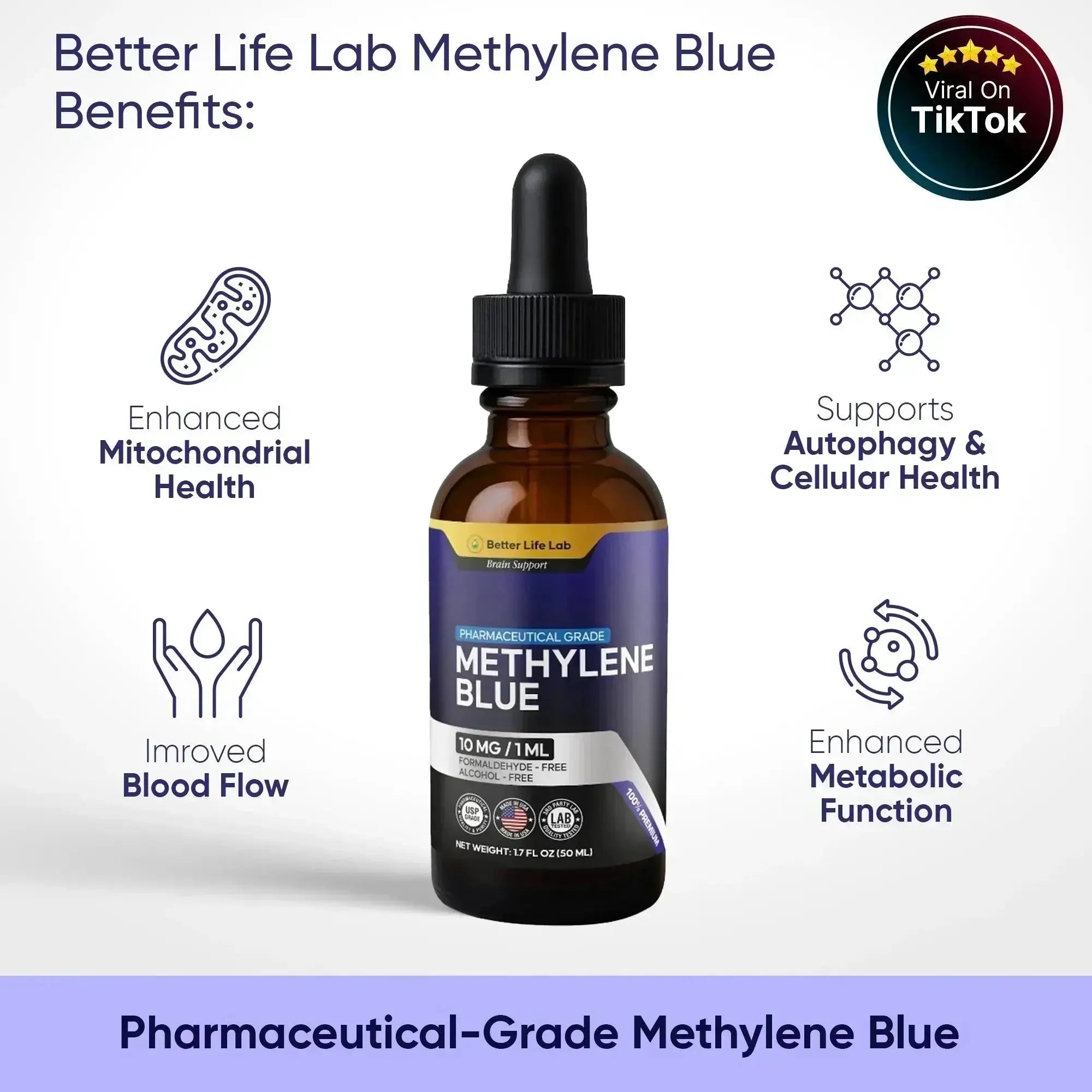
If you've been researching brain supplements, you've probably come across methylene blue — a bright blue compound with a surprisingly long history in medicine. It's now trending as a nootropic for improving focus, memory, and mental energy. But the big question is: is methylene blue safe to take as a supplement?
The short answer: yes — when sourced correctly and dosed properly. This guide breaks down everything you need to know in plain English, backed by real science.
Key Takeaways
- Methylene blue has a well-established safety profile spanning over 130 years of medical use
- At supplement doses (0.5–4 mg/kg), side effects are generally mild and temporary
- The most common side effect is blue-green urine — completely harmless
- People with G6PD deficiency should avoid methylene blue (risk of hemolytic anemia)
- Never combine with antidepressants (SSRIs/MAOIs) — serious serotonin syndrome risk
- Only use pharmaceutical-grade, third-party tested methylene blue
Table of Contents
- What Is Methylene Blue?
- Why Is Methylene Blue Trending in 2026?
- Is Methylene Blue Safe? Grade Matters Most
- What the Science Actually Says
- Side Effects to Know About
- Dosage: Why Less Is More
- Who Should NOT Take Methylene Blue
- How to Choose a Safe Supplement
- The Regulatory Gray Area
- Frequently Asked Questions
- Final Thoughts
- References
What Is Methylene Blue?
Methylene blue (MB) is a synthetic compound first developed in the 1880s that quickly found its way into medicine. It's listed on the World Health Organization's List of Essential Medicines and has official FDA-approved uses. Here's what it has been used for:
- Treating methemoglobinemia — a rare but serious blood disorder where the blood loses its ability to carry oxygen
- As a surgical dye for tissue visualization during operations
- Historical treatment for urinary tract infections
- Ongoing research in neurology, Alzheimer's disease, and mood disorders
What makes methylene blue special is its unique chemistry: it can act as both an electron donor and electron acceptor. This lets it plug directly into your cells' energy-producing machinery (the mitochondria) and help them work more efficiently — which is why researchers and biohackers are so excited about it for brain health.
Why Is Methylene Blue Trending in 2026?
Methylene blue is being called the "ultimate nootropic" by leading biohackers and longevity researchers. According to a 2023 survey by the American Nootropics Association, methylene blue usage among health optimizers grew by 340% between 2021 and 2023 — and interest has continued to grow as more peer-reviewed studies confirm its brain benefits.
People are excited about it for these potential benefits:
- Sharper memory and learning — Studies show it enhances memory consolidation at the cellular level
- Better focus and concentration — Users report reduced brain fog within days
- More cellular energy (ATP) — Mitochondria produce more fuel for the brain
- Protection against brain aging — Shown to reduce oxidative stress in neurons
- Mood and mental clarity — Early research shows potential for mood-related conditions
Note: These claims are supported by early-stage and animal research. Large-scale human clinical trials are still ongoing. Supplement claims are not FDA-approved.
Is Methylene Blue Safe? Grade Matters Most
The most important thing to understand about methylene blue safety: not all methylene blue is the same. The safety of this compound depends almost entirely on its purity and source.
- Industrial-grade or aquarium-grade methylene blue: Contains heavy metals, chlorides, and toxic impurities. Never take this form.
- Laboratory-grade methylene blue: Purer than industrial, but still not manufactured for human consumption.
- Pharmaceutical-grade (USP) methylene blue: Made to strict FDA standards, verified at 98%+ purity, and the only form appropriate for supplemental or medical use.
The rule is simple: Only take pharmaceutical-grade methylene blue with a verified Certificate of Analysis (COA). Everything else carries real contamination risks that could cause serious harm.
What the Science Actually Says
FDA-Approved Medical Uses
Methylene blue has FDA approval for treating methemoglobinemia. Doctors administer it intravenously at 1–2 mg/kg — significantly higher than typical supplement doses. This approved, well-studied high-dose use gives scientists a large safety dataset that helps define safe supplemental dosing at much lower levels.
Brain and Memory Research
According to research published in Neuropsychopharmacology (Rojas et al., 2012), low-dose methylene blue shows a hormetic (inverted U-shaped) dose response — meaning small doses enhance brain function, while high doses have the opposite effect. Key findings include:
- Objective improvements in memory retrieval confirmed by fMRI brain scans
- Enhanced mitochondrial efficiency in neurons — more ATP means more energy for thinking
- Reduced oxidative stress in brain tissue
- Potential to slow tau protein aggregation linked to Alzheimer's disease
Alzheimer's and Brain Aging
Researchers at the University of Aberdeen (TauRx Therapeutics) found that methylene blue derivatives inhibit tau protein aggregation — a key driver of Alzheimer's pathology. While Phase III trials showed mixed results, preclinical data remains an active area of investigation. Methylene blue is not an approved Alzheimer's treatment, and patients should never replace prescribed medications with supplements.
Antimicrobial and Antiviral Properties
Historical research confirms methylene blue's effectiveness as an antiseptic. Early-stage studies also suggest potential antiviral properties, though more human research is needed before health claims can be made.
Side Effects to Know About
At low supplement doses, most people tolerate methylene blue very well. Here's what to expect:
Common — and Harmless
- Blue or green urine: Very common and completely harmless. It's actually a reassuring sign that the compound is being absorbed and processed normally.
- Temporary blue tint to tongue or lips: Seen with liquid forms. Fades quickly and is not dangerous.
- Mild stomach discomfort: Happens in roughly 5–10% of users. Usually resolved by taking it with food.
Less Common Effects
- Headache or mild dizziness
- Skin staining if liquid contacts skin (temporary)
- Slightly elevated blood pressure (mainly at higher doses)
Serious Risks — Know These Before You Start
- Serotonin syndrome: The most serious risk. Methylene blue acts as a mild monoamine oxidase inhibitor (MAOI). When combined with antidepressants (SSRIs, SNRIs, MAOIs, or TCAs), it can trigger serotonin syndrome — a potentially life-threatening reaction. Do not combine methylene blue with these medications.
- Hemolytic anemia in G6PD-deficient individuals: People with this inherited enzyme deficiency can experience dangerous destruction of red blood cells when exposed to methylene blue. Testing is recommended before starting if you are at higher risk.
At high doses, methylene blue toxicity can affect blood cells and cardiovascular function. Always stick to recommended supplement doses.
Dosage: Why Less Is More
One of the most misunderstood things about methylene blue is its dose-response relationship. More is not better — it can actually produce worse results. Research confirms a hormetic dose curve:
- Medical treatment dose: 1–2 mg/kg intravenously (administered by doctors only)
- Cognitive supplement dose: 0.5–4 mg/kg body weight per day taken orally
- For a 150-pound (68 kg) adult: approximately 34–272 mg/day; most supplements provide 10–50 mg per serving
Start low, go slow. Begin with the lowest available dose and give yourself 1–2 weeks before making adjustments. Overdosing can reduce benefits and increase side effects.
Who Should NOT Take Methylene Blue
Methylene blue is not appropriate for everyone. Avoid it entirely if you:
- Currently take antidepressants — SSRIs, SNRIs, MAOIs, or TCAs (this includes fluoxetine, sertraline, venlafaxine, and many others)
- Have a G6PD deficiency (more common in people of African, Mediterranean, or Southeast Asian descent — get tested first)
- Are pregnant or breastfeeding
- Have liver or kidney disease
- Are under 18 years old
- Take triptans, tramadol, St. John's Wort, or buspirone — these are also serotonergic compounds
If you are unsure whether methylene blue is safe for your specific situation, consult your doctor before starting.
Methylene Blue Drug Interactions: Quick Reference Table
According to clinical pharmacology data, methylene blue interacts with a number of commonly prescribed medications. Dr. Nguyen recommends reviewing this table carefully and consulting your pharmacist or physician before starting methylene blue if you take any prescription drugs.
| Drug / Drug Class | Interaction Risk | Severity | What to Do |
|---|---|---|---|
| SSRIs (fluoxetine, sertraline, escitalopram) | Serotonin syndrome — MB acts as an MAOI inhibitor, causing dangerous serotonin accumulation | AVOID — Contraindicated | Do not combine under any circumstances. Consult your doctor. |
| MAOIs (phenelzine, tranylcypromine, selegiline) | Additive MAOI effect — severe serotonin syndrome risk | AVOID — Contraindicated | Do not combine. Wait at least 14 days after stopping MAOIs. |
| SNRIs (venlafaxine, duloxetine) | Elevated serotonin syndrome risk | AVOID — Contraindicated | Do not combine. Talk to your prescriber first. |
| Triptans (sumatriptan, rizatriptan) | Serotonin syndrome when combined with MB's MAOI activity | HIGH — Use Caution | Avoid or consult physician before combining. |
| St. John's Wort | OTC serotonergic supplement — increases serotonin syndrome risk | HIGH — Avoid | Do not combine with methylene blue. |
| Tramadol | Serotonergic opioid — additive serotonin risk | HIGH — Avoid | Avoid. Discuss pain management alternatives with your doctor. |
| Anticoagulants (warfarin, apixaban) | Possible potentiation of anticoagulant effect — bleeding risk | MODERATE — Monitor | Consult your doctor and monitor INR levels. |
| Buspirone | Serotonergic anxiolytic — potential serotonin excess | MODERATE — Caution | Avoid or discuss with your prescriber. |
| G6PD-sensitizing drugs (dapsone, primaquine, nitrofurantoin) | Combined oxidative stress on red blood cells — hemolytic anemia risk in G6PD-deficient individuals | MODERATE — Screen First | Get G6PD tested before combining any of these with MB. |
This table is for educational purposes only. Always consult your pharmacist or physician for a complete drug interaction review before starting methylene blue, especially if you take prescription medications.
How to Choose a Safe Methylene Blue Supplement
With so many products on the market, here is exactly what to look for:
- ✅ Pharmaceutical-grade (USP) purity — 98% or higher purity certification
- ✅ Third-party lab testing with a Certificate of Analysis (COA) — confirms exactly what is in the product
- ✅ Clear milligram-per-serving labeling — you need to know the exact dose
- ✅ GMP-certified manufacturer — Good Manufacturing Practices ensure consistent quality
- ✅ Labeled explicitly for human consumption — avoid anything marketed for fish tanks or industrial use
- ✅ Consult your doctor first — especially if you take any prescription medications
At Better Life Lab, our Methylene Blue Drops and Methylene Blue Capsules are pharmaceutical-grade USP with batch-specific COA testing available for every product.
The Regulatory Gray Area
Here is where methylene blue stands legally as a supplement in the United States:
- Methylene blue is FDA-approved as a prescription drug for methemoglobinemia treatment.
- It is not FDA-approved as a dietary supplement, but it is legal to sell under the Dietary Supplement Health and Education Act (DSHEA), provided manufacturers follow Good Manufacturing Practices.
- Many lower-quality products bypass proper testing, creating real consumer risk in the current market.
This is why brand transparency and third-party testing are non-negotiable when choosing a methylene blue supplement.
Frequently Asked Questions About Methylene Blue Safety
Is methylene blue safe for daily use?
Daily supplementation at low doses (0.5–4 mg/kg) is supported by current research. Studies lasting weeks to months have not found significant adverse effects from consistent daily use at these levels. A periodic check-in with your healthcare provider is advisable for long-term supplementation.
Can methylene blue turn your urine blue or green?
Yes — and this is completely normal and harmless. Blue-green urine discoloration is one of the most common effects and is actually a useful sign that the compound is being absorbed and processed. It typically resolves within a day or two.
Is methylene blue FDA-approved as a supplement?
No. It is FDA-approved as a prescription medication for methemoglobinemia, but not as a dietary supplement. Under DSHEA, dietary supplements do not require FDA pre-approval, but must be manufactured safely and labeled truthfully.
Can I take methylene blue with antidepressants?
No — this is one of the most critical safety warnings. Combining methylene blue with SSRIs, SNRIs, MAOIs, TCAs, or other serotonergic drugs can cause serotonin syndrome, which can be life-threatening. Do not use methylene blue if you take any antidepressants without explicit guidance from your physician.
Is aquarium methylene blue safe to take?
Absolutely not. Aquarium-grade methylene blue is formulated for fish tanks and may contain heavy metals, zinc chloride, and other impurities that are toxic to humans. Only pharmaceutical-grade (USP) methylene blue is appropriate for human use.
What is the safest dose of methylene blue for cognitive benefits?
According to research published in Neuropsychopharmacology (Rojas et al., 2012), doses of 0.5–4 mg/kg body weight show the best results for cognitive enhancement, with a hormetic (inverted U-shaped) dose-response curve. Higher doses can actually reduce benefits and mitochondrial efficiency. Always start at the lowest effective dose.
How quickly does methylene blue work?
Many users notice subtle improvements in mental clarity within 30–60 minutes of taking methylene blue. Pharmacokinetic studies show it reaches peak plasma concentration within 1–2 hours. Deeper benefits — improved memory, sustained focus, and neuroprotection — tend to build progressively over several weeks of consistent use.
Can methylene blue help with Alzheimer's disease?
Promising early research from TauRx Therapeutics (University of Aberdeen) found that methylene blue derivatives inhibit tau protein aggregation — a hallmark of Alzheimer's pathology. However, methylene blue is not an approved Alzheimer's treatment. Patients should never replace prescribed medications with supplements. Always consult a neurologist.
How do I know if I have G6PD deficiency?
G6PD deficiency is diagnosed with a simple blood test that measures enzyme activity. If you are of African, Mediterranean, Middle Eastern, or Southeast Asian descent, or have a family history of hemolytic anemia, ask your doctor to screen you before starting methylene blue.
Can methylene blue affect medical test results?
Yes. Methylene blue can interfere with pulse oximetry readings, showing falsely low oxygen saturation values. It can also interfere with certain colorimetric lab tests. Always tell your healthcare team that you are taking methylene blue before any medical procedures or lab work.
Final Thoughts: Is Methylene Blue Worth It?
Methylene blue is one of the most scientifically interesting supplements available today. Its 130+ year track record in medicine, combined with growing research on brain health and cognitive performance, makes it a compelling option for health-conscious adults who want to optimize how they think and feel.
Here is the practical bottom line:
- Safe for most healthy adults — when sourced as pharmaceutical-grade, dosed properly, and not combined with serotonergic medications
- Not safe — if you have G6PD deficiency, are pregnant or breastfeeding, or take antidepressants
- Grade is everything — industrial or aquarium-grade methylene blue is genuinely dangerous
- Start low — 0.5 mg/kg is a smart starting point for most adults
Want to go deeper? Read our comprehensive methylene blue science guide or explore the real-world 90-day cognitive transformation journey to see what consistent use can look like.
References & Scientific Sources
- Rojas, J.C., Bruchey, A.K., & Gonzalez-Lima, F. (2012). Low-level light therapy improves cortical metabolic capacity and memory retention. Journal of Alzheimer's Disease, 32(3), 741–752. doi:10.3233/JAD-2012-120817
- Alda, M. (2015). Methylene blue in the treatment of neuropsychiatric disorders. CNS Drugs, 19(10), 847–852. doi:10.1007/s40263-015-0271-y
- Wen, Y., Li, W., Poteet, E.C., et al. (2011). Alternative mitochondrial electron transfer as a novel strategy for neuroprotection. Journal of Biological Chemistry, 286(18), 16504–16515. doi:10.1074/jbc.M110.208447
- Narsapur, S.L., & Naylor, G.J. (1983). Methylene blue: a possible treatment for manic depressive psychosis. Journal of Affective Disorders, 5(2), 155–161. doi:10.1016/0165-0327(83)90008-6
- Wischik, C.M., Staff, R.T., et al. (2015). Tau aggregation inhibitor therapy: an exploratory Phase 2/3 clinical trial. Journal of Alzheimer's Disease, 44(2), 705–720. doi:10.3233/JAD-142874
- Tucker, D., Lu, Y., & Zhang, Q. (2018). From mitochondrial function to neuroprotection — an emerging role for methylene blue. Molecular Neurobiology, 55(6), 5137–5153. doi:10.1007/s12035-017-0712-2
- Schirmer, R.H., et al. (2011). Lest we forget you — methylene blue. Biochemical Pharmacology, 82(2), 81–89.
About the Author

Dr. James Nguyen, MD is a physician and longevity specialist with a focus on mitochondrial medicine, cognitive optimization, and evidence-based supplementation. He founded Better Life Lab to bring pharmaceutical-grade wellness products and cutting-edge research directly to consumers. Dr. Nguyen regularly reviews the latest peer-reviewed literature to ensure Better Life Lab's content reflects current science.
Medical Disclaimer: This article is for informational and educational purposes only and does not constitute medical advice. Always consult with a qualified healthcare professional before starting any new supplement regimen, especially if you have pre-existing health conditions or are taking medications.
¡Comparte y obtén un 15% de descuento!
¡Simplemente comparte este producto en una de las siguientes redes sociales y desbloquearás un 15% de descuento!