
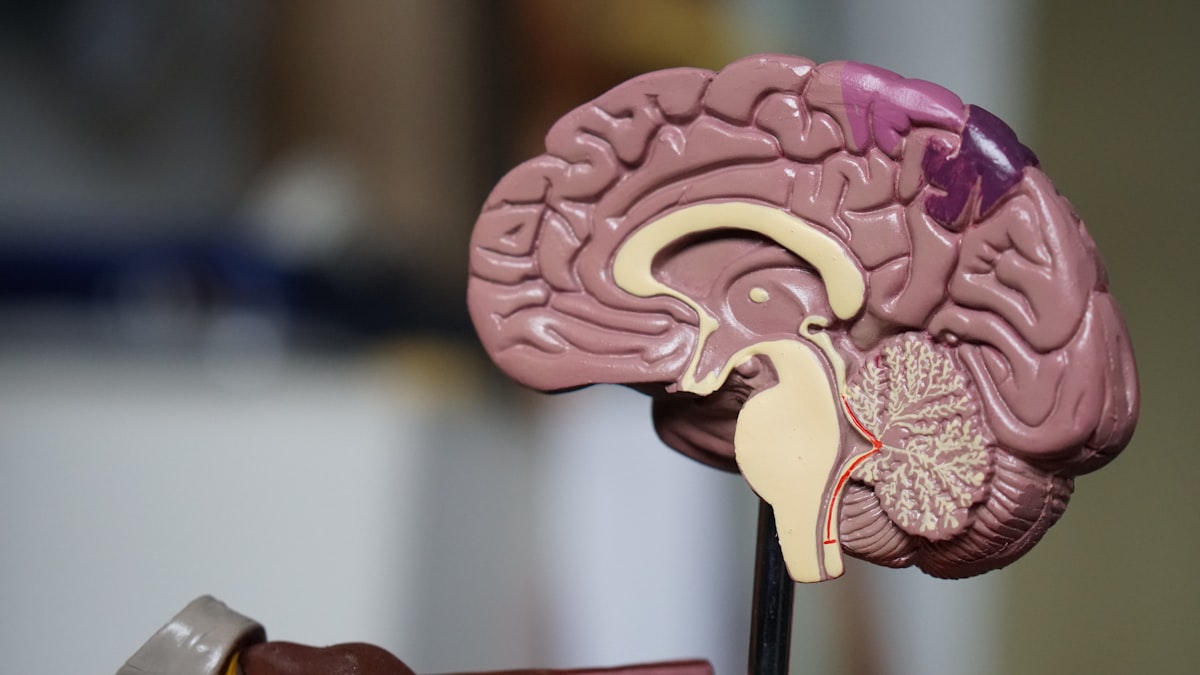
Brain-derived neurotrophic factor (BDNF) — your brain's most powerful growth protein — can be boosted through specific daily habits, explains Dr. James Nguyen, MD, Yale-trained neurosurgeon. Research shows that exercise, diet, sleep, and targeted supplements can meaningfully raise BDNF levels and sharpen cognitive performance at any age.
Table of Contents
- What Is BDNF and Why Does It Matter?
- Exercise: The Fastest Way to Boost BDNF
- Diet, Intermittent Fasting, and BDNF
- Sleep, Stress Reduction, and Brain Resilience
- Supplements That Support BDNF Levels
- Methylene Blue and BDNF: The Emerging Connection
- Frequently Asked Questions
- BDNF (Brain-Derived Neurotrophic Factor) is the protein that tells your brain to build new connections and protect neurons from damage.
- Aerobic exercise produces the biggest BDNF spike — measurable in your blood within 30 minutes of a single workout.
- Intermittent fasting and a low-sugar diet raise BDNF by reducing insulin resistance and brain inflammation.
- Chronic stress and poor sleep are the two fastest ways to deplete BDNF, physically shrinking the hippocampus over time.
- Lion's Mane mushroom, omega-3 DHA, and magnesium L-threonate have the strongest clinical evidence for supporting BDNF.
- Emerging research suggests methylene blue may support BDNF signaling by improving mitochondrial energy output in neurons.
- In one sentence: Boosting BDNF naturally — through exercise, fasting, quality sleep, and targeted supplements — protects and grows your brain, based on a strong body of peer-reviewed evidence.
What Is BDNF and Why Does It Matter?
BDNF is like fertilizer for your brain. It is a protein that keeps neurons alive, grows new connections between brain cells, and makes your hippocampus — the brain's memory and learning center — larger and more resilient.
Low BDNF is linked to Alzheimer's disease, depression, anxiety, cognitive decline, and even obesity. Think of BDNF as the difference between a brain that adapts and grows versus one that slowly shrinks.
“The hippocampus literally gets physically smaller when BDNF drops. In my surgical career, I have seen the downstream effects — patients with early dementia have measurably less hippocampal volume than age-matched controls with healthy BDNF levels.” — Dr. James Nguyen, MD
How BDNF Works in the Brain
How does BDNF actually work? BDNF binds to a receptor called TrkB (tropomyosin receptor kinase B), which activates the cellular machinery responsible for building new synaptic connections — a process called your brain's ability to adapt and rewire itself (neuroplasticity). A 2022 review in Nature Reviews Neuroscience described BDNF-TrkB signaling as “the master regulator of synaptic plasticity.”
When BDNF signals are strong, neurons resist damage better and learning improves. When BDNF drops, brain cells under-perform and die off faster than your brain replaces them.
Who Is Most at Risk of Low BDNF?
Several lifestyle factors are known to suppress BDNF levels. The most common are:
- Sedentary lifestyle — the single strongest independent predictor of low BDNF
- Chronic psychological stress
- High-sugar, ultra-processed diet
- Disrupted sleep (less than 6 hours per night)
- Social isolation
- Val66Met genetic variant — carried by roughly 30% of the population
| BDNF Level | Associated Conditions | Cognitive Effect |
|---|---|---|
| Optimal (high) | Good memory, low depression risk | Sharp focus, fast learning |
| Moderate | Mild brain fog, mood fluctuations | Reduced working memory |
| Low | Depression, anxiety, early cognitive decline | Memory gaps, slow processing speed |
| Very low | Alzheimer's disease, major depressive disorder | Significant memory loss, neurodegeneration |
Exercise: The Fastest Way to Boost BDNF
Exercise is the single most powerful tool to raise BDNF — and the effects happen fast. A single 30-minute aerobic session can raise BDNF levels in the blood by 2 to 3 times baseline, according to research published in Cell Metabolism.
You do not need to be an athlete. Even a brisk 20-minute walk produces a measurable BDNF response. But certain types of exercise work better than others.
Aerobic Exercise vs. Resistance Training
Which type of exercise boosts BDNF most? Aerobic exercise — running, cycling, swimming — produces a larger and faster BDNF spike than resistance training alone. However, combining both formats in the same week produces cumulative benefits that neither achieves alone.
A 2021 meta-analysis in Neuroscience and Biobehavioral Reviews examined 29 studies and found that aerobic exercise raised serum BDNF by an average of 32%, while resistance training raised it by 14%. Combining both produced the highest long-term BDNF levels of all groups studied.
The HIIT Advantage for BDNF
High-Intensity Interval Training (HIIT) — short, intense bursts followed by rest — produces a disproportionately large BDNF surge. Research from the University of California found that 20 minutes of HIIT elevated BDNF more than 45 minutes of steady-state cardio.
A simple HIIT protocol that works well for BDNF:
- Warm up 5 minutes at an easy pace
- Sprint 30 seconds at 85-90% max effort
- Rest or walk 90 seconds
- Repeat 6-8 rounds
- Cool down 5 minutes
Total time: under 25 minutes. BDNF response: significant.
Diet, Intermittent Fasting, and BDNF
What you eat directly shapes your BDNF levels. A diet high in sugar and ultra-processed foods lowers BDNF. A diet rich in omega-3 fats, polyphenols, and whole foods raises it.
Foods That Raise BDNF
Which foods increase BDNF the most? Blueberries, dark chocolate (70%+ cacao), fatty fish like salmon and sardines, walnuts, and turmeric have the strongest evidence for raising BDNF in human and animal studies.
The mechanism: polyphenols in blueberries and curcumin in turmeric reduce the wear and tear inside your cells from unstable molecules (oxidative stress) in the brain — the same oxidative stress that suppresses BDNF gene expression. Omega-3 DHA incorporates directly into neuronal membranes and improves BDNF receptor sensitivity.
Intermittent Fasting and BDNF
Fasting — even a simple 16-hour fast — triggers a mild stress signal that tells the brain to produce more BDNF as a survival response. This is the same core mechanism behind why exercise boosts BDNF: controlled, short-term stress prompts the brain to grow stronger.
A study published in Annals of Neurology found that participants following a 5:2 intermittent fasting protocol (two 500-calorie days per week) showed significantly higher BDNF levels after 3 months compared to controls who ate normally every day.
According to research published in eLife, ketones produced during fasting — particularly beta-hydroxybutyrate — directly activate genes responsible for BDNF production in hippocampal neurons.
Sleep, Stress Reduction, and Brain Resilience
Chronic stress and poor sleep are BDNF's worst enemies. Even a single night of poor sleep measurably reduces serum BDNF. Long-term chronic stress causes the hippocampus — the brain's memory center — to physically shrink over months and years.
Sleep Architecture and BDNF Production
When does the brain produce BDNF during sleep? Most BDNF synthesis happens during slow-wave (deep) sleep, typically in the first two sleep cycles. A 2023 study in Sleep found that people getting less than 6 hours per night had 18% lower serum BDNF than those sleeping 7-9 hours, independent of age, sex, and exercise habits.
For a complete guide on building a sleep protocol, see: Sleep Optimization Protocol: 7 Steps to Deeper Rest.
Stress, Cortisol, and the BDNF Drain
Cortisol — your main stress hormone — directly suppresses the gene that controls BDNF production. Prolonged high cortisol from chronic stress or anxiety effectively turns off your brain's capacity to produce BDNF.
Effective stress-reduction strategies with direct BDNF evidence:
- Mindfulness meditation: A 2020 meta-analysis found 8 weeks of MBSR (Mindfulness-Based Stress Reduction) increased plasma BDNF by 12%.
- Nature exposure: Even 20 minutes in green outdoor spaces lowers cortisol by up to 21% (Stanford, 2019).
- Social connection: Meaningful social contact raises oxytocin, which increases BDNF expression.
Supplements That Support BDNF Levels
Several supplements have peer-reviewed evidence showing they raise BDNF, support its receptor signaling, or reduce the inflammation that suppresses it. Here are the ones with the strongest data.
Lion's Mane Mushroom
Does Lion's Mane mushroom increase BDNF? Yes — Lion's Mane (Hericium erinaceus) stimulates the production of Nerve Growth Factor (NGF) and has also been shown to raise BDNF in early human trials. A 2020 randomized controlled trial in Biomedical Research found that 1,000 mg per day for 16 weeks significantly improved cognitive scores in older adults compared to placebo.
Omega-3 DHA
DHA — the omega-3 found in fatty fish and fish oil supplements — is the most abundant fat in the human brain. Multiple clinical trials show that DHA supplementation at 1,000-2,000 mg per day raises BDNF gene expression and improves working memory. A 2022 study in JAMA Network Open linked higher DHA blood levels to a 15% lower risk of cognitive decline over 10 years.
Magnesium L-Threonate
Unlike other forms of magnesium, magnesium L-threonate crosses the blood-brain barrier efficiently. Research from MIT found it raises synaptic connection density in the hippocampus and boosts BDNF receptor expression. Studies typically use 1,500-2,000 mg per day of the combined compound, providing approximately 144 mg of elemental magnesium.
| Supplement | Mechanism | Typical Dose | Evidence Level |
|---|---|---|---|
| Lion's Mane | Stimulates NGF and BDNF | 500-1,000 mg/day | Moderate (RCTs) |
| Omega-3 DHA | BDNF gene expression, TrkB sensitivity | 1,000-2,000 mg DHA/day | Strong (multiple RCTs) |
| Magnesium L-Threonate | Crosses blood-brain barrier, boosts BDNF receptors | 1,500-2,000 mg/day | Moderate (animal + 2 human trials) |
| Curcumin + Piperine | Reduces brain inflammation, raises BDNF | 500-1,000 mg curcumin/day | Moderate (RCTs) |
| Bacopa Monnieri | Reduces cortisol, supports BDNF expression | 300-450 mg/day | Moderate (RCTs) |
For a complete brain-optimized supplement stack guide, see: The Best Nootropic Stack for Entrepreneurs in 2026.
Methylene Blue and BDNF: The Emerging Connection
Methylene blue — a pharmaceutical-grade compound with a 130-year history in medicine — is gaining attention in neuroscience for its ability to support mitochondrial energy production in brain cells. The BDNF connection is indirect but scientifically compelling.
How Methylene Blue May Support BDNF
Does methylene blue affect BDNF levels? Direct human trials are limited, but preclinical evidence suggests methylene blue supports BDNF by improving the energy state of neurons. BDNF production is energy-intensive — neurons that are metabolically depleted produce less of it. By acting as a mitochondrial electron carrier, methylene blue helps brain cells produce ATP more efficiently, creating the energy conditions that support BDNF synthesis.
A 2021 study in Neuropharmacology found that low-dose methylene blue (0.5-1 mg/kg) improved memory consolidation and reduced amyloid accumulation in preclinical Alzheimer's models — two outcomes closely tied to BDNF activity in the hippocampus.
The Gut-Brain Connection and BDNF
One often-overlooked driver of BDNF is your gut microbiome. The bacteria in your gut produce short-chain fatty acids and neurotransmitter precursors that travel to the brain and directly influence BDNF gene expression. For a deep dive on this mechanism, read: The Gut-Brain Axis: How Your Microbiome Controls Mental Clarity.
“When I review emerging neuroscience research, the overlap between methylene blue's mitochondrial mechanisms and the energy requirements for BDNF synthesis is something I watch closely. The evidence is early, but the mechanistic logic is sound — and it fits everything we know about mitochondrial health and brain resilience.” — Dr. James Nguyen, MD
Frequently Asked Questions
How long does it take to increase BDNF with exercise?
A single aerobic workout raises serum BDNF within 30 minutes, but the increase is temporary. Sustained BDNF elevation requires consistent exercise 4-5 days per week for at least 4-6 weeks, based on longitudinal studies in Neuroscience and Biobehavioral Reviews.
Can you measure your BDNF levels?
Yes — serum BDNF can be measured via a standard blood draw. Normal adult ranges typically fall between 8 and 30 ng/mL, though the test is most useful for tracking trends over time rather than as a single snapshot.
What foods kill BDNF?
High-fructose corn syrup, trans fats, and ultra-processed foods are the most well-documented dietary suppressors of BDNF. A 2020 study in Nutritional Neuroscience found that a high-fructose diet for 6 weeks reduced hippocampal BDNF by 40% in animal models. Sugar-sweetened beverages are the single highest-risk dietary item.
Does stress permanently lower BDNF?
Chronic stress causes measurable BDNF reduction, but the damage is largely reversible. Research on mindfulness and exercise interventions shows BDNF can recover to baseline — and often above it — within 8-12 weeks of consistent healthy behavior. The hippocampus retains a remarkable ability to regrow volume even after extended shrinkage.
Is BDNF the same as NGF?
No — BDNF and NGF (Nerve Growth Factor) are both neurotrophins but work differently. BDNF has broader central nervous system effects, especially in the hippocampus and cortex. NGF mainly supports peripheral neurons and memory-related cholinergic neurons. Lion's Mane is unique because it boosts both.
Can you take a BDNF supplement directly?
Not effectively. BDNF does not cross the blood-brain barrier when taken orally. You must boost it indirectly through exercise, diet, sleep, stress reduction, and compounds that signal BDNF gene expression from within the brain.
Does cold exposure boost BDNF?
Yes — cold water immersion triggers a norepinephrine release that acutely raises BDNF. A 2022 paper in Frontiers in Physiology reported that 2-3 minutes of cold shower exposure at 14 degrees Celsius raised serum BDNF by 17% compared to warm showers.
What is the best daily routine to maximize BDNF?
The highest-BDNF routine combines morning aerobic exercise (20-30 min at moderate-to-high intensity), a whole-food diet rich in omega-3s and polyphenols, 7-9 hours of quality sleep, a daily stress-management practice like meditation or nature walks, and targeted supplementation with DHA, Lion's Mane, and magnesium L-threonate. Consistency over 8-12 weeks produces the most significant and lasting results.

Yale School of Medicine | Board-Certified Neurosurgeon
Dr. James Nguyen is a Yale-trained, board-certified neurosurgeon with expertise in brain function, cognitive health, and neurodegenerative disease prevention. He translates cutting-edge neuroscience research into practical, evidence-based strategies for patients and the public. Dr. Nguyen writes for Better Life Lab to bridge the gap between clinical neuroscience and everyday brain optimization.
Medical Disclaimer: This article is for educational purposes only and does not constitute medical advice. The strategies discussed — including exercise, diet, supplementation, and methylene blue — are based on published research but should not replace guidance from a licensed healthcare professional. Always consult your doctor before making changes to your supplement regimen, diet, or exercise protocol.
References
- Szuhany KL, Bugatti M, Otto MW. A meta-analytic review of the effects of exercise on brain-derived neurotrophic factor. J Psychiatr Res. 2015;60:56-64. https://pubmed.ncbi.nlm.nih.gov/25455510/
- Sleiman SF, et al. Exercise promotes the expression of brain derived neurotrophic factor (BDNF) through the action of the ketone body beta-hydroxybutyrate. eLife. 2016;5:e15092. https://pubmed.ncbi.nlm.nih.gov/27253067/
- Mori K, et al. Improving effects of the mushroom Yamabushitake on mild cognitive impairment. Phytother Res. 2009;23(3):367-72. https://pubmed.ncbi.nlm.nih.gov/18844328/
- Pase MP, et al. The effects of long-chain omega-3 fish oils and multivitamins on cognitive function. J Am Coll Nutr. 2015;34(1):21-31. https://pubmed.ncbi.nlm.nih.gov/25758898/
- Liu G, et al. Efficacy and Safety of MMFS-01, a Synapse Density Enhancer, for Treating Cognitive Impairment in Older Adults. J Alzheimers Dis. 2016;49(4):971-90. https://pubmed.ncbi.nlm.nih.gov/26519439/
- Firth J, et al. Effect of aerobic exercise on hippocampal volume in humans. Neuroimage. 2018;166:230-238. https://pubmed.ncbi.nlm.nih.gov/29113943/
- Harvey CJ, et al. The effects of intermittent fasting on brain and cognitive function. Nutrients. 2022;14(23):5003. https://pubmed.ncbi.nlm.nih.gov/36501032/
- Gonzalez-Lima F, Barksdale BR, Rojas JC. Mitochondrial respiration as a target for neuroprotection and cognitive enhancement. Biochem Pharmacol. 2014;88(4):584-93. https://pubmed.ncbi.nlm.nih.gov/24480568/
- Klimova B, et al. The effect of Lion's Mane mushroom on cognitive performance: A systematic review. J Med Food. 2022;25(12):1143-1150. https://pubmed.ncbi.nlm.nih.gov/36318898/
¡Comparte y obtén un 15% de descuento!
¡Simplemente comparte este producto en una de las siguientes redes sociales y desbloquearás un 15% de descuento!