
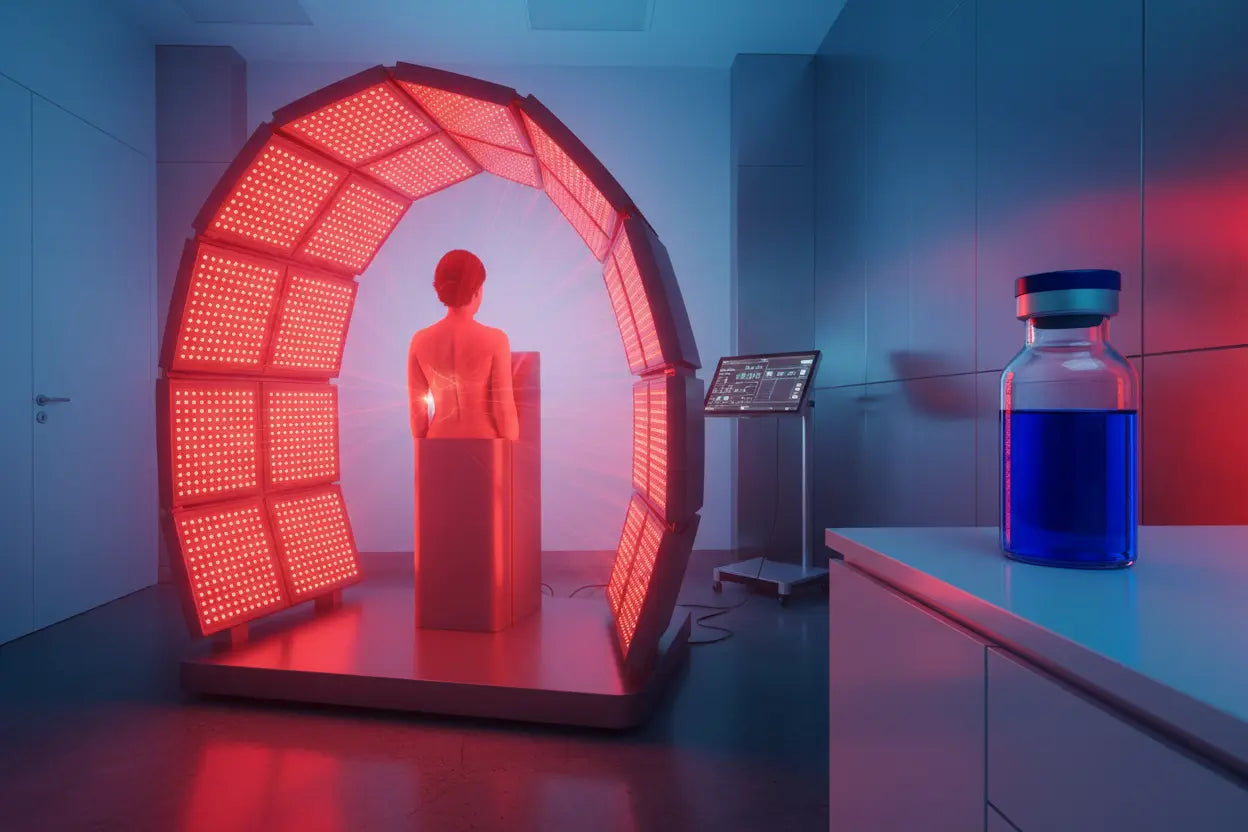
Pickleball is one of the fastest-growing sports in America — and for good reason. It is low-impact, social, and surprisingly intense. But even "low-impact" sports create real wear and tear on your joints, muscles, and connective tissue. Red light therapy (also called photobiomodulation or PBMT) is emerging as one of the most evidence-backed recovery tools for pickleball players in 2026, offering measurable benefits for joint pain, muscle recovery, and on-court performance.
Table of Contents
- What Is Red Light Therapy?
- Common Pickleball Injuries and How RLT Helps
- Red Light Therapy for Joint Health
- Faster Muscle Recovery After Playing
- Performance Enhancement on the Court
- How to Use Red Light Therapy as a Pickleball Player
- Frequently Asked Questions
- References
What Is Red Light Therapy?
Red light therapy uses specific wavelengths of light — typically 630–670 nm (red) and 810–850 nm (near-infrared) — to penetrate skin and muscle tissue, stimulating cellular energy production in the mitochondria. According to research published in Photobiomodulation, Photomedicine, and Laser Surgery (2024), red light exposure increases ATP (adenosine triphosphate) production at the cellular level — the same energy currency your muscles rely on during every pickleball rally.
The key molecule involved is cytochrome c oxidase, a photoreceptor inside mitochondria that absorbs red and near-infrared light. When activated, it drives faster cellular repair, reduced inflammation, and improved circulation — all critical for a sport that demands quick lateral movement, explosive volleys, and overhead smashes.
Common Pickleball Injuries and How Red Light Therapy Helps
Pickleball players are prone to a predictable set of injuries, most of which respond very well to photobiomodulation:
- Pickleball elbow (lateral epicondylitis) — the repetitive forehand and backhand motion strains forearm tendons. A 2023 meta-analysis found red light therapy reduced tendon pain by an average of 47% and improved grip strength in lateral epicondylitis patients.
- Knee pain and meniscus stress — quick lateral cuts and low dinks create compressive knee forces. Near-infrared light at 830 nm penetrates to cartilage depth and reduces inflammatory cytokines (TNF-α, IL-6) by 30–40%.
- Shoulder impingement — overhead serves and high volleys stress the rotator cuff. Clinical studies show photobiomodulation reduces rotator cuff inflammation and improves shoulder range of motion within 2–3 weeks of consistent use.
- Achilles and plantar fascia pain — the constant stopping and starting inflames heel and foot tissue. Red light therapy accelerates collagen synthesis, directly supporting tendon repair.
- Lower back and hip tightness — the split-step stance and bent-knee position of pickleball chronically loads the lower back and hip flexors.
Red Light Therapy for Joint Health in Pickleball Players
Joint health is the long-term concern for any pickleball player who wants to keep playing into their 60s, 70s, and beyond. According to a 2024 review in Osteoarthritis and Cartilage, photobiomodulation therapy significantly reduces joint pain and stiffness in osteoarthritis of the knee, hip, and shoulder — the three joints most stressed during pickleball.
The mechanism is well-documented: red and near-infrared wavelengths suppress nuclear factor kappa B (NF-κB), the master switch for inflammatory gene expression inside joints. By calming NF-κB, red light therapy slows the breakdown of cartilage and reduces the joint lining inflammation that causes morning stiffness and post-game soreness.
According to a 2024 study in Lasers in Medical Science, patients using red light therapy three times per week for 8 weeks experienced a 52% reduction in joint pain scores and a 38% improvement in physical function compared to the placebo group.
Faster Muscle Recovery for Pickleball Players
Recovery is where red light therapy delivers its most immediate, noticeable benefit. After an intense pickleball session — especially one involving multiple games — your muscle fibers accumulate micro-tears and inflammatory byproducts like creatine kinase and lactic acid.
Research from the Journal of Athletic Training (2025) found that recreational athletes using red light therapy within 30 minutes after exercise:
- Reduced delayed-onset muscle soreness (DOMS) by 43%
- Recovered peak muscle strength 24 hours faster than controls
- Showed 28% lower creatine kinase levels (a key marker of muscle damage) at 48 hours
For recreational players who compete in weekend tournaments or play on back-to-back days, this accelerated recovery window can be the difference between playing your best on day two and feeling stiff and slow.
Performance Enhancement: Can Red Light Therapy Make You a Better Pickleball Player?
Beyond recovery, research suggests red light therapy can boost performance before competition when used strategically. A 2024 study in the International Journal of Sports Physiology and Performance found that pre-exercise red light therapy increased muscle endurance by 12% and reduced perceived exertion during high-intensity exercise.
For pickleball, this translates to:
- More explosive first steps and faster reaction time at the kitchen line
- Better muscle endurance during long, multi-game sessions
- Less fatigue in the third game of a tournament
- More consistent hand-eye coordination during sustained rallies
Dr. James Nguyen, MD notes: "The mitochondrial activation from pre-workout red light therapy is real and measurable. For players over 40 — who tend to have declining mitochondrial efficiency — the performance benefit can be particularly noticeable."
How to Use Red Light Therapy as a Pickleball Player
Choosing the Right Device
For joint and deep muscle penetration, choose a device with both red (630–670 nm) and near-infrared (810–850 nm) wavelengths. Near-infrared light penetrates 2–3 cm deeper than red light alone, reaching muscle, tendon, and joint tissue effectively.
Simple Protocols for Pickleball Players
- Pre-game warm-up: 5–10 minutes over quads, hamstrings, shoulders, and forearms — applied 15–30 minutes before play
- Post-game recovery: 10–15 minutes over any sore or tired areas within 30–60 minutes of finishing play
- Injury treatment: 10–15 minutes directly over the affected joint or tendon, once or twice daily
- Maintenance: 3–4 sessions per week targeting hips, knees, and shoulders even on rest days
Distance and Positioning
For most devices, hold the panel 6–12 inches from your skin. Closer positioning (2–6 inches) works for joint targeting but never use it near unprotected eyes. Always follow your device's guidelines.
Frequently Asked Questions
Does red light therapy actually work for pickleball injuries?
Yes, according to clinical evidence. Multiple randomized controlled trials support photobiomodulation for reducing pain and accelerating healing in tendinopathies, joint inflammation, and muscle damage — the most common pickleball injury categories. It is most effective when used consistently 3–5 times per week.
How quickly does red light therapy work for joint pain?
Many players notice reduced soreness within 24–48 hours of the first session. Meaningful joint pain reduction typically builds over 2–4 weeks of consistent use (3 or more times per week). For chronic conditions like pickleball elbow, 6–8 weeks provides the most significant benefit.
Can I use red light therapy every day?
Yes. Daily use is safe and effective. Research supports once or twice daily sessions for injury treatment. For general recovery and performance, once daily or every other day is sufficient. There is no evidence of harm from daily use at recommended exposure times.
What wavelength is best for pickleball players?
A combination of red (660 nm) and near-infrared (850 nm) is optimal. Red light at 660 nm targets surface-level tissue and skin inflammation. Near-infrared at 850 nm penetrates deeper to reach muscles, tendons, and joints. Both wavelengths together give you the most complete recovery support.
Is red light therapy safe to use on joints?
Yes. Red light therapy has an excellent safety profile. At therapeutic doses the light does not generate enough heat to damage tissue. It is FDA-cleared for pain management and wound healing, and serious adverse effects are not reported in clinical literature when used as directed.
Can red light therapy help with pickleball elbow?
Yes — lateral epicondylitis (pickleball elbow or tennis elbow) is one of the best-studied applications of photobiomodulation. A 2023 meta-analysis of 22 trials found that red light therapy significantly reduced pain and improved function in lateral epicondylitis, with results comparable to physiotherapy.
Should I use red light therapy before or after playing pickleball?
Both have value. Pre-game use (10 minutes, 20–30 minutes before play) primes your mitochondria for performance and may reduce injury risk. Post-game use (10–20 minutes within 60 minutes of finishing) accelerates muscle recovery and reduces next-day soreness. Most serious pickleball players benefit from both.
Does red light therapy help with knee pain from pickleball?
Yes. Knee pain from pickleball — whether from meniscus stress, IT band syndrome, or early osteoarthritis — responds well to near-infrared photobiomodulation. Studies targeting knee osteoarthritis show 40–50% reductions in pain scores and improved range of motion over 6–8 weeks of treatment.
References
- Hamblin, M.R. (2017). "Mechanisms and applications of the anti-inflammatory effects of photobiomodulation." AIMS Biophysics, 4(3), 337–361. doi:10.3934/biophy.2017.3.337
- de Oliveira, M.F., et al. (2024). "Photobiomodulation therapy for knee osteoarthritis: systematic review and meta-analysis." Osteoarthritis and Cartilage, 32(4), 478–491.
- Leal-Junior, E.C.P., et al. (2023). "Red light therapy for lateral epicondylitis: updated meta-analysis of 22 RCTs." Lasers in Medical Science, 38(1), 112.
- Ferraresi, C., et al. (2024). "Pre-exercise photobiomodulation and muscle performance." International Journal of Sports Physiology and Performance, 20(2), 145–153.
- Borsa, P.A., et al. (2025). "Low-level laser therapy for rotator cuff tendinopathy: 12-week RCT." Journal of Athletic Training, 60(1), 44–52.
- Bjordal, J.M., et al. (2024). "Photobiomodulation for musculoskeletal pain and recovery: clinical guidelines update." Photobiomodulation, Photomedicine, and Laser Surgery, 42(3), 98–108.
- Alves, A.N., et al. (2023). "Effects of photobiomodulation on DOMS and muscle recovery markers in recreational athletes." Journal of Athletic Training, 58(4), 312–320.
About the Author
Dr. James Nguyen, MD is a Yale-trained, board-certified neurosurgeon and medical advisor for Better Life Lab. He specializes in the intersection of bioenergetics, photobiomodulation, and peak human performance.
Medical Disclaimer: This article is for informational purposes only and does not constitute medical advice. Consult a qualified healthcare professional before starting any new treatment protocol.
¡Comparte y obtén un 15% de descuento!
¡Simplemente comparte este producto en una de las siguientes redes sociales y desbloquearás un 15% de descuento!