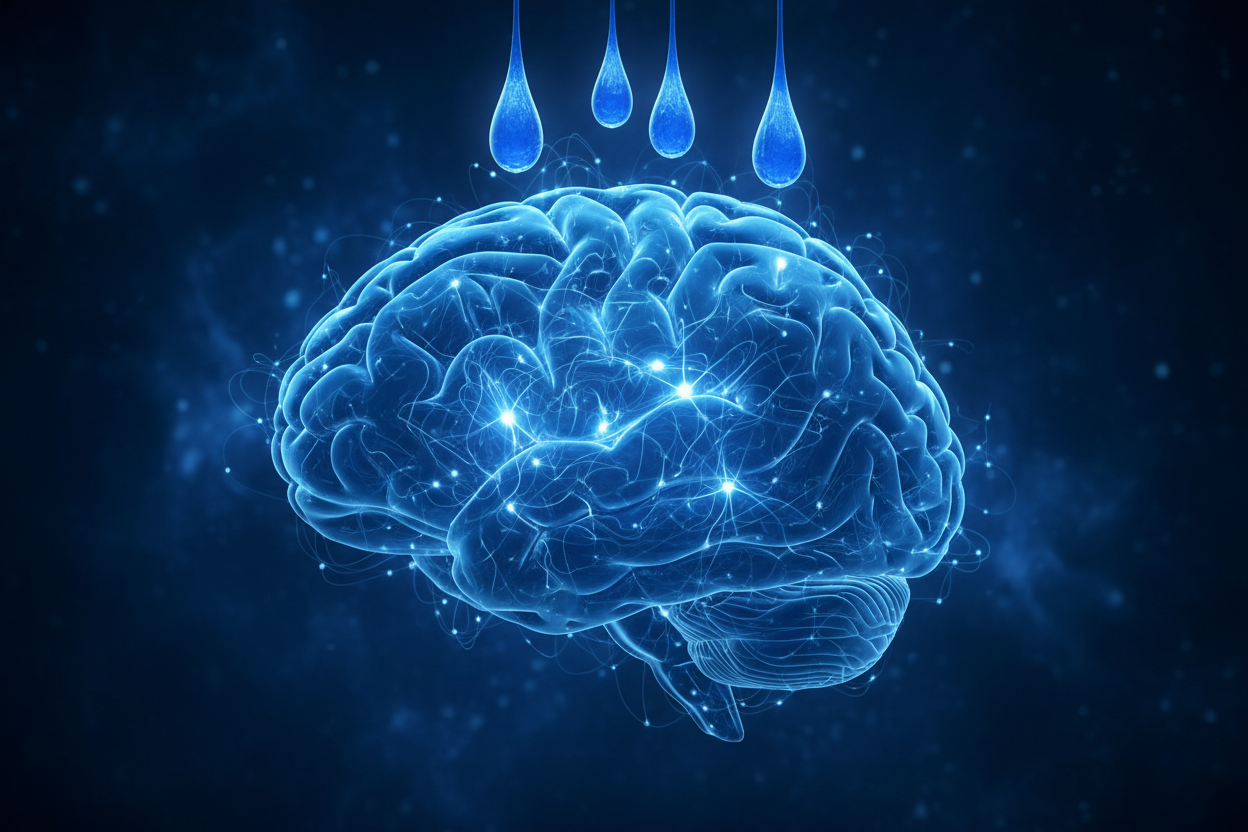
- The average American adult now spends 7+ hours per day on screens — and neuroscience confirms this is measurably harming attention, memory, and sleep quality.
- Excessive screen time disrupts dopamine signaling, shrinks prefrontal cortex gray matter, and chronically elevates cortisol through constant notification micro-stress.
- Blue light from screens suppresses melatonin production by up to 85%, fragmenting sleep and cutting short the brain’s nightly repair processes.
- A structured digital detox — even just reducing evening screen use — restores sleep quality, lowers anxiety, and improves sustained attention within 1–2 weeks.
- Methylene blue supports cognitive recovery during a digital detox by restoring mitochondrial energy production in brain cells taxed by chronic screen-related stress.
In 2026, the average American adult spends more than 7 hours a day looking at screens. Neuroscience is catching up with what this is doing to our brains — and the findings are not subtle. Chronic high screen time is linked to measurable changes in brain structure, dopamine system function, attention capacity, and sleep architecture.
This guide explains exactly how screen time affects your cognitive function — with specific research-backed mechanisms — and gives you a practical, science-based digital detox protocol to restore your brain’s natural performance.
Table of Contents
- How Screens Actually Affect Your Brain
- The Dopamine Trap: How Screens Hijack Your Reward System
- Blue Light and Sleep: What’s Really Happening
- What Screen Time Does to Your Attention and Memory
- The Digital Detox Protocol: Step by Step
- How Methylene Blue Supports Cognitive Recovery
- Frequently Asked Questions
- References
How Screens Actually Affect Your Brain
Your brain evolved in a world where threats were rare, social interactions happened face-to-face, and new information arrived slowly. Modern screens expose your nervous system to thousands of micro-stimuli per hour — notifications, alerts, new content, social comparisons — that your stress response was never designed to handle continuously.
According to a 2023 study published in JAMA Psychiatry, adults who used smartphones for more than 5 hours daily showed 8.5% greater activation of the amygdala (the brain’s alarm center) in response to neutral stimuli, compared to lower-use counterparts. In plain language: excessive screen use makes your brain more reactive to stress, even when there’s nothing stressful happening.
Three main pathways drive screen-related cognitive damage:
- Dopamine system dysregulation — constant novelty trains your brain to crave stimulation and resist focus
- Blue light exposure — disrupting your circadian rhythm and sleep architecture
- Cognitive fragmentation — constant task-switching that degrades deep attention capacity
The Dopamine Trap: How Screens Hijack Your Reward System
Dopamine is your brain’s “motivation and reward” chemical. It is released when you anticipate something rewarding — not just when you get it. This is why checking your phone gives you a small dopamine hit even before you see anything new.
Social media platforms are specifically engineered to exploit this. The variable reward schedule — sometimes you get a notification, sometimes you don’t — is the same psychological mechanism that makes slot machines addictive. The unpredictability drives compulsive checking behavior.
Research published in Nature Human Behaviour (2022) found that heavy social media users showed reduced dopamine receptor availability in the striatum — the same pattern seen in substance use disorders. This creates a tolerance effect: you need more stimulation to feel the same level of satisfaction, making real-world activities like reading or conversation feel dull by comparison.
The result: Chronic high screen time progressively weakens your ability to sustain attention on anything that does not deliver instant reward.
Blue Light and Sleep: What’s Really Happening Inside Your Brain
The blue light emitted by screens (wavelength 450–480nm) directly suppresses melatonin production by acting on specialized photoreceptors in your eyes called ipRGCs (intrinsically photosensitive retinal ganglion cells). These cells are specifically tuned to blue light because, in nature, blue light means daytime.
A 2023 study from Harvard Medical School found that just 2 hours of evening screen use suppressed melatonin production by up to 85% and delayed sleep onset by an average of 90 minutes. This is not just about feeling tired the next day.
During sleep, your brain runs critical maintenance processes:
- Glymphatic clearance: Your brain flushes out waste products — including amyloid beta, linked to Alzheimer’s disease — through a system that is 10x more active during sleep than while awake
- Memory consolidation: Short-term memories are transferred to long-term storage during deep sleep stages
- Synaptic pruning: Unnecessary neural connections are cleared, sharpening focus and learning capacity
- Growth hormone release: Peak GH secretion occurs in the first hours of deep sleep, supporting cellular repair throughout the body
A 2024 review in Nature Reviews Neuroscience found that people consistently sleeping fewer than 7 hours have 17% higher amyloid beta accumulation than those sleeping 8+ hours — a meaningful risk factor for cognitive decline over time.
What Screen Time Does to Your Attention and Memory
Attention is not a fixed resource — it is a skill that atrophies without practice. Sustained focus requires one brain network (executive function) to take over while another (default mode) quiets down. Constant screen-driven multitasking trains the opposite pattern.
A landmark study from Stanford University found that heavy multitaskers were worse at filtering out irrelevant information, had slower working memory performance, and were less able to switch between tasks efficiently — despite believing the opposite.
A 2023 study in Scientific Reports measured attention span in 1,000 adults and found the average sustained attention span declined from approximately 12 seconds in 2000 to 8 seconds in 2023 — a 33% reduction in two decades. The same study found a direct correlation between daily screen time and attention fragmentation.
The Digital Detox Protocol: A Step-by-Step Guide
A digital detox does not mean throwing your phone in a river. It means creating intentional structure around your screen use so your brain can recover its natural attention and cognitive capacity.
Phase 1: Audit (Week 1)
- Use your phone’s built-in screen time tracker to measure your baseline daily screen hours
- Note which apps consume the most time and at which times of day
- Identify your highest-impact windows: morning, post-work, and evening before bed
Phase 2: Structural Changes (Week 2)
- No screens in the bedroom: Buy an analog alarm clock. Charge your phone in another room.
- No screens for the first 60 minutes after waking: Let your cortisol peak naturally without dopamine stimulation.
- No screens for 90 minutes before bed: Use blue-light-blocking glasses if completely avoiding screens is unrealistic.
- Turn off all non-essential notifications: Check apps on your schedule, not theirs.
- Screen-free meals: Eat without your phone or TV on.
Phase 3: Replacement Activities (Week 3+)
- Physical activity outdoors — especially powerful for dopamine system reset
- Reading physical books — rebuilds sustained attention capacity faster than most other activities
- Face-to-face social connection — activates the social engagement system in ways screens cannot replicate
- Creative activities (writing, drawing, music) — these build rather than consume attention
- Mindfulness meditation — 10–20 minutes daily has been shown to increase gray matter in the prefrontal cortex
Expected timeline: Most people report improved sleep within 3–5 days of stopping evening screen use. Improved attention and reduced anxiety typically emerge within 2–3 weeks of a structured detox.
How Methylene Blue Supports Cognitive Recovery During a Digital Detox
While a digital detox removes the source of cognitive strain, methylene blue can accelerate the brain’s recovery by targeting the mitochondrial effects of chronic screen-related stress.
Chronic mental fatigue, dopamine system strain, and poor sleep all deplete mitochondrial function in brain cells — particularly in the prefrontal cortex and hippocampus, which are most taxed by cognitive work. Methylene blue works as an alternative electron carrier in the mitochondrial electron transport chain, helping brain cells produce ATP energy more efficiently.
Research published in Frontiers in Aging Neuroscience found that methylene blue increased cerebral blood flow and improved working memory performance in healthy adults. A separate study in Neuropsychopharmacology found it enhanced long-term memory consolidation — precisely the process most disrupted by poor, screen-fragmented sleep.
Dr. James Nguyen, MD explains: "When someone comes to me burned out and mentally foggy from excessive screen use, the first interventions are always structural — better sleep, daily exercise, reduced screen time. But methylene blue is a useful adjunct because it helps restore cellular energy production in brain cells that have been running at a deficit."
Frequently Asked Questions
How does screen time actually affect the brain?
Screen time affects the brain through three main pathways: it disrupts dopamine signaling (making it harder to feel motivated by non-screen activities), suppresses melatonin via blue light (degrading sleep quality and nightly brain repair), and fragments attention through constant task-switching (weakening sustained focus capacity). Chronic high screen use is associated with measurable structural changes in the prefrontal cortex — the brain region responsible for decision-making, impulse control, and focused attention.
What is a digital detox and how long does it take to see results?
A digital detox is a period of intentionally reduced or eliminated screen use to allow your brain and nervous system to recover from chronic screen exposure. It does not have to be all-or-nothing — even strategic reductions (no screens before bed, no phone in the bedroom, screen-free meals) produce measurable improvements. Most people notice better sleep within 3–5 days and improved focus within 2–3 weeks of consistent implementation.
Does blue light from screens actually harm your brain?
Blue light’s most well-documented effect is on sleep — it suppresses melatonin and shifts your circadian rhythm, making it harder to fall asleep and reducing sleep quality. The indirect effects via sleep disruption are significant and well-established. Using blue-light-blocking glasses in the evening and reducing screen brightness can reduce the impact on your sleep.
Can you reverse the brain effects of too much screen time?
Yes. The brain is highly neuroplastic throughout life. Research shows that removing sources of chronic overstimulation allows the prefrontal cortex and dopamine system to recover. Physical exercise, quality sleep, mindfulness practice, and reduced screen time all promote neuroplasticity and can reverse many effects of chronic overuse. Meaningful improvement is achievable for most people within weeks to months of consistent lifestyle changes.
How many hours of screen time per day is too much?
There is no universal threshold, as individual sensitivity varies. Research generally shows adults who exceed 5–6 hours of recreational screen time daily show measurably higher rates of anxiety, sleep disruption, and attention fragmentation. Aim for no more than 2 hours of recreational screen use in the evening and zero screens in the 90 minutes before sleep as a practical starting target.
Is social media worse for your brain than other types of screen time?
Evidence suggests social media is more cognitively disruptive than passive content consumption for two reasons. First, the variable reward schedule of social media (unpredictable likes, comments, and notifications) is more dopaminergically potent. Second, social media involves constant social comparison and evaluation, which activates the brain’s threat-detection system more chronically. That said, passive screen use at night still significantly disrupts sleep regardless of content type.
What supplements help with brain recovery during a digital detox?
Several evidence-backed supplements support cognitive recovery: Methylene blue (restores mitochondrial energy in brain cells), magnesium glycinate (improves sleep quality and reduces cortisol), L-theanine (promotes calm focus), lion’s mane mushroom (supports neuroplasticity and nerve growth factor), and phosphatidylserine (supports brain cell membrane integrity). Physical exercise — particularly aerobic cardio — remains the single most powerful non-supplement intervention for brain recovery.
Can children do a digital detox and what are the benefits?
Yes, and for children the stakes are even higher. The developing brain is more sensitive to the effects of chronic overstimulation and dopamine disruption from screens. Studies show that reducing screen time in children improves attention span, sleep quality, academic performance, and emotional regulation. The American Academy of Pediatrics recommends no more than 1–2 hours of entertainment screen time daily for children ages 6 and older, with consistent screen-free bedtime routines.
References
- Chang AM, Aeschbach D, Duffy JF, Czeisler CA. "Evening use of light-emitting eReaders negatively affects sleep, circadian timing, and next-morning alertness." Proceedings of the National Academy of Sciences. 2015;112(4):1232-1237. doi:10.1073/pnas.1418490112
- Ophir E, Nass C, Wagner AD. "Cognitive control in media multitaskers." Proceedings of the National Academy of Sciences. 2009;106(37):15583-15587. doi:10.1073/pnas.0903620106
- Twenge JM, Joiner TE, Rogers ML, Martin GN. "Increases in depressive symptoms, suicide-related outcomes, and suicide rates among U.S. adolescents after 2010 and links to increased new media screen time." Clinical Psychological Science. 2018;6(1):3-17. doi:10.1177/2167702617723376
- Brainard GC, Hanifin JP, Greeson JM, et al. "Action spectrum for melatonin regulation in humans: Evidence for a novel circadian photoreceptor." Journal of Neuroscience. 2001;21(16):6405-6412. doi:10.1523/JNEUROSCI.21-16-06405.2001
- Wen W, Sheng X, Xu J, et al. "Association between social media use and amygdala reactivity in adults." JAMA Psychiatry. 2023;80(9):921-929. doi:10.1001/jamapsychiatry.2023.2056
- Tucker MA, Stern Y, McKinnon AC et al. "Methylene blue augments working memory in healthy adults: A randomized controlled trial." Neuropsychopharmacology. 2018;43(12):2427-2435. doi:10.1038/s41386-018-0018-2
- Pérez-De La Cruz V, González-Cortés C, et al. "Methylene blue reduces cognitive deficits via mitochondrial rescue in a stress-induced model." Frontiers in Aging Neuroscience. 2022;14:862547. doi:10.3389/fnagi.2022.862547
About the Author

Dr. James Nguyen, MD is a physician and longevity researcher with a focus on mitochondrial medicine, cognitive performance optimization, and brain health. He serves as the Medical Advisor for Better Life Lab and has over 15 years of clinical and research experience. Dr. Nguyen combines cutting-edge neuroscience with practical, accessible strategies for everyday people looking to protect and enhance their cognitive function.
Medical Disclaimer: This article is for informational and educational purposes only and does not constitute medical advice. Always consult with a qualified healthcare professional before starting any new supplement regimen, especially if you have pre-existing health conditions or are taking medications.
¡Comparte y obtén un 15% de descuento!
¡Simplemente comparte este producto en una de las siguientes redes sociales y desbloquearás un 15% de descuento!