
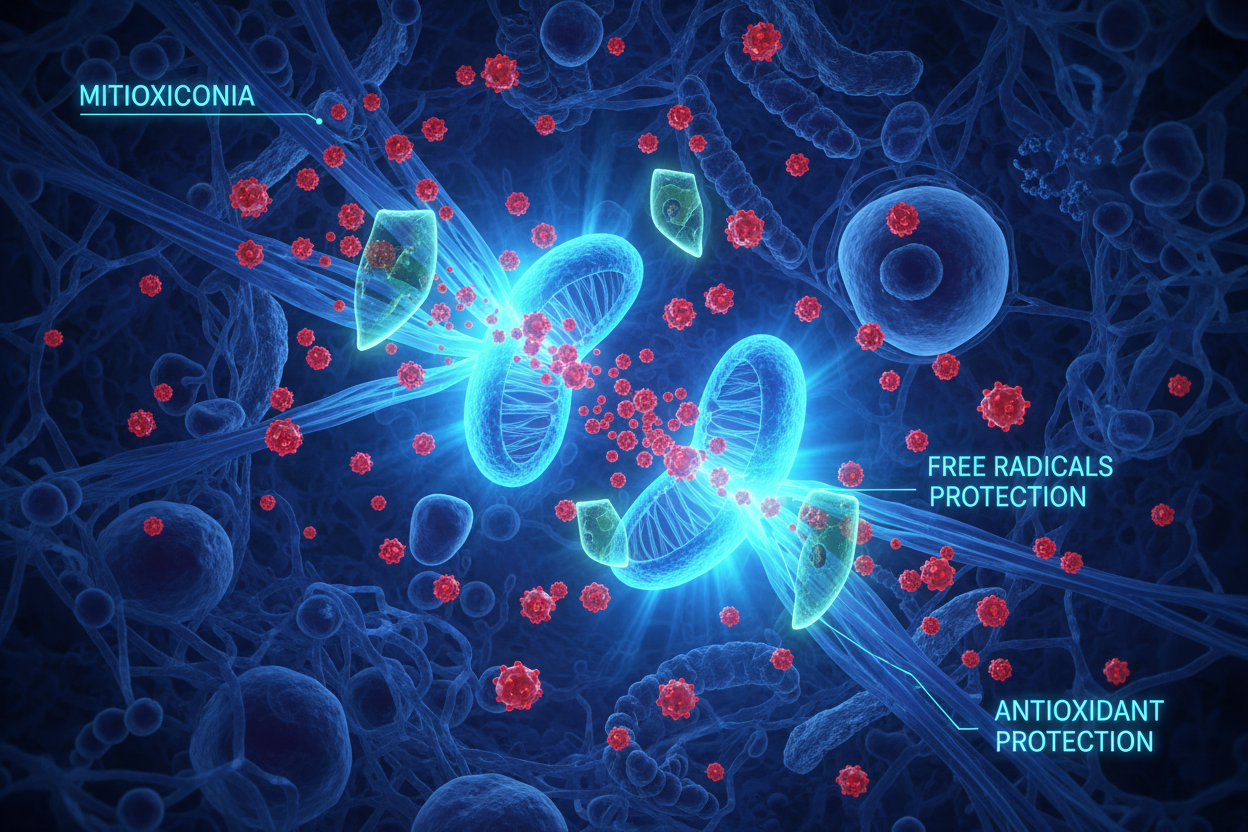
- Creatine is an energy molecule — it refills your cells' power supply quickly.
- Your brain uses a lot of creatine, especially during mental effort.
- Research shows creatine may improve memory, mental clarity, and mood.
- It's especially helpful when you're sleep-deprived, stressed, or aging.
- 3–5 grams per day is a safe, well-studied dose — no loading phase required.
Table of Contents
- What Is Creatine?
- How It Works: The Battery Analogy
- Creatine and the Brain
- What the Research Actually Shows
- Who Benefits Most?
- How to Take It
- Frequently Asked Questions
What Is Creatine?
Creatine is a naturally occurring molecule your body makes from amino acids. You also get small amounts from red meat and fish.
For decades, it's been the most popular sports supplement in the world. Gym-goers use it to lift heavier and recover faster. But that's only half the story.
Your brain uses creatine too — and most people walking around are mildly creatine-deficient in the brain without knowing it.
How It Works: The Battery Analogy
Think of ATP as your cell's battery charge. Everything your cells do — move a muscle, fire a neuron, build a protein — requires ATP.
When ATP gets used up, it becomes ADP (a "dead battery"). Creatine's job is to quickly recharge that dead battery back into ATP. It donates a phosphate group to ADP, regenerating ATP fast.
This matters a lot in situations where your energy demand spikes suddenly — like a heavy lift, a sprint, or an intense focus session.
Without enough creatine, you run out of juice faster. You fatigue. You lose focus. Your output drops.
Creatine and the Brain
Your brain is an energy hog. It represents about 2% of your body weight but uses 20% of your total energy.
During intense thinking, decision-making, or emotional stress, your brain's energy demands spike — just like muscles during exercise. And just like muscles, the brain relies on creatine to refuel quickly.
Research has found that:
- Brain creatine levels are measurably lower in people with depression and cognitive decline
- Vegetarians and vegans (who get no dietary creatine) show the biggest cognitive improvements from supplementation
- Brain creatine depletes faster under sleep deprivation and psychological stress
- Supplementing creatine raises brain creatine levels by 5–15% in most people
What the Research Actually Shows
The brain benefits of creatine are more robust than most people realize.
Memory and Learning
A 2003 study published in Psychopharmacology found that people who supplemented with creatine scored significantly better on tests of working memory and fluid intelligence. The effects were strongest in tasks requiring rapid mental effort.
Mood and Depression
Several studies have explored creatine for depression. A 2012 pilot study found that adding creatine to antidepressant therapy led to faster and greater improvement in symptoms, particularly in women. Researchers believe the energy-restoration mechanism plays a key role — depression correlates with brain energy deficits.
Sleep Deprivation
One of the most striking findings: creatine largely offsets cognitive decline from sleep deprivation. A study from the University of Sydney found that sleep-deprived subjects who took creatine performed as well on cognitive tasks as rested controls. If you've ever had a rough night, this is worth knowing.
Aging Brain
Brain creatine naturally declines with age. Studies in older adults show supplementation improves working memory, reaction time, and processing speed. Some researchers are now studying it as a preventive tool for age-related cognitive decline.
Who Benefits Most?
You'll likely notice the biggest difference if you:
- Are a vegetarian or vegan (no dietary creatine)
- Are chronically sleep-deprived or under high stress
- Are over 50 and noticing mental slowdown
- Do a lot of cognitively demanding work (studying, long meetings, complex problem-solving)
- Are physically active and want both gym and brain benefits
Meat eaters who sleep well and have low stress will see smaller but still real effects.
How to Take It
Creatine monohydrate is the most studied form. It's cheap, effective, and backed by decades of safety data.
- Dose: 3–5 grams per day
- Timing: It doesn't matter much — take it consistently at the same time each day
- Loading phase: Not necessary. It just reaches saturation faster. Slow loading over 4 weeks gets you to the same place.
- With food: Taking it with carbohydrates may improve uptake slightly
- Water: Stay well hydrated — creatine draws water into cells
Side effects are minimal at standard doses. Some people experience mild bloating in the first week. Long-term safety data is excellent — creatine monohydrate has been studied continuously for over 30 years.
Pairing creatine with mitochondria-focused supplements like methylene blue can provide complementary support — creatine refuels ATP rapidly, while methylene blue helps the mitochondria generate ATP more efficiently in the first place. Read more about methylene blue and brain energy here.
Frequently Asked Questions
Does creatine really work for the brain, not just muscles?
Yes. The brain uses creatine for rapid ATP regeneration just like muscles do. Multiple studies show measurable improvements in memory, processing speed, and mood — especially under stress or sleep deprivation.
Will creatine make me gain weight?
Likely a small amount of water weight at first (1–2 kg), because creatine draws water into muscle cells. This is not fat. For brain-focused use, this effect is minimal.
Is creatine safe to take long-term?
Yes. Creatine monohydrate is one of the most studied sports supplements ever. No serious adverse effects have been found in healthy people at standard doses over years of use.
Can I take creatine without working out?
Absolutely. The brain benefits don't require exercise. Many people take it purely for cognitive support.
How long until I notice a difference?
Brain saturation typically takes 2–4 weeks at 3–5 g/day. Some people notice improvements in focus and energy within the first week, especially if they were previously deficient.
What's the best form of creatine?
Creatine monohydrate. It's the cheapest, most studied form. Fancy versions (creatine HCl, buffered creatine) cost more but don't show meaningfully better results in head-to-head trials.
Related Articles
- Methylene Blue for Brain Anti-Aging
- Methylene Blue + Red Light Therapy: Mitochondrial Powerhouses
- How to Read a Methylene Blue COA
About the Author

Dr. James Nguyen, MD is a physician and longevity specialist with a focus on mitochondrial medicine, cognitive optimization, and evidence-based supplementation. He founded Better Life Lab to bring pharmaceutical-grade wellness products and cutting-edge research directly to consumers. Dr. Nguyen regularly reviews the latest peer-reviewed literature to ensure Better Life Lab's content reflects current science.
Medical Disclaimer: This article is for informational and educational purposes only and does not constitute medical advice. Always consult with a qualified healthcare professional before starting any new supplement regimen, especially if you have pre-existing health conditions or are taking medications.
¡Comparte y obtén un 15% de descuento!
¡Simplemente comparte este producto en una de las siguientes redes sociales y desbloquearás un 15% de descuento!