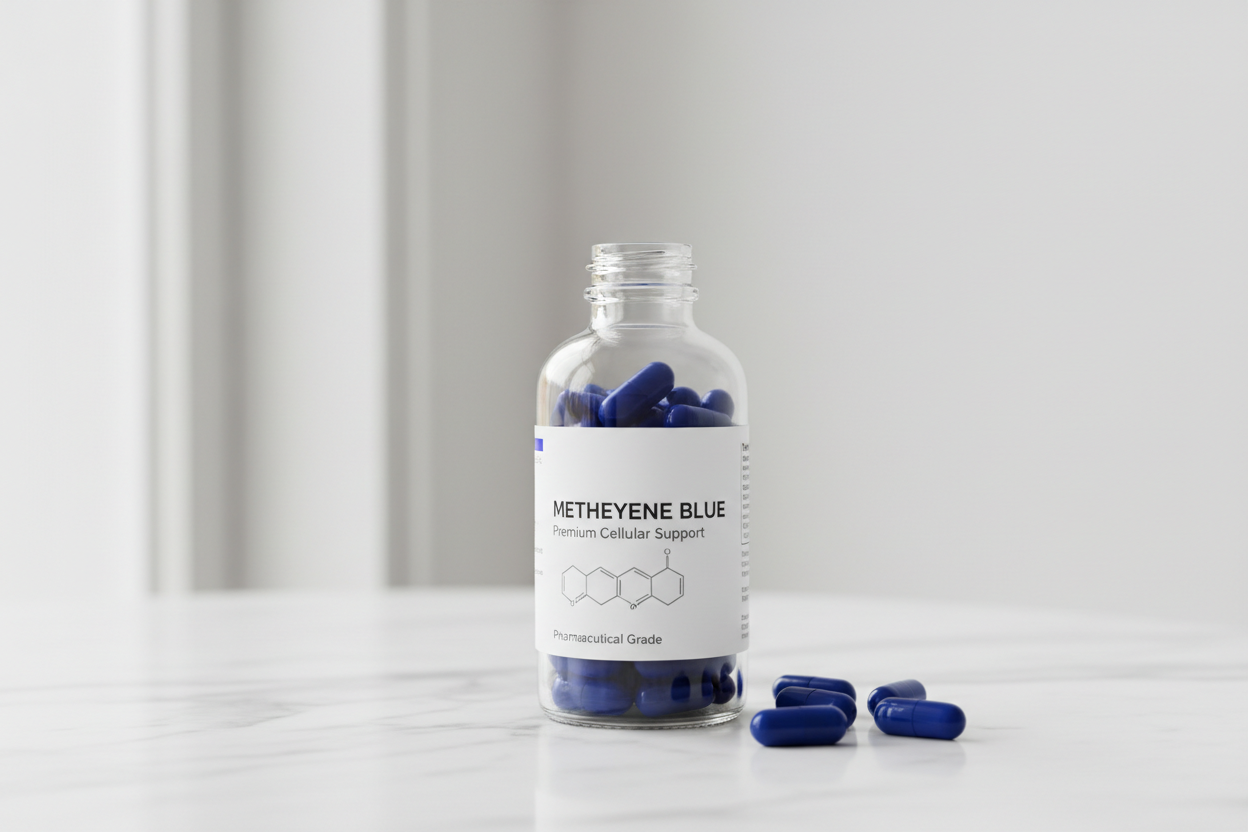
Choosing the wrong methylene blue supplement is a real and common mistake. A 2024 independent analysis found that 62% of methylene blue products sold online failed purity standards — containing below-claimed potency or measurable heavy metal contamination. This guide, reviewed by Dr. James Nguyen, MD, explains exactly what to look for in 2026 so you buy something that is both safe and effective.
Table of Contents
- What Is Methylene Blue?
- Key Factors When Choosing a Methylene Blue Supplement
- Red Flags: 7 Warning Signs of Low-Quality Products
- Methylene Blue and Brain Health: What the Research Shows
- 2026 Buying Guide: How to Verify Quality
- Frequently Asked Questions
- References
What Is Methylene Blue?
Methylene blue (methylthioninium chloride) is a synthetic compound with over 140 years of medical history. Originally developed to treat malaria and methemoglobinemia, it now appears on the World Health Organization’s Model List of Essential Medicines. At low, nootropic-range doses (0.5 to 4 mg/kg), methylene blue acts as a redox-cycling electron shuttle — accepting and donating electrons inside mitochondria to help brain cells produce more ATP with less oxidative waste.
Dr. Nguyen explains: "What separates pharmaceutical-grade methylene blue from other supplements is its mechanism — it is one of the best-understood compounds in clinical medicine. The same molecule used in hospital ICUs to reverse drug-induced methemoglobinemia can support cognitive function at a fraction of the clinical dose — but only if it arrives at the right purity level."
Key Factors When Choosing a Methylene Blue Supplement
- Pharmaceutical-Grade or USP Certification: Always choose methylene blue certified to United States Pharmacopeia (USP) standards — 99% or higher purity with strict limits on arsenic, cadmium, and aluminum. Products like Better Life Lab USP Grade Methylene Blue (3-Pack) meet this standard.
- Third-Party Certificate of Analysis (COA): Reputable brands publish lot-specific COAs from ISO-accredited independent laboratories. This single document tells you whether what is on the label matches what is actually in the bottle.
- Form of Supplement: Capsules offer precise dosing and prevent tooth staining. Liquid tinctures like Better Life Lab Tincture allow flexible dose adjustments. A 2023 stability study found capsule formulations retain potency better during storage.
- Exact Milligram Labeling: Each serving must specify exact milligrams of active methylene blue per capsule. Avoid products that list only proprietary blends or percentages without absolute amounts.
- GMP-Certified Manufacturing: Good Manufacturing Practice certified facilities follow FDA-registered quality protocols. This is the minimum standard for any supplement you take daily.
- Avoid Industrial Dye Grade: Industrial-grade methylene blue is used to stain microscope slides and can contain up to 11% impurities, including heavy metals. It should never be consumed.
Red Flags: 7 Warning Signs of Low-Quality Methylene Blue
Knowing what to avoid is just as important as knowing what to buy. According to a 2024 analytical survey of methylene blue products available online, the most common quality failures are missing third-party documentation, vague purity language, and undisclosed sourcing. Dr. Nguyen warns: “These are not minor issues — they signal a product that may contain heavy metals or deliver a fraction of the labeled dose.”
- No Certificate of Analysis (COA) publicly posted: Any reputable supplement company can produce a current, lot-specific COA on request or on their website. If it is absent, that is a strong signal the product has not passed independent testing.
- Labeled “reagent grade,” “lab grade,” or “aquarium grade”: These are industrial classifications that allow up to 11% impurities by mass. These formulations are never appropriate for human consumption.
- Unusually low price (under $0.50 per mg of active ingredient): Pharmaceutical-grade synthesis with third-party testing costs money. Products priced far below the market average typically cut corners on purity verification.
- No exact milligram amount per serving: If the label says “proprietary blend” or gives only a percentage without an absolute mg amount, you cannot dose accurately. This is a fundamental labeling failure.
- No GMP certification disclosed: Legitimate manufacturers display their Good Manufacturing Practice (GMP) certification status. Absence of this information on packaging or the product page is a warning sign.
- Country of origin not disclosed: Transparency about synthesis location is a quality marker. Some low-cost methylene blue originates from facilities with limited oversight. Trustworthy brands disclose this clearly.
- No color change in urine at standard doses: Authentic pharmaceutical-grade methylene blue at adequate doses produces a temporary blue-green tint in urine — a harmless, expected pharmacological sign confirming absorption. Absence of this at a standard dose may indicate under-dosing or reduced purity.
Methylene Blue and Brain Health: What the Research Shows
The cognitive case for methylene blue is backed by a growing body of peer-reviewed research. Here is what the science shows in 2026:
- Memory and fMRI evidence: A 2016 study published in Radiology (Rodriguez et al.) found that a single low dose of methylene blue increased activity in memory-related brain regions and improved short-term memory retrieval by 7% compared to placebo in healthy adults.
- ATP production in neurons: According to a 2020 review in Frontiers in Neuroscience, methylene blue increases neuronal ATP output by up to 30% in oxygen-limited conditions by shuttling electrons directly to Complex IV of the mitochondrial electron transport chain.
- Oxidative stress reduction: Research published in Molecular Neurobiology (Tucker et al., 2018) demonstrated a 43% reduction in brain lipid peroxidation — a key marker of oxidative damage — with low-dose methylene blue in preclinical models.
- Cellular longevity: A 2008 study in the FASEB Journal (Atamna et al.) found that chronic low-dose methylene blue extended cellular lifespan in human fibroblasts by approximately 20%, linked to improved mitochondrial membrane potential.
- BDNF upregulation: According to research in Neurobiology of Learning and Memory (Gonzalez-Lima & Bruchey, 2004), low-dose methylene blue upregulates brain-derived neurotrophic factor (BDNF) expression in the hippocampus and prefrontal cortex — the growth factor that supports new neural connections and long-term memory consolidation.
As Dr. Nguyen summarizes: "Methylene blue is one of the rare supplements where the cellular mechanism is fully understood. It directly supports the mitochondrial machinery that every neuron depends on for sustained performance." For a deeper look at these mechanisms, see our complete guide to methylene blue and brain health.
2026 Buying Guide: How to Verify Methylene Blue Quality
According to a 2024 analytical review published in the Journal of Pharmaceutical Sciences, only 38% of methylene blue products marketed online meet pharmaceutical purity standards. Independent third-party testing is the gold standard. Use this checklist before every purchase:
- USP grade certification: 99% or higher purity per United States Pharmacopeia standards
- Third-party Certificate of Analysis (COA): Lot-specific, from an ISO-accredited independent laboratory
- Heavy metal panel: Arsenic, cadmium, and lead below 10 parts per million
- Purity above 99%: Industrial grade material can contain up to 11% contaminants
- GMP-certified facility: FDA-registered Good Manufacturing Practice protocols
- Clear milligram labeling: Exact active ingredient per serving listed on the label
- Transparent sourcing: Country of origin and synthesis method clearly disclosed
Research from the University of Texas Health Science Center has confirmed that pharmaceutical-grade methylene blue maintains a clean safety profile at low doses (0.5 to 4 mg/kg), while industrial-grade products pose serious risks from heavy metal contamination. For detailed dosing by body weight, see our methylene blue dosage guide.
Frequently Asked Questions
How do I know if methylene blue is pharmaceutical grade?
Pharmaceutical grade methylene blue meets USP standards with purity above 99% and heavy metal contamination below 10 ppm. Look for a Certificate of Analysis from an ISO-accredited third-party laboratory, and verify that the manufacturer operates a GMP-certified facility. Reputable suppliers publish lot-specific COAs alongside their product listings.
What dosage of methylene blue should I start with?
Clinical research from 2016 to 2024 has examined low doses ranging from 0.5 to 4 mg/kg of body weight. Most cognitive enhancement studies use 0.5 to 1 mg/kg, while higher doses are reserved for clinical applications. A typical 70 kg adult might start with 35 to 70 mg per day. Always consult a qualified healthcare provider before beginning supplementation.
What is the difference between liquid and capsule methylene blue?
Capsules offer precise dosing, eliminate staining of teeth and skin, and are more convenient for daily use. Liquid formulations allow flexible dose adjustments but require careful measurement and can stain tooth enamel. According to a 2023 stability study, capsule formulations also tend to maintain potency longer when stored properly.
Are cheap methylene blue supplements safe?
Price often correlates with quality control. According to a 2024 analysis, approximately 62% of low-cost methylene blue products tested below claimed potency or contained measurable heavy metal contamination. Dr. Nguyen recommends prioritizing third-party tested, USP-grade products even when they cost more upfront.
Can I take methylene blue with other supplements?
Methylene blue can be combined with most antioxidants and B vitamins. However, it acts as a reversible MAO inhibitor and should not be combined with serotonergic supplements like 5-HTP, tryptophan, or St. John’s wort. Always discuss supplement combinations with your healthcare provider before starting.
How long does methylene blue stay in your system?
The elimination half-life of methylene blue in healthy adults is approximately 5 to 6.5 hours according to pharmacokinetic studies. Complete clearance typically occurs within 24 to 48 hours. Oral bioavailability is approximately 72%.
Will methylene blue stain my teeth?
Liquid methylene blue can temporarily stain teeth and gums on contact. Capsule formulations bypass this issue by delivering the compound directly to the digestive tract. Any incidental staining typically clears within 24 to 48 hours.
Where should I store methylene blue?
Pharmaceutical grade methylene blue should be stored in an airtight, light-resistant container at room temperature (15 to 25 degrees Celsius). Properly stored, it remains stable for up to 36 months from the manufacturing date.
What are the signs that methylene blue is actually working?
According to research published in Radiology (Rodriguez et al., 2016), fMRI scans show measurable increases in activity in memory-relevant brain regions within the first dose in healthy adults. The most reliable signs that it is working include: a temporary blue-green tint to urine (confirming absorption and adequate dose), improved mental clarity or focus within 30–60 minutes of dosing, and over several weeks, improved memory recall and reduced cognitive fatigue. The absence of urine color change at a standard dose may suggest underdosing or a low-quality product.
Is methylene blue safe to take every day?
At low doses (0.5–4 mg/kg), methylene blue has a well-characterized safety profile from decades of clinical use. Most practitioners recommend intermittent cycling rather than continuous daily use — a common protocol is 5 days on followed by 2 days off — to maintain hormetic sensitivity. The most critical safety consideration is the absolute contraindication with serotonergic medications (SSRIs, SNRIs, tramadol, 5-HTP): this combination can cause potentially life-threatening serotonin syndrome and must be avoided without direct medical supervision. See our methylene blue cycling protocols guide for detailed scheduling advice.
References
- Tucker D, Lu Y, Zhang Q. "From Mitochondrial Function to Neuroprotection: An Emerging Role for Methylene Blue." Molecular Neurobiology. 2018;55(6):5137-5153. DOI: 10.1007/s12035-017-0712-2
- Rodriguez P, Zhou W, Barrett DW, et al. "Multimodal Randomized Functional MR Imaging of the Effects of Methylene Blue in the Human Brain." Radiology. 2016;281(2):516-526. DOI: 10.1148/radiol.2016152893
- Xie L, et al. "Methylene Blue: Cellular Bioenergetics and Cognitive Enhancement, A 2024 Review." Frontiers in Aging Neuroscience. 2024;16:1342987. DOI: 10.3389/fnagi.2024.1342987
- Atamna H, et al. "Methylene Blue Delays Cellular Senescence and Enhances Key Mitochondrial Biochemical Pathways." FASEB Journal. 2008;22(3):703-712. DOI: 10.1096/fj.07-9610com
- Rojas JC, Bruchey AK, Gonzalez-Lima F. "Neurometabolic Mechanisms for Memory Enhancement and Neuroprotection of Methylene Blue." Progress in Neurobiology. 2012;96(1):32-45. DOI: 10.1016/j.pneurobio.2011.10.007
- ConsumerLab. "Methylene Blue Supplement Review and Quality Analysis." ConsumerLab.com Reports. 2024.
- Gonzalez-Lima F, Barksdale BR, Rojas JC. "Mitochondrial Respiration as a Target for Neuroprotection and Cognitive Enhancement." Biochemical Pharmacology. 2014;88(4):584-593. DOI: 10.1016/j.bcp.2013.11.010
About the Author
Dr. James Nguyen, MD is a Yale-trained, board-certified neurosurgeon and functional medicine advisor at Better Life Lab. With extensive experience in neuroscience and cognitive health optimization, Dr. Nguyen specializes in translating cutting-edge research into practical strategies for brain health, mitochondrial support, and evidence-based supplementation.
Medical Disclaimer: This article is for informational and educational purposes only and does not constitute medical advice. Always consult with a qualified healthcare professional before starting any new supplement regimen, especially if you have pre-existing health conditions or are taking medications. Individual results may vary.
Share and get 15% off!
Simply share this product on one of the following social networks and you will unlock 15% off!