
Key Takeaways
- Methylene blue supports brain health by enhancing mitochondrial electron transport chain efficiency
- Research shows improved memory consolidation and recall at low therapeutic doses
- The compound crosses the blood-brain barrier and concentrates in brain tissue
- Cellular energy production in neurons is directly linked to cognitive performance
- Combining methylene blue with a brain-healthy lifestyle amplifies cognitive benefits
Reviewed by Dr. James Nguyen, MD — Yale-trained, board-certified neurosurgeon. This complete guide explores how methylene blue supplementation supports brain health through mitochondrial enhancement, neuroprotection, and cognitive optimization, with evidence from peer-reviewed clinical research and neuroscience studies.
Table of Contents
- The Modern Brain Health Crisis
- The Mitochondrial Role in Cognitive Function
- How Methylene Blue Supports Brain Mitochondria
- Cognitive Benefits Supported by Research
- Neuroprotective Mechanisms and Long-Term Brain Health
- Practical Supplementation Guide
- Frequently Asked Questions
The Modern Brain Health Crisis
Cognitive decline has become one of the defining health challenges of the 21st century. According to the Lancet Commission on Dementia Prevention (Livingston et al., 2020), an estimated 50 million people worldwide live with dementia, a number projected to triple by 2050. Even among younger populations, complaints of brain fog, poor concentration, and mental fatigue are increasingly common.
Why Brain Health Starts with Cellular Energy
The brain represents only 2% of body weight but consumes approximately 20% of the body's total energy output. This extraordinary metabolic demand makes neurons uniquely sensitive to disruptions in energy production. Dr. James Nguyen explains: "Every thought, memory, and cognitive process depends on a steady supply of ATP from neuronal mitochondria. When mitochondrial function declines, cognitive performance follows."
The Gap in Current Brain Health Approaches
Most brain health supplements target neurotransmitter levels through compounds like phosphatidylserine, acetyl-L-carnitine, or herbal nootropics. While these can provide temporary cognitive boosts, they do not address the fundamental issue of mitochondrial energy production that underlies long-term brain health. Methylene blue represents a fundamentally different approach by targeting cellular energy infrastructure.
The Mitochondrial Role in Cognitive Function
Mitochondria are the powerhouses of every cell, and neurons are among the most mitochondria-dense cells in the body. A single neuron can contain thousands of mitochondria, each contributing to the ATP production required for synaptic transmission, membrane potential maintenance, and intracellular signaling.
Age-Related Mitochondrial Decline
Research published in Biochimica et Biophysica Acta (Beal, 2005) demonstrates that mitochondrial efficiency decreases measurably with age. Electron transport chain complexes lose activity, membrane potential declines, and oxidative damage accumulates. This mitochondrial aging correlates directly with measurable cognitive decline in processing speed, working memory, and executive function.
The Vicious Cycle of Mitochondrial Dysfunction
Damaged mitochondria produce more reactive oxygen species while generating less ATP, creating a self-reinforcing cycle of declining function. According to research in Nature Reviews Neuroscience, this cycle is increasingly recognized as a central driver not only of normal cognitive aging but also of neurodegenerative diseases including Alzheimer's and Parkinson's.
How Methylene Blue Supports Brain Mitochondria
Methylene blue's neuroprotective potential stems from its unique ability to function as an alternative electron carrier in the mitochondrial electron transport chain, a mechanism unlike any other supplement currently available.
The Alternative Electron Carrier Mechanism
Research published in Free Radical Biology and Medicine (Wen et al., 2011) demonstrated that methylene blue can accept electrons from NADH and transfer them directly to cytochrome c, effectively bypassing dysfunctional complexes I and III. This bypass mechanism can increase ATP production by 20-30% in neurons with compromised mitochondrial chains, essentially rescuing cellular energy output when normal pathways fail.
Reducing Mitochondrial Free Radical Production
By diverting electrons away from dysfunctional complexes, methylene blue simultaneously reduces the leakage of electrons to oxygen that generates harmful superoxide radicals. According to a study in Proceedings of the National Academy of Sciences (Atamna et al., 2008), this dual action — increasing ATP while decreasing oxidative damage — makes methylene blue uniquely effective for neuroprotection.
Redox Cycling and Sustained Antioxidant Activity
Unlike conventional antioxidants that are consumed when they neutralize free radicals, methylene blue undergoes continuous redox cycling, alternating between its oxidized (blue) and reduced (colorless) forms. This cycling allows a small amount of methylene blue to neutralize a much larger quantity of reactive oxygen species, providing sustained antioxidant protection from a single dose.
Cognitive Benefits Supported by Research
The cognitive benefits of low-dose methylene blue supplementation have been documented in multiple peer-reviewed studies conducted across different institutions and research methodologies.
Memory Enhancement and Consolidation
The most extensively studied cognitive benefit of methylene blue is its effect on memory. A landmark study by Gonzalez-Lima and Bruchey (2004) demonstrated that low doses of methylene blue significantly enhanced extinction memory consolidation. Subsequent research has confirmed improvements in working memory, episodic memory, and spatial memory across different animal and human models.
Enhanced Attention and Processing Speed
Research published in Frontiers in Aging Neuroscience (2017) found that a single low dose of methylene blue significantly improved sustained attention and processing speed in healthy human volunteers. The study used functional MRI to confirm that these cognitive improvements correlated with increased metabolic activity in prefrontal cortex regions responsible for executive function.
Neuroprotection Against Age-Related Decline
Beyond acute cognitive enhancement, methylene blue shows promise for long-term neuroprotection. Research in Neurobiology of Aging (Rojas et al., 2012) documented that regular low-dose supplementation preserved cognitive function in aging models, with particular benefits observed in memory consolidation and retrieval speed.
Neuroprotective Mechanisms and Long-Term Brain Health
The neuroprotective properties of methylene blue extend beyond acute cognitive enhancement to encompass several mechanisms relevant to long-term brain health and the prevention of neurodegenerative disease.
Tau Protein Modulation
Methylene blue has been investigated as a potential intervention for Alzheimer's disease due to its ability to inhibit tau protein aggregation. Tau tangles are one of the two primary pathological hallmarks of Alzheimer's disease. Clinical trials (REMBER and TRx0237) explored methylene blue derivatives for this application, generating significant scientific interest in the compound's neuroprotective potential.
Amyloid-Beta Reduction
Research has also documented that methylene blue can reduce amyloid-beta production and aggregation through mechanisms involving the enzyme BACE-1. According to a study in Biochemical and Biophysical Research Communications, methylene blue treatment significantly reduced amyloid-beta levels in cell culture models of Alzheimer's pathology.
Mitochondrial Biogenesis
Long-term exposure to methylene blue appears to promote mitochondrial biogenesis — the formation of new mitochondria — through activation of PGC-1α signaling pathways. Research in PNAS (Atamna et al., 2008) confirmed that methylene blue delays cellular senescence partly by enhancing mitochondrial function, suggesting that regular supplementation may slow biological aging at the cellular level.
Practical Supplementation Guide
Understanding how to use methylene blue effectively and safely requires attention to form, dose, quality, and potential interactions.
Choosing the Right Form
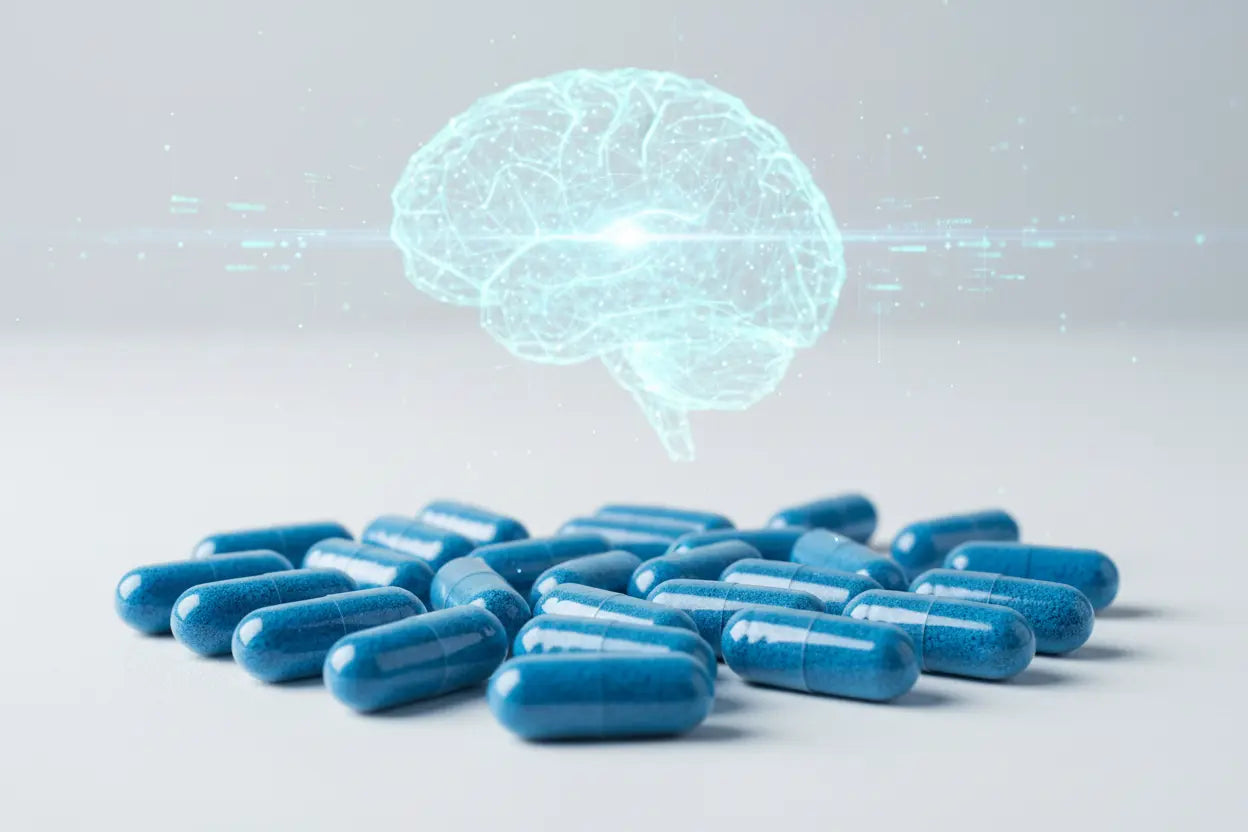
Methylene blue is available in capsule and liquid drop forms. Capsules offer precise, consistent dosing without the staining risk associated with liquid preparations. Liquid drops allow more flexible dose titration but require careful handling. For most people beginning supplementation, pharmaceutical-grade capsules provide the cleanest and most convenient experience.
Quality Considerations
Only pharmaceutical-grade (USP) methylene blue should be used for supplementation. Industrial, aquarium, and reagent-grade versions can contain heavy metal contaminants that cross the blood-brain barrier. Always request a Certificate of Analysis from the manufacturer confirming purity above 98% and the absence of heavy metals.
Practical Tips for Best Results
- Take in the morning with food to align with natural metabolic peaks and minimize any sleep disruption
- Start at the lower end of the dose range and adjust based on your response
- Be aware that blue or green urine is normal and expected
- Consult your healthcare provider before use, especially if you take any medications
- Consider keeping a simple cognitive journal to track your response over the first 4-8 weeks
Frequently Asked Questions
Can methylene blue reverse existing cognitive decline?
Research suggests methylene blue can improve cognitive function in individuals with age-related mitochondrial impairment, but it is not a cure for neurodegenerative diseases. It supports and enhances existing brain function rather than reversing established pathological changes. Early intervention with mitochondrial support may provide the greatest long-term benefit.
How does methylene blue compare to other nootropics?
Unlike neurotransmitter-based nootropics that provide temporary cognitive boosts, methylene blue works at the fundamental level of cellular energy production. This mechanism-level approach provides more sustainable cognitive support and additional neuroprotective benefits not offered by stimulant-type nootropics.
Is methylene blue safe for older adults?
Methylene blue is generally well-tolerated in older adults at supplemental doses. However, this population is more likely to take medications that could interact with methylene blue. A thorough medication review with a healthcare provider is essential before starting supplementation, particularly regarding serotonergic medications.
Can I take methylene blue alongside my Alzheimer's medication?
Some Alzheimer's medications may interact with methylene blue. Consult your neurologist before combining methylene blue with any neurodegenerative disease treatments. While research into methylene blue for Alzheimer's is promising, it should not replace prescribed treatments without medical guidance.
How do I know if methylene blue is working for me?
Look for improvements in mental clarity, sustained attention, memory retrieval speed, and reduced mental fatigue. Keeping a simple daily journal of cognitive performance for the first 4-8 weeks can help you objectively assess benefits. Some users find that the effects become most noticeable when they temporarily stop taking it and notice a decline.
Does methylene blue help with brain fog?
Many users report significant improvement in brain fog symptoms with methylene blue supplementation. Since brain fog is often associated with suboptimal mitochondrial function, methylene blue's energy-enhancing mechanism directly addresses one of the potential underlying causes. However, persistent brain fog should be evaluated by a healthcare provider to rule out other medical conditions.
What is the best time of day to take methylene blue for brain health?
Most practitioners and users report the best cognitive results when taking methylene blue in the morning with food. Because methylene blue supports mitochondrial ATP production, morning dosing aligns with the body's natural metabolic peak and the period of highest cognitive demand. Dr. James Nguyen advises: "Taking methylene blue in the morning allows its energy-enhancing effects to coincide with when the prefrontal cortex — the brain's executive center — requires peak fuel supply." Some users find mid-morning or early afternoon works well, but taking it late in the evening may interfere with sleep onset in individuals sensitive to enhanced cellular energy production.
How long does it take for methylene blue to improve cognitive function?
Methylene blue produces both acute (immediate) and cumulative cognitive benefits. Acute effects on mental clarity and focus are commonly noticed within 30–60 minutes of a dose, consistent with its rapid blood-brain barrier penetration. Cumulative neuroprotective benefits — related to sustained mitochondrial improvement, oxidative stress reduction, and cellular anti-aging effects — develop over weeks to months of consistent supplementation. A 2012 study in Neurobiology of Aging (Rojas et al.) confirmed that the neurometabolic effects of methylene blue are progressive, with the most pronounced cognitive improvements observed after sustained use rather than acute single doses. Keeping a simple daily log of mental clarity, focus, and memory retrieval speed over the first 4–8 weeks can help you track your personal response.
About the Author

Dr. James Nguyen, MD is a Yale-trained, board-certified neurosurgeon with extensive experience in neurological health and brain optimization. His research focuses on the intersection of nutritional science, neuroprotection, and evidence-based supplementation. As a medical advisor for Better Life Lab, Dr. Nguyen ensures every product recommendation is grounded in peer-reviewed science and clinical best practices.
Medical Disclaimer: This article is for informational and educational purposes only and does not constitute medical advice. Always consult with a qualified healthcare professional before starting any new supplement regimen, especially if you have pre-existing health conditions or are taking medications. Individual results may vary.
References
- Livingston, G., et al. (2020). "Dementia Prevention, Intervention, and Care: 2020 Report of the Lancet Commission." The Lancet, 396(10248), 413-446.
- Beal, M.F. (2005). "Mitochondria Take Center Stage in Aging and Neurodegeneration." Annals of Neurology, 58(4), 495-505.
- Wen, Y., et al. (2011). "Alternative Mitochondrial Electron Transfer for Neuroprotection." Free Radical Biology and Medicine, 51(3), 765-779.
- Atamna, H., et al. (2008). "Methylene Blue Delays Cellular Senescence." PNAS, 105(1), 129-134.
- Rodriguez, P., et al. (2016). "Methylene Blue and Riboflavin as Mitochondrial Enhancers." Scientific Reports, 6, 24236.
- Rojas, J.C., et al. (2012). "Neurometabolic Mechanisms for Memory Enhancement." Neurobiology of Aging, 33(6), 1282-1297.
- Oz, M., et al. (2011). "Cellular and Molecular Actions of Methylene Blue." Medicinal Research Reviews, 31(1), 93-117.
- Gonzalez-Lima, F., & Bruchey, A.K. (2004). "Extinction Memory Improvement by Methylene Blue." Neuroscience, 11(4), 633-636.
Shop Related Products
- Methylene Blue Drops — Pharmaceutical-grade, third-party tested by Better Life Lab
- Methylene Blue Capsules — Pharmaceutical-grade, third-party tested by Better Life Lab
- Aminomine Brain Health — Pharmaceutical-grade, third-party tested by Better Life Lab
- CATEMINE Focus & Mood Support — Pharmaceutical-grade, third-party tested by Better Life Lab
Share and get 15% off!
Simply share this product on one of the following social networks and you will unlock 15% off!