
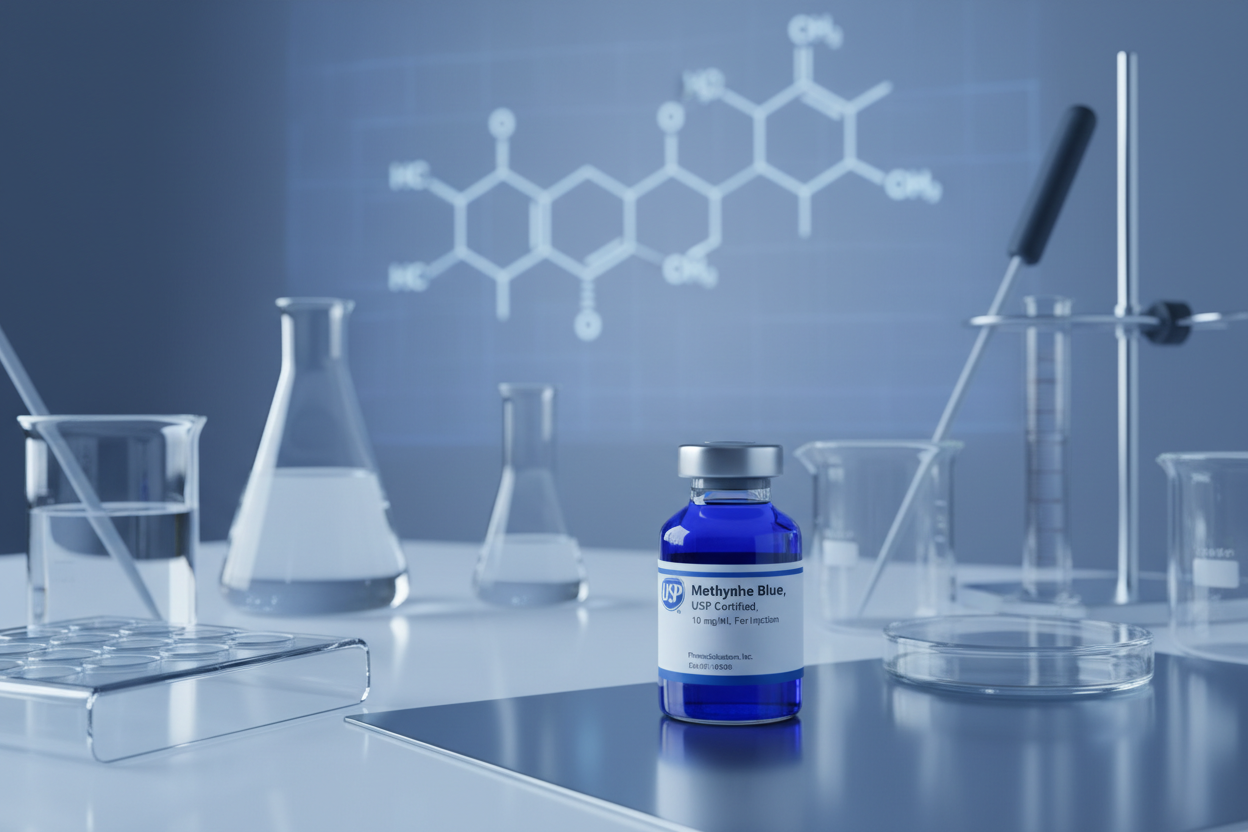
- Bacteriostatic water is the standard reconstitution solution for most injectable peptides because its 0.9% benzalkonium chloride preservative maintains sterility for up to 28 days after the vial is first accessed.
- Sterile technique during reconstitution is as critical as the quality of the water — contamination risk exists at every step from mixing to injection.
- Accurate dosing requires understanding peptide concentration math: milligrams per vial, volume of BAC water added, and resulting mcg-per-unit calculations.
- COA documentation from an FDA-registered manufacturer is the minimum standard for BAC water used in any serious research or clinical protocol.
- Better Life Lab supplies pharmaceutical-grade BAC water with a full Certificate of Analysis from an FDA-approved facility in Garden Grove, CA.
Reviewed by Dr. James Nguyen, MD | Updated May 2026
Table of Contents
- Why the Reconstitution Solution Matters
- Why BAC Water Is the Standard Choice for Peptides
- Supplies You Need Before You Start
- Step-by-Step Reconstitution Protocol
- How to Calculate Peptide Doses
- Storage and Shelf Life After Reconstitution
- Common Mistakes and How to Avoid Them
- Why BAC Water Source Quality Is Non-Negotiable
- Frequently Asked Questions
Why the Reconstitution Solution Matters
Lyophilized (freeze-dried) peptides are supplied as powder precisely because they are unstable in solution. The reconstitution step — dissolving the peptide in a sterile liquid for injection — is where most errors occur, and where the quality of your materials has the greatest impact on safety and bioactivity.
The reconstitution solution determines: whether the peptide remains stable over time or degrades rapidly; whether bacterial contamination occurs after the vial is first accessed; whether repeated vial access is safe or requires discarding remaining solution; and whether the resulting solution is safe for the intended route of administration.
Why BAC Water Is the Standard Choice for Peptides
Bacteriostatic water is the preferred reconstitution medium for most injectable peptides because benzalkonium chloride (BKC) at 0.9% concentration inhibits bacterial growth in the vial, making multi-dose protocols safe for up to 28 days after first access.
- Sterile water for injection (SWFI): Contains no preservative. Safe for single-use reconstitution only — any remainder must be discarded immediately. Impractical for peptides requiring multiple doses from a single vial.
- Normal saline (0.9% NaCl): Appropriate for dilution and IV administration, not for routine multi-dose peptide reconstitution. No bacteriostatic preservative; once opened, the vial is vulnerable to contamination.
- Bacteriostatic saline: Combines 0.9% NaCl with BKC. Used for some protocols where saline is specifically required. Generally interchangeable with BAC water for most peptide applications.
For a complete comparison of all injectable solution types, see our guide: BAC Water vs. Sterile Water vs. Normal Saline.
Supplies You Need Before You Start
- Lyophilized peptide vial — verify the lot number and inspect for integrity
- Bacteriostatic water — pharmaceutical-grade with COA (see sourcing guidance below)
- Insulin syringes — 1 mL, 29–31 gauge for precise volume measurement
- Alcohol swabs — 70% isopropyl alcohol for disinfecting all septa and work surfaces
- Clean work surface — ideally a laminar flow hood or at minimum a clean, low-traffic workspace
- Disposal container — sharps container for used needles and syringes
Never reconstitute peptides on a surface that has not been wiped with isopropyl alcohol. Never recap needles after use. Never use BAC water that appears cloudy, contains visible particles, or comes from a vial that has been open for more than 28 days.
Step-by-Step Reconstitution Protocol
- Wash hands thoroughly with soap and water for at least 20 seconds before handling any vials, needles, or syringes.
- Wipe both vial septa — the peptide vial and the BAC water vial — with a fresh alcohol swab. Allow 15–30 seconds for the alcohol to dry completely before inserting a needle.
- Draw the calculated volume of BAC water into the insulin syringe. A typical starting point is 1–2 mL of BAC water for a 5 mg peptide vial.
- Inject BAC water slowly along the vial wall — do not shoot it directly onto the lyophilized powder cake. Angle the needle so the liquid runs gently down the glass interior.
- Do not shake the vial. Shaking can denature peptide bonds. Gently swirl or roll the vial between your palms until the powder dissolves completely (30–60 seconds).
- Inspect the solution. Reconstituted peptide should be clear and colorless. Any cloudiness, visible particulates, or unusual color indicates a problem; do not use the vial.
- Label the vial with the date of reconstitution, concentration, and expiration date (28 days from today).
- Store immediately according to the peptide’s requirements.
How to Calculate Peptide Doses
The principle: adding a specific volume of BAC water to a known weight of peptide creates a solution of a known concentration.
Example: Peptide vial contains 5 mg (5,000 mcg). You add 2 mL (2,000 microliters) of BAC water.
Concentration = 5,000 mcg ÷ 2,000 μL = 2.5 mcg per microliter
On a U-100 insulin syringe, each unit = 10 microliters, so each unit = 25 mcg of peptide. For a 250 mcg target dose, draw to the 10-unit mark.
Storage and Shelf Life After Reconstitution
- Standard refrigeration (2–8°C): Most reconstituted peptides are stable for 28 days. Mark your vial with the reconstitution date and discard at 28 days.
- Freezing: Some peptides can be frozen for extended storage. Aliquot into single-use volumes before freezing to avoid repeated freeze-thaw cycles.
- Light exposure: Store away from direct light. Keep in original packaging or a dark location.
- Room temperature: Do not store for extended periods. The 28-day bacteriostatic window applies under refrigerated conditions.
Common Mistakes and How to Avoid Them
Shaking instead of swirling. The most common error. Shaking denatures peptide bonds. Always roll or gently swirl.
Adding too little BAC water. Highly concentrated solutions require very small injection volumes, increasing measurement error. Most researchers use 1–2 mL per 5 mg vial as a practical starting point.
Skipping alcohol prep on the septum. The vial septum is not sterile out of the box. Always wipe with alcohol and allow to dry before insertion.
Using unverified BAC water. The reconstitution solution must be pharmaceutical-grade with COA documentation.
Ignoring the 28-day rule. Mark your vials and follow the 28-day discard rule without exception.
Why BAC Water Source Quality Is Non-Negotiable
Bacteriostatic water is the most direct injectable input in a peptide protocol. As covered in our companion guide on why Amazon removed BAC water listings, the majority of online BAC water sellers lack the documentation to verify what is actually in their vials. Incorrect BKC concentration, non-sterile production, or contamination at the manufacturing stage can introduce exactly the risks that the BAC water is supposed to prevent.
Better Life Lab produces bacteriostatic water in an FDA-approved facility in Garden Grove, California, with full COA documentation available for every lot. This means independent verification of BKC concentration, sterility testing results, endotoxin testing, pH, and particulate matter — the same documentation required for pharmaceutical products used in clinical settings.
Frequently Asked Questions
Can I use sterile water instead of BAC water for peptide reconstitution?
For single-use reconstitution where you will draw the entire vial in one session, sterile water for injection is acceptable. For any protocol requiring multiple doses from a single reconstituted vial, BAC water is the correct choice.
How much BAC water should I add to a 5 mg peptide vial?
The most common starting point is 1–2 mL. This yields concentrations of 2.5–5 mcg per microliter, which translates to easily measurable doses on an insulin syringe for most common peptide dose ranges.
How long is reconstituted peptide stable?
Most reconstituted peptides stored at 2–8°C in bacteriostatic water are stable for approximately 28 days. Follow the 28-day discard rule as a minimum standard.
What if my reconstituted peptide looks cloudy?
Do not use it. Cloudiness can indicate peptide aggregation or microbial contamination. Discard the vial and start fresh with verified BAC water and a new peptide vial.
Where can I buy pharmaceutical-grade BAC water with a COA?
Better Life Lab supplies bacteriostatic water produced in an FDA-approved facility in Garden Grove, CA, with a Certificate of Analysis on every lot. See the product link below.
Continue Reading: The Complete BAC Water Guide
- Part 1: Why Amazon Banned BAC Water Listings — What happened and what it means for buyers
- Part 2 (this article): Bacteriostatic Water for Peptide Reconstitution — Step-by-step protocol and dosing guide
- Part 3: BAC Water vs. Sterile Water vs. Normal Saline — Full comparison of injectable solutions
Shop Pharmaceutical-Grade BAC Water with COA
Every reconstitution protocol starts with the right water. Better Life Lab’s bacteriostatic water is produced in an FDA-approved facility in Garden Grove, CA, with a Certificate of Analysis on every lot.
Share and get 15% off!
Simply share this product on one of the following social networks and you will unlock 15% off!