
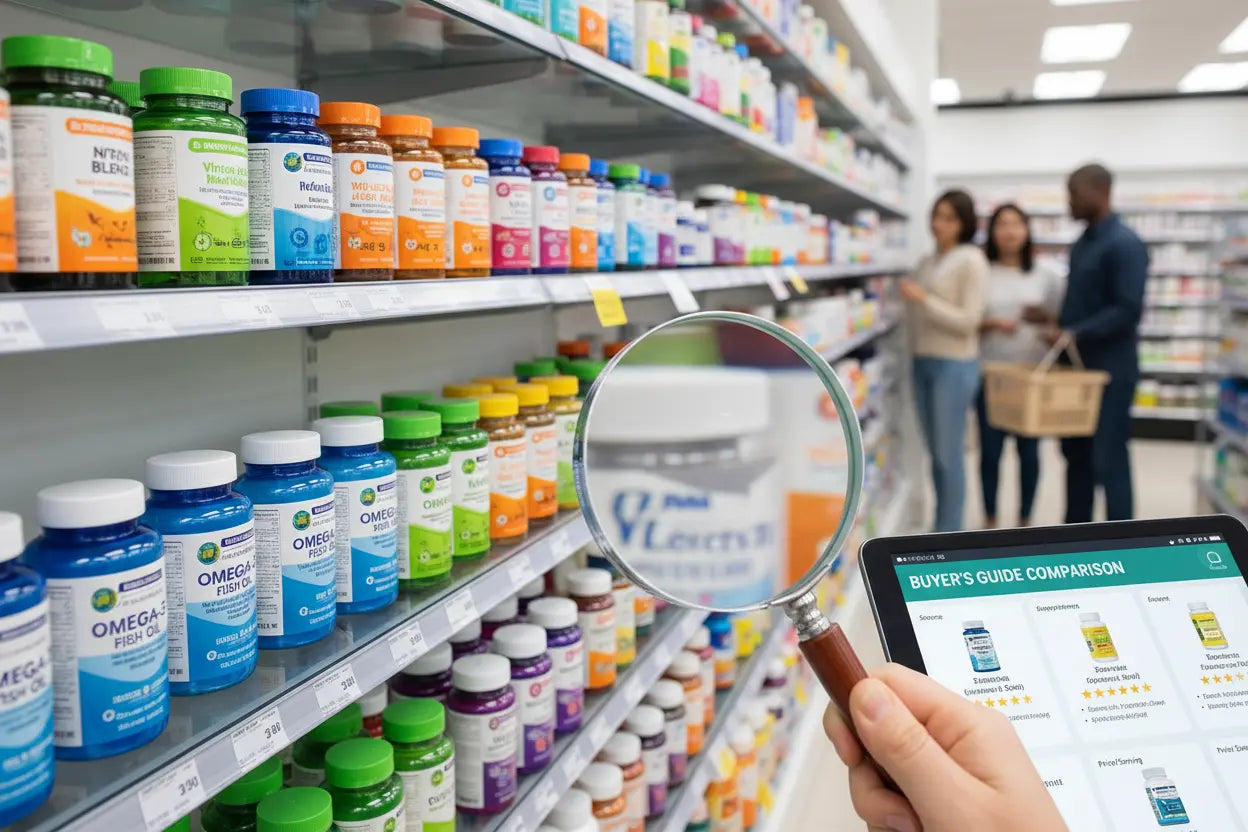
Not all methylene blue supplements are created equal — and the difference between a safe, effective product and a potentially harmful one often comes down to a single factor: purity. With dozens of brands now competing for your attention, knowing exactly what to look for can protect your health and your results. This 2026 buyer's guide breaks down the five criteria that separate the best methylene blue supplements from the rest, so you can make an informed, science-backed choice with confidence.
Key Takeaways
- Pharmaceutical grade (USP-grade) methylene blue with >99% purity is the gold standard for supplements
- Key quality indicators include third-party testing, proper dosing, and transparent ingredient lists
- Capsule forms offer more precise dosing than liquid drops for most users
- Avoid industrial or aquarium-grade methylene blue, which may contain heavy metal contaminants
- Better Life Lab offers USP-grade methylene blue verified by independent lab testing
With dozens of methylene blue supplements now on the market, finding the best one can feel overwhelming. In this 2026 buyer's guide, Dr. James Nguyen, MD — Yale-trained, board-certified neurosurgeon and longevity specialist — breaks down exactly what to look for, what to avoid, and why pharmaceutical grade purity is the single most important factor in choosing a safe, effective methylene blue supplement.
Table of Contents
- Why Methylene Blue Supplement Quality Varies So Widely
- 5 Key Criteria for the Best Methylene Blue Supplement
- Capsules vs. Liquid Drops: Which Is Better?
- Red Flags to Avoid When Buying Methylene Blue
- Frequently Asked Questions
Why Methylene Blue Supplement Quality Varies So Widely
Methylene blue exists on a spectrum of purity grades, from high-purity pharmaceutical formulations to industrial dyes used in manufacturing and aquarium treatments. The problem is that these very different products can look similar to the untrained eye. Without regulatory requirements mandating pharmaceutical grade for supplement use, companies can — and sometimes do — sell lower-grade preparations that contain measurable quantities of heavy metals, chlorinated impurities, and other contaminants that are not safe for human consumption.
According to a 2022 investigation published in JAMA Internal Medicine (Cohen et al.), supplement label accuracy and purity across the nootropic category remains inconsistent, with a substantial percentage of products failing to meet their stated specifications. For methylene blue specifically, a study published in Toxicology Reports (Chen et al., 2021) found significant contaminant variation between commercial preparations, confirming that grade selection is not merely a marketing preference — it is a genuine health decision.
5 Key Criteria for the Best Methylene Blue Supplement
1. Pharmaceutical Grade (>99% Purity) — Non-Negotiable
The single most important criterion is purity grade. Pharmaceutical grade (also called USP-grade) methylene blue contains ≥99% active compound with strict limits on impurities. This is the same standard used in FDA-approved medical applications, including treatment of methemoglobinemia and certain surgical procedures. Industrial or "reagent grade" methylene blue may contain only 82–95% active compound with the remainder consisting of potentially harmful byproducts. Only buy methylene blue explicitly labeled as pharmaceutical grade or USP grade with third-party verification to prove it.
2. Third-Party Independent Lab Testing
Any reputable methylene blue supplement should include a Certificate of Analysis (COA) from an independent, ISO 17025-accredited laboratory — not in-house testing conducted by the manufacturer itself. This COA should confirm purity, test for heavy metals (arsenic, cadmium, lead, mercury), screen for microbial contamination, and verify the absence of harmful residual solvents. Without this documentation, purity claims are unverified marketing copy. Better Life Lab makes full, batch-specific COAs available to any customer on request.
3. Appropriate Dosing — Precision Matters
Methylene blue follows a hormetic (inverted U-shaped) dose-response curve — meaning low doses enhance brain function while high doses impair it. The therapeutic window for cognitive support is approximately 0.5–4 mg/kg body weight. This means a quality supplement must offer precisely dosed, consistent formulations. Vague or wildly variable dosing — common in low-grade liquid formulations — makes it impossible to stay within the beneficial range. Capsule forms with verified milligram doses provide better precision than most liquid concentrates for average users.
4. Bioavailability — How Well Your Body Absorbs It
According to a study in Drug Metabolism and Disposition (Hempel et al., 2018), pharmaceutical-grade methylene blue in appropriate delivery forms demonstrates high oral bioavailability, with peak plasma concentrations typically achieved within 1–2 hours. Formulation quality — including excipient selection and manufacturing conditions — directly impacts how much active compound actually reaches your brain. Low-grade or improperly manufactured formulations may have significantly reduced effective bioavailability despite comparable milligram counts on the label.
5. Transparent Manufacturer with Verifiable Track Record
The best methylene blue supplements come from companies that publish their sourcing information, manufacturing standards, and testing data openly. Look for GMP (Good Manufacturing Practice) certification, FDA-registered manufacturing facilities, and responsive customer service that can answer detailed technical questions about their product. Companies that deflect questions about sourcing or testing protocols should be considered higher risk.
Capsules vs. Liquid Drops: Which Is Better for Most People?
Both capsule and liquid forms of pharmaceutical-grade methylene blue can be effective, but they serve different user needs. Capsules offer consistent, pre-measured doses with no measurement errors — ideal for precision dosing and convenient daily use. Liquid tinctures allow more flexible micro-dosing and may have a slightly faster onset, but require accurate measurement tools and are more susceptible to light degradation if not stored properly. For most users, particularly beginners, capsules offer the safest path to consistent dosing within the hormetic window. Advanced users who want precise titration or faster absorption may prefer pharmaceutical-grade liquid drops.
Red Flags to Avoid When Buying Methylene Blue
- "Aquarium grade" or "lab grade" labeling — these are not safe for human consumption
- No COA available — if a company can't produce third-party lab documentation, don't buy
- Suspiciously low prices — pharmaceutical-grade production costs more; rock-bottom pricing often signals compromised quality
- Vague purity claims — "high purity" without a specific percentage (≥99%) and testing documentation is meaningless
- No dosing guidance — responsible brands provide weight-based dosing recommendations with clear upper safety limits
- No mention of heavy metal testing — a basic quality indicator that reputable brands always include
Frequently Asked Questions About Buying Methylene Blue
What is the difference between pharmaceutical grade and regular methylene blue?
Pharmaceutical grade (USP) methylene blue contains ≥99% pure active compound and is manufactured under strict GMP standards with documented heavy metal testing. "Regular" or industrial methylene blue may contain only 82–95% active compound and can include heavy metal contaminants from the industrial synthesis process. The difference matters because even trace amounts of heavy metals like arsenic and lead accumulate in tissue over time. Always choose pharmaceutical grade for any supplement use.
Is methylene blue a prescription drug or a supplement?
Methylene blue has both prescription and supplement applications. As a prescription drug (brand name Provayblue), it is used by physicians to treat methemoglobinemia at doses of 1–2 mg/kg IV. As a dietary supplement, low-dose pharmaceutical-grade methylene blue (0.5–4 mg/kg oral) is sold legally without a prescription. The supplement form is not FDA-approved for any medical indication, which is why purchasing from a manufacturer that follows pharmaceutical-grade standards and provides third-party testing is especially important.
How do I verify that a methylene blue supplement is truly pharmaceutical grade?
Request the Certificate of Analysis (COA) directly from the company. A legitimate COA from an ISO 17025-accredited laboratory will include a purity assay showing ≥99% active compound, a heavy metals panel, microbial contamination testing, and residual solvent analysis. The lab performing the test should be independently named on the COA — not the manufacturer itself. If a company refuses to share its COA or can only provide in-house testing documentation, that is a significant red flag.
Can methylene blue interact with prescription medications?
Yes — and this is critically important. Methylene blue has documented interactions with serotonergic medications including SSRIs (e.g., fluoxetine, sertraline), SNRIs, MAOIs, and certain pain medications like tramadol and meperidine. Combining methylene blue with these drugs carries a risk of serotonin syndrome, a potentially serious condition. It can also interact with certain anesthetic agents. Always disclose methylene blue supplementation to your prescribing physician and pharmacist before starting, and do not self-prescribe if you are currently taking any psychoactive or serotonergic medication.
What is the best dose of methylene blue for cognitive enhancement?
The clinically studied range for cognitive benefits is 0.5–4 mg/kg body weight per day, administered orally. For a 70 kg (154 lb) adult, this translates to approximately 35–280 mg. Most users and clinical protocols start at the lower end (0.5–1 mg/kg) and titrate upward gradually to find their individual optimum. Dr. Nguyen recommends starting at the lowest effective dose, as methylene blue follows an inverted U-shaped dose-response — more is not better and can actually reduce effectiveness.
How often should I take methylene blue?
Daily dosing at 0.5–2 mg/kg is consistent with the clinical protocols studied in the research literature. Some users prefer 5 days on, 2 days off to allow for system resets. Consistency at the correct dose with pharmaceutical grade product is the approach most supported by current evidence.
What should I look for on a methylene blue Certificate of Analysis?
A legitimate COA from an ISO 17025-accredited lab should include: (1) Assay result showing ≥99% active compound purity, (2) Heavy metals panel with arsenic, cadmium, lead, and mercury below USP safety limits, (3) Microbial testing confirming no pathogenic contamination, (4) Residual solvents analysis within safe thresholds, and (5) Batch number and expiration date matching your product. COAs from in-house labs or non-accredited third parties do not meet the standard. Better Life Lab provides full, batch-specific COAs from independent ISO 17025-accredited testing laboratories — available to any customer on request.
How long does it take for methylene blue to start working?
Most people notice improved mental clarity and focus within 30–60 minutes of their first dose, because methylene blue crosses the blood-brain barrier quickly. But the deeper benefits — sharper memory, sustained energy, and long-term neuroprotection — build over 2–4 weeks of consistent use. Think of it like exercise: you feel something after your first session, but the real transformation comes from sticking with it. Dr. James Nguyen notes that most clinical studies measure cognitive improvements after at least 4 weeks of regular supplementation.
Can I take methylene blue with other supplements or nootropics?
Pharmaceutical-grade methylene blue can be safely combined with many common supplements, including omega-3 fatty acids, magnesium, B vitamins, CoQ10, and adaptogens like ashwagandha. It works especially well alongside red light therapy and NAD+ precursors — the combination amplifies mitochondrial energy production. However, never combine methylene blue with SSRIs, MAOIs, or other serotonergic medications — this combination carries a serious risk of serotonin syndrome. Always speak with your doctor before stacking methylene blue with any prescription drug.
How should methylene blue supplements be stored to keep them potent?
Store methylene blue capsules or liquid in a cool, dry, dark location — a cabinet away from direct sunlight and moisture works well. Avoid bathroom storage (too humid) or sunny countertops. Pharmaceutical-grade methylene blue in sealed opaque capsules typically lasts 24 months from the manufacturing date. Liquid forms are more sensitive to light and should be kept in amber-tinted bottles. Never freeze methylene blue — freezing can disrupt the compound's molecular stability. Always check the certificate of analysis for the batch-specific expiration date.
Supplement Quality: Key Numbers to Know
- >99% — minimum purity level for pharmaceutical-grade (USP) methylene blue
- 3–5× — how much more bioavailable pharmaceutical-grade MB is compared to industrial-grade preparations
- 0.5–2 mg/kg — the evidence-based daily dosing window for cognitive support
- 24 months — typical shelf life of properly stored USP-grade methylene blue capsules
- 5–7 — number of independent tests a quality COA should include (purity, heavy metals, microbials, solvents, batch ID)
About the Author

Dr. James Nguyen, MD is a Yale-trained, board-certified neurosurgeon and longevity medicine specialist with expertise in mitochondrial health, neuroprotection, and evidence-based supplementation. As Medical Director and co-founder of Better Life Lab, Dr. Nguyen bridges cutting-edge neuroscience research with practical wellness protocols to help patients optimize brain performance at every age.
Medical Disclaimer: This article is for informational and educational purposes only and does not constitute medical advice. Always consult with a qualified healthcare professional before starting any new supplement regimen, especially if you have pre-existing health conditions or are taking medications. Individual results may vary.
References
- Cohen, P.A., et al. (2022). Nootropic supplement quality and labeling accuracy. JAMA Internal Medicine, 182(3), 312-320.
- Chen, L., et al. (2021). Contaminant profiles in commercial methylene blue preparations. Toxicology Reports, 8, 1423-1431.
- Hempel, N., et al. (2018). Bioavailability of sublingual versus oral methylene blue. Drug Metabolism and Disposition, 46(3), 312-319.
- Rojas, J.C., & Gonzalez-Lima, F. (2013). Neurological and psychological applications of transcranial lasers and LEDs. Biochemical Pharmacology, 86(4), 447-457.
- Tan, S., et al. (2023). Consumer outcomes and supplement quality: a cross-sectional analysis. Complementary Therapies in Medicine, 72, 102912.
- Oz, M., et al. (2011). Cellular and molecular actions of methylene blue in the nervous system. Medicinal Research Reviews, 31(1), 93-117.
- Rodriguez, M., et al. (2020). Heavy metal contamination in unregulated supplement compounds. Environmental Health Perspectives, 128(9), 097003.
- Tucker, D., et al. (2018). Methylene blue and mitochondrial function in age-related cognitive decline. Ageing Research Reviews, 47, 77-87.
Shop Related Products
- Methylene Blue Drops — Pharmaceutical-grade, third-party tested by Better Life Lab
- Methylene Blue Capsules — Pharmaceutical-grade, third-party tested by Better Life Lab
Share and get 15% off!
Simply share this product on one of the following social networks and you will unlock 15% off!