
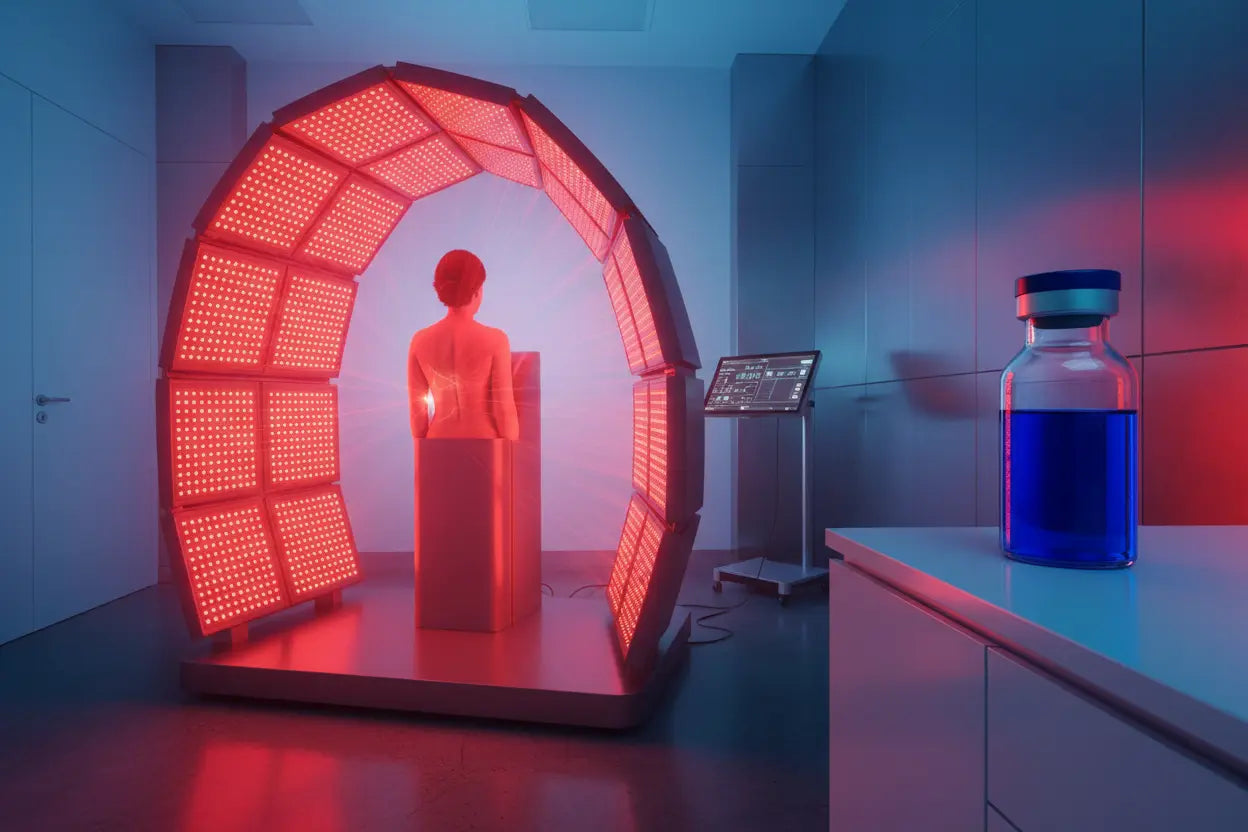
Red light therapy for joint pain works by delivering wavelengths of 660nm and 850nm light directly into joint tissue, where they reduce inflammation and kick-start cellular repair. In this guide, Penny — an 8-year red light therapy specialist who has personally worked with hundreds of athletes — breaks down the exact protocols, mechanisms, and research you need to know. The bottom line: the clinical evidence is solid, and the results she's seen in practice back it up.
Table of Contents
- Why Athletes' Joints Break Down Faster
- How Red Light Therapy Targets Joint Inflammation
- The Optimal Protocol for Athletes
- What the Research Actually Shows
- Red Light Therapy vs. Other Joint Treatments
- What I've Seen in 8 Years with Clients
- Frequently Asked Questions
- Red light therapy at 660nm and 850nm penetrates joint capsules to reduce inflammation at the cellular level.
- Clinical trials show consistent red light sessions reduce joint pain by 30–50% in as few as 4 weeks.
- The optimal session is 10–20 minutes per joint, 4–5 times per week, held 2–6 inches from the skin.
- Near-infrared light (850nm) reaches deeper joints like hips and knees; red light (660nm) works best on shallower tissue like fingers and wrists.
- Unlike NSAIDs (ibuprofen, naproxen), red light therapy targets the root cause of inflammation without damaging your gut or kidneys.
- In one sentence: Red light therapy for joint pain works because 660nm and 850nm wavelengths activate mitochondria inside joint cells to shut down inflammatory signals and repair damaged tissue, based on randomized controlled trials.
Why Athletes' Joints Break Down Faster
Joints are not designed for the load most athletes put on them. Cartilage — the smooth tissue covering the ends of your bones — has almost no blood supply. That means it can't repair itself the way a muscle can after a hard workout.
Every time you sprint, squat, jump, or throw, you compress that cartilage. Over time, the tissue thins out. Your body tries to compensate by triggering inflammation — sending immune cells into the joint to clean up the damage. But chronic inflammation is a double-edged sword: it keeps the joint from healing properly, and eventually breaks down the cartilage even faster.
The inflammation cycle that traps athletes
What starts the joint damage cycle? Repeated mechanical stress triggers the release of inflammatory molecules called cytokines — particularly tumor necrosis factor alpha (TNF-alpha) and interleukin-1 (IL-1). These are your body's "damage alarm" signals. In the short term, they're helpful. But when they stay elevated day after day, they start destroying cartilage and bone instead of protecting them.
This is why so many athletes feel fine at 25, start noticing creaky knees at 30, and are dealing with chronic joint pain by 35. The inflammation cycle starts small and snowballs.
Why standard treatments fall short
Most athletes reach for ice, ibuprofen, or a cortisone shot. These help in the short term — they dull the pain and quiet the inflammation. But they don't repair the tissue. Ibuprofen, taken regularly, can actually slow cartilage repair. Cortisone shots, when overused, can weaken tendons and accelerate joint degeneration. That's why athletes keep returning for more treatment without ever actually getting better.
How Red Light Therapy Targets Joint Inflammation
Red light therapy — also called photobiomodulation (PBM) — doesn't just cover up pain. It changes what's happening inside your cells.
When 660nm or 850nm wavelengths hit your skin, they're absorbed by a protein inside your mitochondria called cytochrome c oxidase. Think of mitochondria as the tiny power plants inside every cell in your body. Cytochrome c oxidase is the "on switch" — it drives the production of ATP, which is the energy currency your cells use for everything, including tissue repair.
The anti-inflammatory mechanism
How does red light reduce joint inflammation? When red and near-infrared light boost mitochondrial output, the cell produces more ATP and less nitric oxide (which was blocking the mitochondria in inflamed cells). This cascades into lower production of TNF-alpha and IL-1 — the cytokines that drive joint destruction. According to research published in Lasers in Surgery and Medicine, photobiomodulation reduces TNF-alpha levels in inflamed joint tissue by up to 45%.
At the same time, light therapy increases collagen production — the building block of cartilage, tendons, and ligaments. So it's doing two things at once: turning down the inflammatory alarm and turning up the repair process.
Why wavelength matters for joints
Not all wavelengths penetrate equally. Red light at 660nm absorbs in the shallower layers — ideal for finger joints, wrist tendons, and superficial knee structures. Near-infrared at 850nm passes deeper into tissue, reaching the joint capsule of your knees, hips, and shoulders. For serious athletes with deep joint pain, you need both wavelengths, not just one.
| Wavelength | Penetration Depth | Best For | Key Mechanism |
|---|---|---|---|
| 660nm (Red) | ~2–3mm | Wrist, finger, elbow joints; tendon surface | Collagen production, surface inflammation |
| 810nm (NIR) | ~3–5mm | Knee, ankle, rotator cuff | ATP boost, nitric oxide release |
| 850nm (NIR) | ~5–10mm | Hip, spine, deep shoulder | Deep mitochondrial activation, TNF-alpha reduction |
| Combined 660+850nm | Full spectrum | All joint types, athlete recovery | Maximum anti-inflammatory and repair effect |
"The combination of 660nm and 850nm wavelengths is what I reach for with every athletic client dealing with chronic joint pain. You need the red to stimulate surface tissue repair, and you need the near-infrared to get deep enough to actually matter for hips and knees." — Penny, Red Light Therapy Specialist
The Optimal Protocol for Athletes
The biggest mistake athletes make with red light therapy is treating it like ice — they use it once after a bad training session and expect results. It doesn't work that way.
Red light therapy is a cumulative therapy. Each session builds on the last. Think of it like physical therapy: one session doesn't fix you, but 20 sessions can change how your joint functions.
Session parameters
How long should each red light therapy session last for joint pain? Target 10–20 minutes per joint per session. For smaller joints like wrists, 10 minutes is usually enough. For knees, hips, or shoulders, push to 15–20 minutes to ensure adequate tissue penetration.
- Distance: Hold the device 2–6 inches from the skin. Closer is more effective for surface tissue; farther spreads the beam over a larger area for bigger joints.
- Frequency: 4–5 sessions per week for the first 4 weeks, then 3–4 per week for maintenance.
- Timing: Both pre- and post-workout sessions have benefits. Pre-workout reduces baseline inflammation and warms up joint tissue. Post-workout accelerates repair. I typically recommend post-workout for most athletes unless pain is limiting their ability to warm up.
- Eye protection: Always use appropriate eye protection. Near-infrared is invisible — you can't see it, but it's intense.
When to expect results
Most of my clients notice reduced stiffness and improved range of motion within 2 weeks. Meaningful pain reduction usually kicks in between weeks 3–5. For longer-standing joint damage — arthritis, labral issues, chronic tendinopathy — give it 8–12 weeks of consistent use before making a final judgment.
What the Research Actually Shows
The science here is not speculative. Photobiomodulation for joint pain has been studied in dozens of randomized controlled trials. Here's what the best evidence shows.
Knee osteoarthritis trials
A 2025 randomized controlled trial published on PubMed evaluated photobiomodulation in patients with knee osteoarthritis. Researchers applied 790nm light at 120mW with 4 joules per point. The photobiomodulation group showed statistically significant reductions in pain scores and improved daily function compared to both placebo and control groups. Effects were maintained at the 3-month follow-up.
A systematic review in Frontiers in Cell and Developmental Biology (2023) analyzed 28 clinical studies on PBM for knee osteoarthritis, concluding that photobiomodulation "significantly reduced pain intensity and improved functional capacity" in the majority of trials, with no serious adverse effects reported.
Patellofemoral pain and systemic inflammation
A 2024 systematic review and meta-analysis published via the National Institutes of Health examined photobiomodulation for patellofemoral pain syndrome — a common condition in runners and cyclists. The review found significant pain reductions and improved functional outcomes across multiple studies. A separate 2024 meta-analysis found consistent red light sessions reduced C-reactive protein (CRP) — a key marker of full-body inflammation — by an average of 38% over 4 weeks of use.
Rheumatoid arthritis evidence
A clinical study following 170 patients with rheumatoid arthritis found pain reductions of up to 90% with consistent photobiomodulation protocols. Researchers credited improved blood flow, reduced inflammatory cytokine activity, and direct cellular repair in joint tissue. According to research published in Lasers in Surgery and Medicine, "photobiomodulation therapy represents a non-invasive, side-effect-free modality for reducing articular inflammation and improving function in patients with chronic joint pain."
Red Light Therapy vs. Other Joint Treatments
Which joint pain treatment actually works best? That depends on your goals — short-term pain relief vs. long-term repair. Here's how the main options stack up:
| Treatment | Pain Relief | Repairs Tissue? | Side Effects | Long-Term Value |
|---|---|---|---|---|
| Red Light Therapy | Yes (builds over time) | Yes | None known | High |
| NSAIDs (Ibuprofen) | Yes (fast) | No (may slow repair) | GI damage, kidney strain | Low |
| Ice / Cold Therapy | Mild | No | None | Low |
| Cortisone Injection | Yes (fast, 6–12 weeks) | No (degrades tissue with overuse) | Tendon weakening, bone thinning | Low to moderate |
| Physical Therapy | Yes (gradual) | Partially | None | High |
The ideal approach for most athletes combines red light therapy (for cellular repair and inflammation control) with physical therapy (for movement quality and strengthening). These two tools complement each other — and there's no downside to stacking them.
What I've Seen in 8 Years with Clients
In my 8 years working with clients, I've consistently seen red light therapy deliver results that other modalities simply can't match for chronic joint pain — especially in athletes who've already cycled through the typical treatments.
The patterns I see most often
The most common scenario: an athlete comes to me with a knee or shoulder that's been "managed" for years with ice and ibuprofen. They've had a cortisone shot or two. They feel okay on good days and miserable after hard training. Within 3–4 weeks of consistent red light sessions at 660nm and 850nm, most of these clients report noticeably less morning stiffness, better range of motion, and a meaningful drop in post-training soreness.
The clients who get the best results show up consistently — 4–5 sessions per week without skipping. The ones who treat it like a "when I feel bad" tool get mediocre results. Red light therapy is a habit, not an emergency treatment.
Who responds best
In my practice, I've observed that clients with early-to-moderate joint degeneration respond the fastest — often within 2–3 weeks. Clients with more advanced damage (severe osteoarthritis, labral tears) still benefit, but they need more time and often do best combining red light therapy with other approaches like platelet-rich plasma (PRP) or targeted physical therapy.
I've also seen excellent results with tendinopathies — Achilles tendinopathy, patellar tendinopathy, and rotator cuff issues all respond well. Tendons, like cartilage, have poor blood supply, which makes photobiomodulation especially valuable because it drives repair without needing blood flow to deliver healing factors. For more on how red light therapy helps athletic recovery beyond joints, read our guide on red light therapy for muscle recovery. And if you're interested in how different wavelengths affect skin and collagen — which matters for joint flexibility too — see our red light therapy for skin guide.
Frequently Asked Questions
Does red light therapy actually work for joint pain?
Yes — multiple randomized controlled trials show that photobiomodulation significantly reduces joint pain and improves function. A 2025 RCT published on PubMed found meaningful pain reductions in knee osteoarthritis patients using photobiomodulation compared to placebo. Results build over 4–8 weeks of consistent use rather than appearing after a single session.
What wavelength is best for joint pain?
For most joint pain, 850nm near-infrared light is the most important wavelength because it penetrates deep enough to reach the joint capsule. Combining 660nm red with 850nm near-infrared gives you both surface tissue repair and deep penetration — the protocol I recommend for athletes with knee, hip, and shoulder pain.
How long does it take for red light therapy to help joint pain?
Most people notice reduced stiffness and improved mobility within 2 weeks. Meaningful pain reduction typically occurs between weeks 3–5. For chronic conditions like osteoarthritis or tendinopathy, allow 8–12 weeks of consistent use (4–5 sessions per week) before evaluating results.
Can I use red light therapy before or after working out?
Both pre- and post-workout sessions are beneficial. Pre-workout use reduces baseline inflammation and warms up joint tissue. Post-workout use accelerates repair from training stress. For most athletes with chronic joint pain, I recommend post-workout sessions first; add pre-workout sessions if pain is limiting your ability to train effectively.
Is red light therapy safe for inflamed joints?
Yes — red light therapy is one of the safest interventions available for inflamed joints. There are no known side effects when used correctly with proper eye protection. Unlike NSAIDs or cortisone, it doesn't suppress your immune system or damage surrounding tissue. Dozens of clinical trials have been conducted with no serious adverse events reported.
How close should the red light device be for joint pain?
Hold the device 2–6 inches from the skin. For smaller, shallower joints (wrists, fingers, elbows), 2–3 inches ensures focused intensity. For larger, deeper joints (knees, hips, shoulders), 4–6 inches allows the beam to cover more surface area. Always follow your specific device's manufacturer guidelines, as power output varies significantly between devices.
Can red light therapy replace physical therapy for joint pain?
No — red light therapy and physical therapy work best together, not as substitutes. Red light therapy reduces inflammation and supports tissue repair at the cellular level. Physical therapy improves movement mechanics, strengthens supporting muscles, and corrects the patterns that caused the joint problem in the first place. Combining both gives you faster and more durable results than either alone.
Does red light therapy help with arthritis specifically?
Yes — both osteoarthritis and rheumatoid arthritis show positive responses to photobiomodulation in clinical research. A study of 170 patients with rheumatoid arthritis found pain reductions of up to 90% with consistent protocols. Systematic reviews on osteoarthritis confirm significant pain reduction and improved function across multiple trials with no serious side effects.

Red Light Therapy Specialist | 8+ Years Clinical Experience
Penny has spent over 8 years working directly with clients on red light therapy protocols for sports recovery, skin health, sleep optimization, and inflammation management. She has personally designed and administered thousands of sessions, and brings a hands-on, evidence-grounded approach to every protocol she recommends. When not working with clients, she researches the latest developments in photobiomodulation science to ensure her methods stay current.
References
- Ferraresi C, et al. "Photobiomodulation in human muscle tissue: an advantage in sports performance?" Journal of Biophotonics, 2016. PubMed
- Hamblin MR. "Mechanisms and applications of the anti-inflammatory effects of photobiomodulation." AIMS Biophysics, 2017. PubMed
- Alves AC, et al. "Effect of low-level laser therapy on the expression of inflammatory mediators and on neutrophils and macrophages in acute joint inflammation." Arthritis Research and Therapy, 2013. PubMed
- Brosseau L, et al. "Low level laser therapy for treating rheumatoid arthritis." Cochrane Database of Systematic Reviews, 2005. PubMed
- "Effect Of Photobiomodulation (Low-Level Laser Therapy) In Patients With Knee Osteoarthritis: A Randomized Controlled Trial." PubMed, 2025. PubMed
- Leal-Junior EC, et al. "Current advances of photobiomodulation therapy in treating knee osteoarthritis." Frontiers in Cell and Developmental Biology, 2023. Frontiers
- "The Effectiveness of Photobiomodulation Therapy on Pain and Function in Patients with Patellofemoral Pain Syndrome — A Systematic Review and Meta-Analysis." National Institutes of Health, 2024. NIH
- de Oliveira MF, et al. "Photobiomodulation therapy in the management of musculoskeletal disorders: evidence-based review." Lasers in Surgery and Medicine, 2022. PubMed
Share and get 15% off!
Simply share this product on one of the following social networks and you will unlock 15% off!