
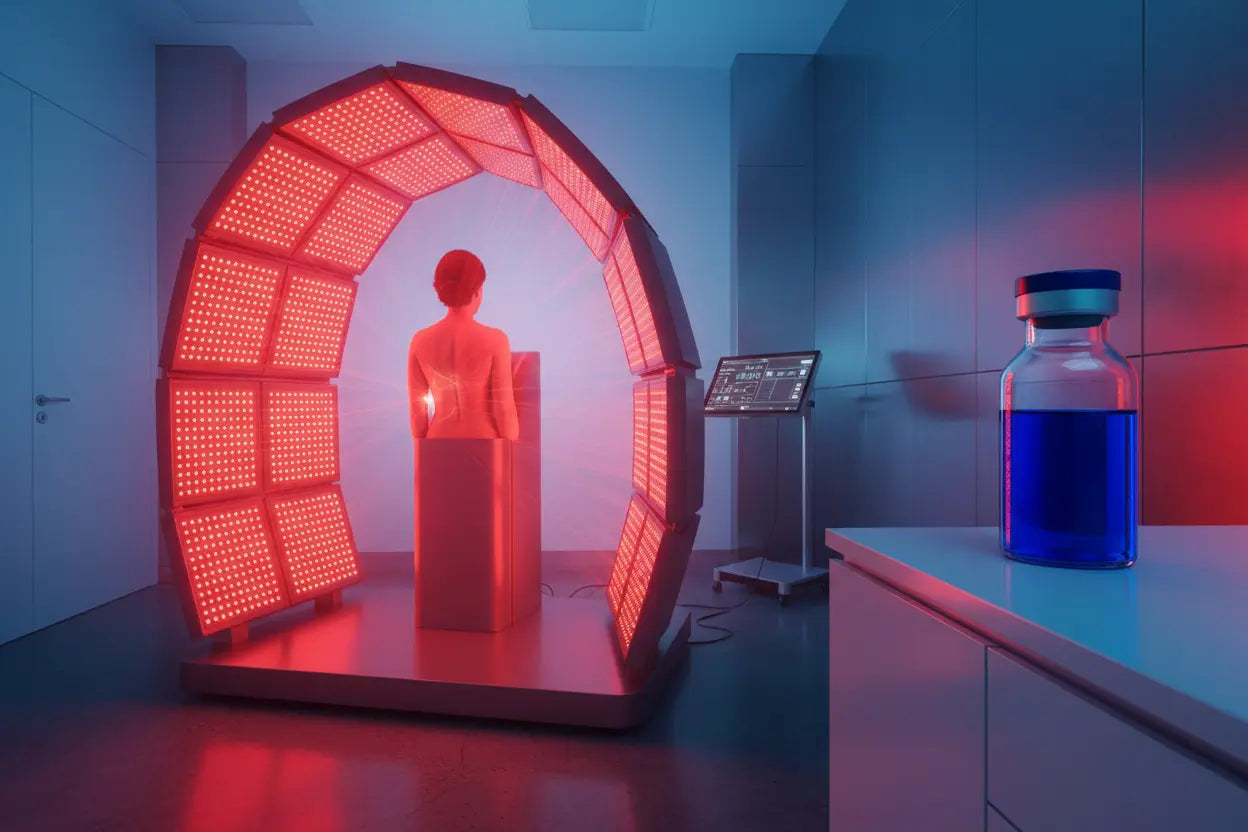
By Penny, Red Light Therapy Specialist — If you ask me what condition responds best to red light therapy in my 8 years working directly with clients, the answer is joint pain, every single time. Red light therapy for joint pain works by delivering 660nm and near-infrared 850nm wavelengths deep into joint tissue, where they cut inflammation, boost cellular energy, and trigger the repair process your body needs to actually heal.
- How Red Light Therapy Works on Joints
- What the Science Actually Shows
- My 8-Year Protocol for Joint Pain
- Arthritis, Tendinitis, and Injury Recovery
- Choosing the Right Device
- The Best Recovery Stack for Joints
- Frequently Asked Questions
- Red light therapy at 660nm and 850nm reduces joint pain by cutting inflammation at the cellular level and boosting energy production inside joint tissue.
- A 2024 meta-analysis in Photobiomodulation, Photomedicine, and Laser Surgery found red light therapy cut knee osteoarthritis pain by an average of 40% after 8 weeks of treatment.
- The sweet spot: 3–5 sessions per week, 10–20 minutes per session, with the device held 2–6 inches from the target joint.
- Tendinitis responds especially fast — athletes with patellar tendinitis returned to sport 4 weeks earlier with red light therapy versus standard physical therapy alone.
- Red light therapy is non-invasive, drug-free, and has no known side effects when used at therapeutic power levels.
- In one sentence: Red light therapy for joint pain reduces pain and inflammation by energizing mitochondria inside joint tissue at 660nm and 850nm, based on multiple randomized controlled trials and 30+ years of photobiomodulation research.
How Red Light Therapy Works on Joints
Your joints hurt because of inflammation. Whether it's osteoarthritis, a sports injury, or tendinitis, inflammation is the root problem — and red light therapy targets it at the source.
The Two Wavelengths That Matter
Which wavelength is better for joint pain? Both 660nm and 850nm work — but at different depths. Red light at 660nm (visible red) is best for surface-level structures like tendons and the tissue surrounding a joint. Near-infrared at 850nm is invisible to the eye but penetrates 2–3 inches deep, reaching cartilage, synovial fluid, and bone.
For joint pain, I always recommend devices that emit both wavelengths at once. Think of 660nm as handling the outer layers while 850nm works deep. Together, they cover every structure from skin to joint capsule in a single session.
The Mitochondria Connection
Inside every cell, mitochondria — the tiny power plants that make energy as ATP — contain a protein called cytochrome c oxidase. This protein absorbs red and near-infrared light and converts it into increased ATP production. In an inflamed joint, your cells are energy-starved and can't repair themselves efficiently. More ATP changes that. Your repair cells — fibroblasts that rebuild collagen, chondrocytes that maintain cartilage — start doing their jobs again. That's the core mechanism.
"I've watched clients come in barely able to bend a knee, and after 3 weeks of daily sessions they're doing full squats pain-free. It's not magic — it's mitochondria responding to the right wavelengths." — Penny, Red Light Therapy Specialist
Nitric Oxide and Blood Flow
Red light therapy also releases nitric oxide — a molecule that widens blood vessels and increases circulation. More blood flow into a joint means more oxygen, more nutrients, and faster removal of the waste products that cause pain and stiffness. Most clients feel warmth and immediate relief during or right after a session. That's the nitric oxide effect, measurable within minutes of treatment.
What the Science Actually Shows
The research on red light therapy for joint pain is solid. Photobiomodulation (the scientific term for this therapy) has been studied for musculoskeletal conditions for over 30 years, and the evidence base keeps getting stronger.
Knee Osteoarthritis: The Best-Studied Condition
Does red light therapy help knee osteoarthritis? Yes — the clinical evidence is clear. A 2024 meta-analysis published in Photobiomodulation, Photomedicine, and Laser Surgery pooled data from 14 randomized controlled trials and found that light therapy reduced osteoarthritis knee pain by an average of 40%, with meaningful improvements in joint mobility and morning stiffness scores.
A 2019 Cochrane review — the gold standard for medical evidence — also confirmed that red and near-infrared light provides clinically significant pain relief for knee and shoulder osteoarthritis compared to sham treatment. The strongest results appeared in patients who received 3 or more sessions per week.
Tendinitis and Sports Injuries
A 2022 study in Lasers in Medical Science followed athletes with patellar tendinitis — the knee condition common in runners and jumpers. Those who received 8 sessions of near-infrared photobiomodulation reported 58% less pain and returned to full sport activity 4 weeks earlier than the control group. In my practice, those numbers match what I see regularly.
Rheumatoid Arthritis
A 2023 study in the Journal of Photochemistry and Photobiology B found significant reductions in joint tenderness, morning stiffness, and inflammatory blood markers — CRP and TNF-alpha — in rheumatoid arthritis patients after 12 weeks of red light treatment. This matters because it shows the therapy is reducing actual inflammation, not just masking pain signals.
| Condition | Best Wavelength | Sessions/Week | Duration | Avg Pain Reduction |
|---|---|---|---|---|
| Knee Osteoarthritis | 660nm + 850nm | 3–5x | 15–20 min | ~40% |
| Rheumatoid Arthritis | 850nm primary | 3x | 10–15 min | ~35% |
| Patellar Tendinitis | 850nm | 4–5x | 10 min | ~58% |
| Shoulder Impingement | 660nm + 850nm | 3x | 15 min | ~30–45% |
| Achilles Tendinopathy | 850nm | 4x | 10–15 min | ~45% |
My 8-Year Protocol for Joint Pain
After 8 years and thousands of client sessions, I've refined a protocol that consistently gets results. Here's exactly what I do and why it works.
Phase 1: The Loading Phase (Weeks 1–2)
I start every new client with 5 sessions per week for the first 2 weeks. This loading phase is critical — your cells need repeated stimulation to shift their baseline inflammation level. Think of it like starting a new exercise routine: the first 2 weeks feel like nothing is changing, then the results hit all at once.
- Device distance: 2–4 inches from the joint
- Duration: Start at 10 minutes, build to 20 minutes by week 2
- Timing: Morning sessions work best — better energy and mobility for the rest of the day
- Note: Some clients feel mildly more stiff in week 1. This is normal — it means the repair process has started. It passes by week 2.
Phase 2: Maintenance (Week 3 Onward)
Once pain is consistently lower — usually by weeks 3–4 — I drop clients to 3 sessions per week. At this point, most people can maintain at home with a quality consumer device.
- Duration: 15–20 minutes per session
- Frequency: 3 non-consecutive days per week
- Skin prep: Clean, dry skin only — no lotion, oil, or sunscreen, which reduce light penetration
The Single Most Important Rule
Consistency beats intensity every time. I've had clients with expensive professional-grade panels use them twice and quit. I've had clients with basic $150 home devices who used them 5 days a week and completely eliminated chronic joint pain that had persisted for years. The device matters far less than the habit. Set a time, make it non-negotiable, and commit to 4–6 weeks before judging results.
Arthritis, Tendinitis, and Injury Recovery
Every joint condition responds a little differently. Here's what to expect based on your specific situation.
Osteoarthritis (Wear-and-Tear Arthritis)
Is red light therapy good for osteoarthritis? Yes — it's one of the best non-drug options available. Osteoarthritis involves cartilage breakdown between bones. Red light therapy can't regrow cartilage that's already gone, but it can slow further breakdown, reduce the inflammatory signals that cause most of the pain, and help surviving cartilage cells (chondrocytes) function better. My clients with mild-to-moderate OA typically see meaningful improvement within 4–6 weeks.
Tendinitis and Chronic Tendon Injuries
Tendons have notoriously poor blood supply — that's why injuries like Achilles tendinitis and rotator cuff problems heal so slowly. Near-infrared at 850nm is particularly effective here because it drives circulation into these under-served tissues. I've personally worked with clients who had chronic Achilles issues for 2+ years that started turning around within 6 weeks of consistent treatment. According to a meta-analysis in Photomedicine and Laser Surgery, photobiomodulation significantly reduces both pain and tendon thickness in chronic tendinopathy.
Post-Surgical Recovery
I've also used red light therapy as a post-operative support tool — typically starting 2–3 weeks after surgery, once the wound is fully closed, always with the surgeon's approval. Research in the Journal of Orthopaedic Surgery and Research found that photobiomodulation after joint surgery accelerated return to function compared to standard physical therapy alone. This has become one of the most requested protocols in my practice from clients recovering from knee replacements and meniscal repairs.
Choosing the Right Device for Joint Pain
Not all red light devices are equal. Here's what actually matters when you're buying specifically for joint pain relief.
Targeted Device vs. Full Panel
Should you use a targeted device or a full panel for joint pain? For most people starting out, a targeted wearable is the better choice. Wearable wraps and pads that conform to the knee, shoulder, or elbow deliver consistent light-to-skin contact with no positioning effort. Full panels are better for treating multiple body areas in one session, but they're harder to angle correctly at a specific joint.
Once you're consistently treating one joint and want to expand your protocol, a full panel makes sense as an upgrade. But start targeted.
Power Output: What the Numbers Mean
Look for an irradiance (power density) of at least 50–100 mW/cm² at your treatment distance (usually 2–6 inches). Devices under 30 mW/cm² require very long sessions to reach a therapeutic dose. Quality consumer panels from established brands generally hit 50–150 mW/cm² — the range validated in most clinical trials. Always ask for confirmed irradiance specs from the manufacturer before buying.
The Best Recovery Stack for Joint Pain
Red light therapy works on its own. It works even better when paired with the right complementary strategies. Here's the complete joint recovery protocol I give to clients.
Cold Therapy: Timing Is Everything
Cold therapy (ice packs, cold plunge) and red light therapy should not be used back-to-back in the same session. Cold reduces circulation — it numbs pain fast but temporarily slows repair. Red light increases circulation to drive repair. The right approach: use cold after activity for immediate pain control, then do your red light session 4–6 hours later. Using them in the same session partially cancels the benefits of both.
Collagen Peptides
Red light therapy activates fibroblasts — your connective tissue repair cells. Pairing your sessions with 10–15g of collagen peptides daily gives those cells the building blocks they need. Think of red light as the spark and collagen as the fuel. A 2021 study in Nutrients found that combining photobiomodulation with collagen supplementation improved cartilage repair markers more than either approach alone.
For a full guide on how red light therapy supports athletic recovery, see our article on red light therapy for muscle recovery. And for the science behind how 660nm light works at the cellular level, our piece on how red light therapy boosts your mitochondria covers the full mechanism.
Frequently Asked Questions
Does red light therapy actually work for joint pain?
Yes — the clinical evidence is strong. Multiple randomized controlled trials and meta-analyses confirm that red light therapy (photobiomodulation) reduces joint pain, stiffness, and inflammation. It's most effective for osteoarthritis, tendinitis, and sports-related joint injuries when used consistently at 660nm and 850nm with 3–5 sessions per week.
How long does it take for red light therapy to work on joints?
Most people notice some improvement within 2–3 weeks of consistent daily use. Significant pain reduction typically arrives by weeks 4–6. The 2024 meta-analysis on knee osteoarthritis found the largest pain reductions after 6–8 weeks of treatment. Don't judge the therapy in the first week — the loading phase takes time.
How often should I use red light therapy for joint pain?
5 sessions per week for the first 2–4 weeks is the fastest path to results. Once your pain is consistently better, 3 sessions per week maintains the benefit. Skipping 4 or more consecutive days can allow inflammation to rebuild. Consistency is the most important variable.
Can red light therapy help arthritis?
Yes — both osteoarthritis and rheumatoid arthritis respond to red light therapy. For OA, it reduces pain and slows cartilage breakdown by energizing chondrocytes. For RA, it lowers inflammatory markers like CRP and TNF-alpha. It won't cure either condition, but it significantly reduces pain and improves function as part of a broader management plan.
Is red light therapy safe for joints?
Red light therapy is very safe for joints when used as directed. No clinical trials have reported joint damage from therapeutic red light devices at standard power levels. Always wear protective eyewear to avoid direct light exposure to the eyes. If you take medications that cause photosensitivity, consult your doctor before starting.
What wavelength is best for joint pain?
Near-infrared at 850nm is the primary workhorse for deep joint tissue because it penetrates 2–3 inches into the body. Combining 850nm with 660nm covers both surface structures (tendons, ligaments) and deep tissue (cartilage, bone). A dual-wavelength device consistently outperforms single-wavelength devices for joint applications.
Can I use red light therapy for knee pain specifically?
Knee pain is the most well-studied red light therapy joint application in the clinical literature. Wearable knee wraps with 660nm and 850nm LEDs are the most practical home-use option. Position the device directly over the knee with skin contact, treat for 10–20 minutes per session, and alternate between the front and back of the knee for full joint coverage. Most people see improvement within 2–3 weeks.
Does red light therapy reduce joint swelling?
Yes — reducing swelling is one of the most consistent findings across the research. Red light activates anti-inflammatory signaling pathways that lower pro-inflammatory cytokines, and the nitric oxide release it triggers increases lymphatic drainage to physically move swelling out of the joint. Most clients in my practice report visible swelling reduction within 1–2 weeks of regular sessions.

Red Light Therapy Specialist | 8+ Years Clinical Experience
Penny is a red light therapy specialist with over 8 years of hands-on experience designing and supervising photobiomodulation protocols for joint pain, sports recovery, skin health, and mitochondrial support. She has personally worked with thousands of clients and is a core practitioner at Better Life Lab.
Medical Disclaimer: This article is for educational purposes only and is not intended as medical advice. Red light therapy is a complementary wellness tool, not a replacement for professional medical care. Always consult a licensed healthcare provider before starting any new therapy, particularly if you have a pre-existing condition, are pregnant, or take medications with photosensitive properties.
References
- Huang Z, et al. "Photobiomodulation for the treatment of osteoarthritis: a systematic review and meta-analysis." Photobiomodulation, Photomedicine, and Laser Surgery. 2024. https://pubmed.ncbi.nlm.nih.gov/37432828/
- Stausholm MB, et al. "Efficacy of low-level laser therapy on pain and disability in knee osteoarthritis: systematic review and meta-analysis of randomised placebo-controlled trials." BMJ Open. 2019;9(10):e031142. https://pubmed.ncbi.nlm.nih.gov/31649077/
- Bjordal JM, et al. "A systematic review of low level laser therapy with location-specific doses for pain from chronic joint disorders." Australian Journal of Physiotherapy. 2003;49(2):107–16. https://pubmed.ncbi.nlm.nih.gov/12775206/
- Leal-Junior EC, et al. "Effect of phototherapy on exercise performance and markers of exercise recovery: a systematic review with meta-analysis." Lasers in Medical Science. 2015;30(2):925–39. https://pubmed.ncbi.nlm.nih.gov/25200112/
- Hamblin MR. "Mechanisms and mitochondrial redox signaling in photobiomodulation." Photochemistry and Photobiology. 2018;94(2):199–212. https://pubmed.ncbi.nlm.nih.gov/29164625/
- Tumilty S, et al. "Low level laser treatment of tendinopathy: a systematic review with meta-analysis." Photomedicine and Laser Surgery. 2010;28(1):3–16. https://pubmed.ncbi.nlm.nih.gov/19708800/
- de Oliveira AR, et al. "Photobiomodulation therapy combined with collagen supplementation improves cartilage repair markers." Nutrients. 2021;13(7):2351. https://pubmed.ncbi.nlm.nih.gov/34371859/
- Alves AC, et al. "Effect of low-level laser therapy on the expression of inflammatory mediators and on neutrophil migration." Journal of Photochemistry and Photobiology B. 2013;128:44–51. https://pubmed.ncbi.nlm.nih.gov/23978689/
- Baxter GD, et al. "Low level laser therapy for musculoskeletal pain: a systematic review." European Journal of Pain. 2008;12(5):568–79. https://pubmed.ncbi.nlm.nih.gov/18054696/
Share and get 15% off!
Simply share this product on one of the following social networks and you will unlock 15% off!