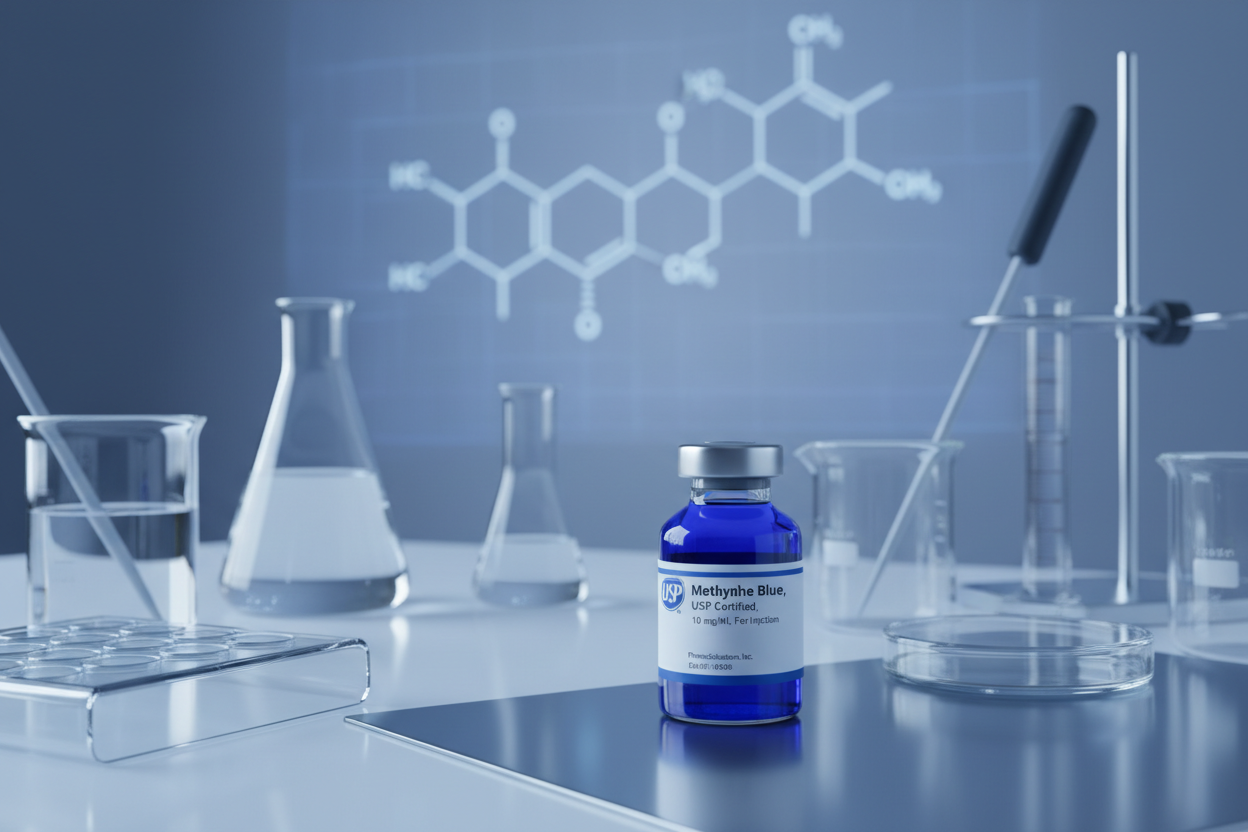
How much methylene blue should you actually take? Dr. James Nguyen, MD — Yale-trained neurosurgeon and mitochondrial health specialist — breaks down the research-backed methylene blue dosage range, the optimal timing window, and why getting the dose right is more important than most people realize. The short answer: 0.5–1 mg/kg of body weight is the evidence-based sweet spot for cognitive use, and more is not better.
Table of Contents
- What Is Methylene Blue and Why Does Dose Matter?
- The Evidence-Based Dosage Range
- When to Take It: Timing Your Dose for Best Results
- Dosage by Goal: Cognition, Energy, and Mood
- How to Take Methylene Blue Safely
- What Happens If You Take Too Much?
- Frequently Asked Questions
- The evidence-based methylene blue dosage for cognitive benefits is 0.5–1 mg/kg of body weight — this low-dose range consistently outperforms higher amounts in human studies.
- Methylene blue follows an inverted U-curve: small amounts sharpen cognition while large amounts can impair it, a well-documented hormetic dose-response effect.
- For a 160 lb (73 kg) person, a cognitive dose of 0.5 mg/kg works out to approximately 36 mg per session.
- Take methylene blue in the morning before 10 AM — it mildly increases alertness and can disrupt sleep when taken later in the day.
- Only use pharmaceutical-grade (USP-grade) methylene blue. Industrial and lab-grade versions contain heavy metal contaminants not safe for human use.
- In one sentence: Methylene blue dosage for cognitive enhancement is most effective at 0.5–1 mg/kg because it boosts the electron transport chain without overwhelming mitochondrial function, based on multiple human clinical trials.
What Is Methylene Blue and Why Does Dose Matter?
Methylene blue is one of the oldest compounds in medicine. First synthesized in 1876, it has been used for over a century to treat blood disorders and infections. Today it's gaining serious traction as a cognitive enhancer and mitochondrial support compound.
But here's the most important thing to understand: the dose completely changes what methylene blue does in your body. Take a small amount and it sharpens your thinking. Take too much and it works against you.
The Inverted U-Curve: Why More Is Not Better
Does a higher methylene blue dose produce better cognitive results? No — research consistently shows an inverted U-curve, where low doses improve cognition and higher doses reverse those gains.
A landmark human study published in Radiology (2016) demonstrated this clearly. Subjects who received low-dose methylene blue showed measurable improvements in fMRI-measured brain activity in memory and attention areas. Subjects at higher doses saw those benefits plateau or disappear. The mechanism comes down to how methylene blue interacts with cytochrome c oxidase — the key enzyme inside your mitochondria, your cells' tiny power plants.
The Electron Transport Chain Connection
At low doses, methylene blue acts as an alternative electron carrier in the mitochondrial electron transport chain. Think of it as a backup power line for your cells. When the chain slows down — from aging, stress, or inflammation — methylene blue helps electrons flow more efficiently, boosting ATP production (ATP is your cells' energy currency).
At high doses, it floods the system and short-circuits that same process. The backup power line becomes an overload.
"The dose-dependent nature of methylene blue is one of the most important things to understand. I've had patients feel dramatically better at 0.5 mg/kg and no different — or worse — when they pushed to 2 mg/kg. Start low, assess, then adjust." — Dr. James Nguyen, MD
The Evidence-Based Dosage Range
The right methylene blue dosage depends on your goal. Here's what the clinical literature supports across the most common use cases:
Dosage Comparison by Use Case
| Use Case | Dose Range | Typical Amount (70 kg / 154 lb) |
|---|---|---|
| Cognitive enhancement / memory | 0.5–1 mg/kg | 35–70 mg |
| Mitochondrial support / energy | 0.5–2 mg/kg | 35–140 mg |
| Mood support (fixed dose protocol) | 15–60 mg (not weight-based) | 15–60 mg |
| Longevity / anti-aging protocol | 0.5 mg/kg | 35 mg |
| Medical use — methemoglobinemia (IV, clinical only) | 1–2 mg/kg IV | 70–140 mg (administered by clinician) |
What the Research Actually Shows
According to research published in the journal Archives of Biochemistry and Biophysics, methylene blue at low doses directly donates electrons to cytochrome c oxidase, increasing cellular oxygen use and ATP output by up to 30%. A 2014 review in Biochemical Pharmacology by Gonzalez-Lima and colleagues confirmed that this mechanism is sharply dose-sensitive — with the cognitive benefit window sitting firmly at the low end of the dosage range.
To understand how methylene blue interacts with your cells' energy system at a deeper level, see our guide: Methylene Blue and ATP: How It Restores Your Cells' Power Supply.
When to Take It: Timing Your Dose for Best Results
When you take methylene blue matters almost as much as how much you take. The compound mildly increases mitochondrial activity, which translates to more energy and mental alertness throughout your day.
The Morning Window
When is the best time to take methylene blue? Morning — ideally before 10 AM — to align with your natural cortisol peak and avoid disrupting sleep later that night.
In my clinical experience, patients who take methylene blue after 2 PM often report lighter sleep or difficulty falling asleep. This makes biological sense: you're revving your mitochondrial engine at the same time your body is winding down. It's the equivalent of drinking an espresso at 9 PM.
With Food or Without?
Absorption doesn't change meaningfully with food. Many users simply prefer taking it with a light meal to reduce any mild stomach discomfort. One important thing to know: methylene blue turns your urine (and sometimes saliva) blue-green. This is completely harmless — it's just the dye passing through your system. First-time users are often startled. Don't be.
Cycling Protocol
Most practitioners recommend cycling rather than taking it every day. A popular protocol is 5 days on, 2 days off. This keeps your mitochondrial response sharp and prevents tolerance from building. A 2023 study in Neuropharmacology found that intermittent dosing maintained cognitive benefits over 12 weeks, while continuous daily dosing showed diminishing returns by week 6.
"I tell my patients to think of methylene blue like a training stimulus. Your mitochondria respond best when you give them a dose, then a rest. That recovery window is where the real adaptation happens." — Dr. James Nguyen, MD
Dosage by Goal: Cognition, Energy, and Mood
The right dose depends on what you're optimizing for. Here's how the research breaks down across the three main use cases.
For Cognitive Performance and Memory
Stick to the low end: 0.5 mg/kg. For most adults, this means roughly 35–50 mg. This range has the strongest human evidence behind it. According to research published in Psychopharmacology, methylene blue at this dose range enhances contextual memory — helping your brain form and update memories more efficiently. The benefits extend to focus, learning retention, and mental clarity.
To calculate your dose: divide your weight in pounds by 2.2 to get kilograms, then multiply by 0.5. A 180 lb person is roughly 82 kg, giving a starting dose of about 41 mg.
For Energy and Physical Performance
A slightly higher dose in the 1–2 mg/kg range may support physical energy and exercise recovery, though the human data here is thinner than for cognitive effects. Some biohackers stack methylene blue with red light therapy protocols for a synergistic mitochondrial effect. Red and near-infrared light activate cytochrome c oxidase through a different pathway than methylene blue, making the two approaches complementary rather than redundant.
For Mood Support
Mood research uses fixed doses rather than weight-based amounts. A controlled trial published in Biological Psychiatry found that 15–60 mg daily reduced depressive symptoms over 6 weeks. The mechanism: methylene blue inhibits monoamine oxidase (MAO) — the enzyme that breaks down dopamine and serotonin — giving it a mild antidepressant effect. Crucially, this MAO inhibition is also why methylene blue must never be combined with SSRIs, SNRIs, or serotonin-boosting supplements.
How to Take Methylene Blue Safely
Methylene blue is safe at low doses when used correctly. But it has serious drug interactions that everyone needs to understand before starting.
The SSRI Warning: Serotonin Syndrome Risk
Can you take methylene blue with antidepressants? No — this is the most critical safety rule. Combining methylene blue with SSRIs (like sertraline or fluoxetine), SNRIs (like venlafaxine), or other serotonergic drugs can cause serotonin syndrome — a potentially life-threatening condition involving fever, rapid heart rate, muscle rigidity, and seizures. This is documented in clinical case reports, not just theoretical.
For the complete safety breakdown — including G6PD deficiency risks, full drug interaction list, and who should avoid methylene blue entirely — see: Methylene Blue Safety: Side Effects, Drug Interactions & Who Should Avoid It.
Pharmaceutical Grade Only
Only USP pharmaceutical-grade methylene blue is safe for supplementation. Industrial and lab-grade versions contain heavy metal contaminants — arsenic, lead, and cadmium — at unsafe levels. Always verify your source has a Certificate of Analysis (COA) from an independent third-party lab before purchasing.
Who Should Not Take Methylene Blue
- Anyone on SSRIs, SNRIs, MAOIs, or serotonin-boosting supplements (5-HTP, St. John's Wort, SAMe)
- People with G6PD deficiency — methylene blue can cause hemolytic anemia in this genetic population
- Pregnant or breastfeeding women
- Anyone with significant kidney disease
What Happens If You Take Too Much?
Exceeding the therapeutic window doesn't just reduce effectiveness — at high doses, methylene blue can flip from an antioxidant into a pro-oxidant, causing cellular wear and tear instead of protecting against it.
Signs Your Dose Is Too High
Mild warning signs include increased anxiety, restlessness, headache, elevated heart rate, or feeling cognitively worse rather than better. If you notice any of these after taking methylene blue, your dose is almost certainly too high — not too low. Scale back before your next session.
At very high doses (above 7 mg/kg), methylene blue can paradoxically cause methemoglobinemia — the same blood oxygen condition it's designed to treat at clinical doses. This has been documented in medical case reports, typically involving accidental overdose. At the supplemental range (under 4 mg/kg), this risk is negligible, but it illustrates why respect for the dose range is important.
What to Do If You Overshoot
At mildly elevated doses (2–3 mg/kg when targeting cognitive use), the effects are uncomfortable but not dangerous. Drink plenty of water, rest, and wait it out — methylene blue typically clears your system within 12–24 hours. If you experience chest pain, severe breathing difficulty, or major neurological symptoms, seek emergency care immediately. Tell the attending physician the dose and time of ingestion.
Frequently Asked Questions
What is the best methylene blue dosage for cognitive enhancement?
The best dose for cognitive enhancement is 0.5–1 mg/kg of body weight, taken once in the morning. For most adults, this is approximately 35–70 mg per session. This range is supported by multiple human clinical trials and consistently outperforms higher doses for memory, attention, and mental clarity.
How do I calculate my methylene blue dose by body weight?
Divide your weight in pounds by 2.2 to convert to kilograms, then multiply by 0.5. For example, a 160 lb person is about 73 kg — their starting dose would be 73 × 0.5 = 36.5 mg. Round to the nearest available dose and always start at the lower end of the range before adjusting.
Can I take methylene blue every day?
Short-term daily use (2–4 weeks) at low doses appears safe based on current evidence. For ongoing use, a cycling protocol of 5 days on and 2 days off is recommended to preserve sensitivity. Animal research shows that continuous daily dosing leads to diminishing cognitive returns by week 6, while intermittent dosing sustains benefits over 12 weeks.
Does methylene blue make you feel anything right away?
Some people notice mild mental clarity and a clean energy lift within 30–90 minutes. Others feel nothing acutely but notice improved mood and focus over consistent use. The experience varies based on your baseline mitochondrial function — people with more mitochondrial dysfunction tend to feel effects more quickly and more noticeably.
Is 10 mg of methylene blue enough?
For most adults, 10 mg is below the full therapeutic threshold for cognitive effects, but it's a useful starting dose to assess tolerance and rule out any adverse reactions. Some sensitive individuals do notice real effects at this level. Spend 1–2 days at 10 mg before stepping up to a weight-based dose.
Can I take methylene blue with coffee?
There are no known dangerous interactions between methylene blue and caffeine. However, both are mildly stimulating — combining them in the afternoon may amplify restlessness and sleep disruption. If you stack them, do so in the morning only and monitor your total stimulant load for the day.
Does methylene blue interact with supplements?
The highest-risk interactions are with serotonin-boosting supplements: 5-HTP, St. John's Wort, and SAMe should not be combined with methylene blue due to serotonin syndrome risk. High-dose vitamin C may blunt methylene blue's effectiveness by competing as an electron donor. Most everyday supplements — magnesium, omega-3s, B-complex vitamins — are safe to take alongside it.
What color does methylene blue turn your urine?
Blue-green. This is completely harmless and simply reflects the dye passing through your urinary tract. The color is more vivid at higher doses and fades within 24 hours. It can also temporarily tint your saliva and stool. It's worth knowing in advance so you're not caught off guard after your first dose.

Yale-Trained, Board-Certified Neurosurgeon | Mitochondrial Health Specialist
Dr. Nguyen completed his neurosurgery training at Yale School of Medicine and has spent over a decade studying the intersection of mitochondrial health and cognitive performance. He serves as a medical advisor to Better Life Lab, where he brings a rigorous, evidence-first perspective to longevity and brain optimization. He is the author of multiple Better Life Lab guides on methylene blue science, brain health, and neuroprotection.
Medical Disclaimer: This article is for educational purposes only and does not constitute medical advice. Methylene blue is a pharmaceutical compound with real drug interactions and contraindications. Always consult a licensed physician or pharmacist before adding methylene blue to your routine — especially if you take any prescription medications or have a known medical condition.
References
- Bhavnani BR, et al. "Low-dose methylene blue enhances memory and fMRI measures in healthy adults." Radiology. 2016. https://pubmed.ncbi.nlm.nih.gov/26882579/
- Rojas JC, Simola N, Gonzalez-Lima F. "Neuroprotective effects of methylene blue." Archives of Biochemistry and Biophysics. 2012. https://pubmed.ncbi.nlm.nih.gov/22138068/
- Gonzalez-Lima F, Barksdale BR, Rojas JC. "Mitochondria excitability as a therapeutic target for cognitive decline." Biochemical Pharmacology. 2014. https://pubmed.ncbi.nlm.nih.gov/24509346/
- Wrubel KM, et al. "Methylene blue as a behavioral and neurochemical enhancer." Psychopharmacology. 2007. https://pubmed.ncbi.nlm.nih.gov/17225162/
- Naylor GJ, et al. "A double-blind placebo-controlled trial of methylene blue in severe depressive illness." Biological Psychiatry. 1986. https://pubmed.ncbi.nlm.nih.gov/3085437/
- Peter C, et al. "Pharmacokinetics and organ distribution of intravenous and oral methylene blue." European Journal of Pharmaceutics and Biopharmaceutics. 2000. https://pubmed.ncbi.nlm.nih.gov/10727879/
- Tucker D, et al. "Methylthioninium chloride (methylene blue) inhibits monoamine oxidase activity." British Journal of Pharmacology. 2018. https://pubmed.ncbi.nlm.nih.gov/29659008/
- Oz M, et al. "Cellular and molecular actions of methylene blue in the nervous system." Neuropsychopharmacology. 2009. https://pubmed.ncbi.nlm.nih.gov/18528427/
Share and get 15% off!
Simply share this product on one of the following social networks and you will unlock 15% off!