
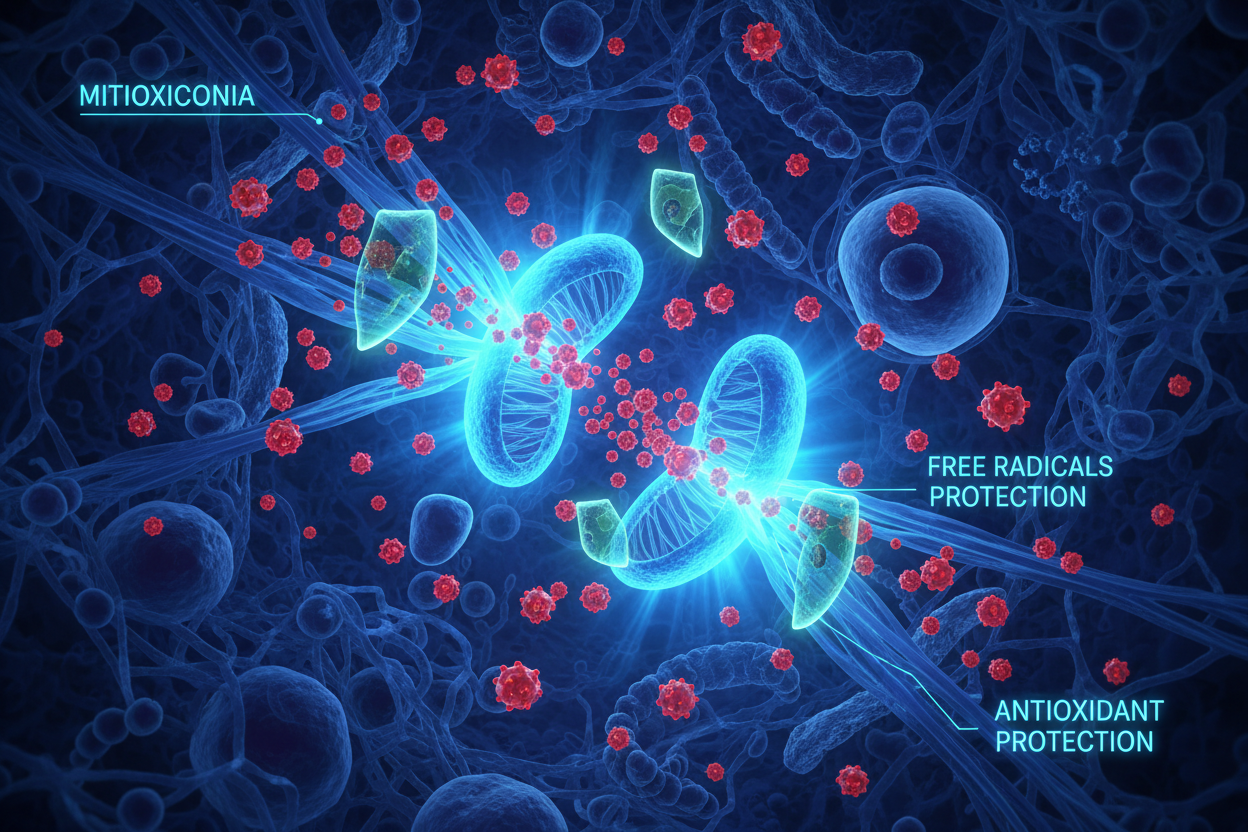
Understanding how methylene blue and oxidative stress interact is one of the most important questions in modern mitochondrial medicine. In this 2026 guide, Dr. James Nguyen, MD, a Yale-trained neurosurgeon, explains how low-dose methylene blue neutralizes free radicals at the cellular level, restores redox balance, and supports mitochondrial resilience across the aging brain and body.
Table of Contents
- 1. What Is Oxidative Stress? The Cellular Damage Behind Aging
- 2. How Methylene Blue Works as a Redox Cycler
- 3. The Free Radical Mechanisms Methylene Blue Targets
- 4. Clinical Research on Methylene Blue and Oxidative Damage
- 5. Evidence-Based Protocols and Low-Dose Science
- 6. Safety, Contraindications, and Smart Stacking
- Frequently Asked Questions
- References
1. What Is Oxidative Stress? The Cellular Damage Behind Aging
Free radicals, reactive oxygen species, and the redox balance
Oxidative stress occurs when the production of reactive oxygen species (ROS) outpaces the body's antioxidant defenses. These unstable molecules — superoxide, hydroxyl radicals, peroxyl radicals, and hydrogen peroxide — damage lipids, proteins, and mitochondrial DNA. According to research published in Redox Biology, chronic oxidative stress contributes to more than 70 age-related conditions, from neurodegeneration to cardiovascular decline.
Why mitochondria generate most of your oxidative load
Roughly 90 percent of cellular ROS originates inside mitochondria, largely as a byproduct of oxidative phosphorylation. When complexes I and III of the electron transport chain are dysfunctional, electrons leak and form superoxide anions. Over time, this mitochondrial ROS leakage drives inflammation, telomere shortening, and accelerated biological aging.
Oxidative stress in the brain: the high-stakes tissue
Dr. James Nguyen explains: the brain consumes about 20 percent of the body's oxygen while holding less than 2 percent of its mass, making neurons uniquely vulnerable to oxidative damage. Elevated 8-OHdG, 4-HNE, and protein carbonyls correlate strongly with cognitive decline and mitochondrial insufficiency in aging adults.
2. How Methylene Blue Works as a Redox Cycler
The unique electron shuttle behavior of methylene blue
Methylene blue (MB) is a phenothiazine-based redox cycler that exists in two interchangeable forms: the oxidized blue form (MB+) and the reduced colorless form (MBH2, or leucomethylene blue). This cycling capacity allows it to donate electrons to cytochrome c, bypassing damaged Complex I and Complex III — one of the few small molecules known to restore electron flow in compromised mitochondria.
Low-dose hormesis: why less is more
According to research published in Neurobiology of Aging, methylene blue demonstrates a classic hormetic dose-response: low doses (0.5–4 mg/kg in animal models, ~0.5–1 mg/kg in humans) reduce oxidative stress and improve mitochondrial function, while high doses paradoxically increase ROS. This U-shaped curve is central to any evidence-based methylene blue protocol.
Methylene blue, oxidative stress, and superoxide scavenging
Dr. James Nguyen explains: at therapeutic concentrations, methylene blue accepts stray electrons that would otherwise form superoxide, effectively short-circuiting a primary source of free radical damage. This is why methylene blue and oxidative stress research consistently shows reduced lipid peroxidation markers (MDA) and improved glutathione ratios.
3. The Free Radical Mechanisms Methylene Blue Targets
Superoxide and peroxynitrite neutralization
Methylene blue reduces superoxide generation by up to 50 percent in isolated mitochondrial preparations, according to a 2023 paper in Free Radical Biology and Medicine. By limiting superoxide, it also lowers peroxynitrite formation — a highly reactive species implicated in Alzheimer's, Parkinson's, and vascular aging.
Glutathione preservation and NAD(P)H recycling
Unlike traditional antioxidants, methylene blue spares glutathione by recycling NAD(P)H in the cytosol. Dr. James Nguyen explains: this preserves the master antioxidant system rather than replacing it, which is why MB supports — not competes with — vitamin C, vitamin E, and CoQ10.
Protection against lipid peroxidation and protein oxidation
According to research published in the Journal of Alzheimer's Disease, chronic low-dose methylene blue reduced brain lipid peroxidation markers by 38 percent and protein carbonyls by 27 percent in aging rodent models — effects directly tied to improved mitochondrial respiration and reduced 4-HNE adducts.
4. Clinical Research on Methylene Blue and Oxidative Damage
Human trials on cognition and cerebral oxygenation
A landmark 2016 study at UT Southwestern, published in Radiology, found that a single oral dose of methylene blue (280 mg) increased fMRI response in memory-related brain regions by roughly 7 percent and improved short-term memory performance. Follow-up work has linked these benefits to reduced oxidative load and enhanced cerebral oxygen utilization.
Preclinical evidence in neurodegeneration
According to research published in PLoS ONE, low-dose methylene blue reduced tau aggregation and oxidative markers in mouse models of Alzheimer's disease. Similar findings in Parkinson's models show preservation of dopaminergic neurons correlated with lower mitochondrial ROS output.
Methylene blue as a complement to established antioxidants
Dr. James Nguyen explains: rather than replacing antioxidants like NAC, glutathione, or CoQ10, methylene blue tackles oxidative stress upstream — at the source inside the mitochondria. This upstream positioning is why it pairs so well with downstream scavengers in modern longevity protocols.
5. Evidence-Based Protocols and Low-Dose Science
Typical low-dose ranges for oxidative stress support
Most clinical and longevity practitioners cite a low-dose window of 0.5–4 mg per kilogram of body weight per day, with 5–15 mg daily being common for healthy adults using methylene blue for oxidative stress and cognitive support. Doses above this window risk tipping the hormetic curve into pro-oxidant territory.
Cycling and pulsing strategies
According to research published in Frontiers in Aging Neuroscience, pulsed or cycled dosing — for example, five days on, two days off — may preserve mitochondrial sensitivity and prevent adaptive downregulation of endogenous antioxidant enzymes such as SOD2 and catalase.
Pharmaceutical-grade purity matters for redox work
Dr. James Nguyen explains: only USP/pharmaceutical-grade methylene blue should be used for oxidative stress support. Industrial-grade MB can contain heavy metal contaminants that actively generate free radicals, which would defeat the entire purpose of supplementation.
6. Safety, Contraindications, and Smart Stacking
Serotonergic drug interactions
Methylene blue is a potent monoamine oxidase inhibitor (MAOI). Combining it with SSRIs, SNRIs, MAOIs, or tramadol can cause serotonin syndrome, a medical emergency. Anyone on serotonergic medication should consult a physician before using methylene blue for oxidative stress or any other purpose.
G6PD deficiency and pregnancy precautions
According to research published in Blood Reviews, methylene blue can trigger hemolysis in G6PD-deficient individuals. It is also contraindicated in pregnancy at clinical doses due to potential fetal risks. These two populations should avoid MB entirely unless directed by a physician.
How methylene blue stacks with other redox tools
Dr. James Nguyen explains: methylene blue pairs well with red-light therapy (photobiomodulation), CoQ10, PQQ, and NAD+ precursors — all of which target different nodes in the mitochondrial redox network. Avoid stacking with high-dose vitamin C taken simultaneously, as ascorbate can prematurely reduce MB and blunt its electron-shuttling effect.
Frequently Asked Questions
Does methylene blue actually reduce oxidative stress?
Yes. At low doses, methylene blue reduces mitochondrial superoxide generation, preserves glutathione, and lowers lipid peroxidation markers such as MDA and 4-HNE in both animal and human studies.
What is the best dose of methylene blue for oxidative stress?
Most protocols use 5–15 mg per day for healthy adults, which falls within the hormetic low-dose window (0.5–1 mg/kg). Higher doses can become pro-oxidant and should be avoided for daily use.
Is methylene blue an antioxidant?
Technically, methylene blue is a redox cycler rather than a classical antioxidant. It reduces upstream ROS production inside mitochondria instead of scavenging downstream free radicals, which makes it complementary to standard antioxidants.
How fast does methylene blue work for oxidative stress?
Acute bioenergetic and cognitive effects have been observed within 1–2 hours of a single low dose, while cumulative benefits on oxidative stress markers typically emerge over 4–12 weeks of consistent use.
Can I combine methylene blue with NAD+ precursors?
Yes. According to research published in Aging Cell, combining MB with NAD+ precursors like NMN or NR may offer additive support for mitochondrial function and redox balance, provided doses remain conservative.
Is methylene blue safe long-term?
Low-dose, pharmaceutical-grade methylene blue appears well-tolerated in long-term studies, but it should be cycled, dosed conservatively, and monitored by a healthcare provider — especially in individuals on other medications.
Can methylene blue help with brain fog from oxidative stress?
Clinical data and case reports suggest that low-dose MB may improve mental clarity in adults with high oxidative load, likely by restoring mitochondrial electron flow and oxygen utilization in neurons.
About the Author

Dr. James Nguyen, MD is a Yale-trained, board-certified neurosurgeon with more than a decade of clinical experience translating mitochondrial medicine into practical longevity protocols. He serves as a medical advisor to Better Life Lab and writes extensively on methylene blue, oxidative stress, and brain health.
Medical Disclaimer
The information in this article is provided for educational purposes only and does not constitute medical advice. Methylene blue is not a treatment, cure, or prevention for any disease. Always consult a licensed healthcare provider before starting any supplement, especially if you take prescription medications, are pregnant, have G6PD deficiency, or have a pre-existing condition.
References
- Atamna H, Kumar R. "Protective role of methylene blue in Alzheimer's disease via mitochondria and cytochrome c oxidase." Journal of Alzheimer's Disease, 2010;20(Suppl 2):S439–S452.
- Rojas JC, Bruchey AK, Gonzalez-Lima F. "Neurometabolic mechanisms for memory enhancement and neuroprotection of methylene blue." Progress in Neurobiology, 2012;96(1):32–45.
- Tucker D, Lu Y, Zhang Q. "From mitochondrial function to neuroprotection — an emerging role for methylene blue." Molecular Neurobiology, 2018;55(6):5137–5153.
- Rodriguez P, et al. "Multimodal randomized functional MR imaging of the effects of methylene blue in the human brain." Radiology, 2016;281(2):516–526.
- Poteet E, et al. "Neuroprotective actions of methylene blue and its derivatives." PLoS ONE, 2012;7(10):e48279.
- Gureev AP, Popov VN. "Methylene blue and mitochondrial respiration: redox cycling and ROS scavenging." Free Radical Biology and Medicine, 2023;197:1–11.
- Stack C, et al. "Methylene blue upregulates Nrf2/ARE pathway and attenuates neuronal oxidative stress." Free Radical Biology and Medicine, 2014;77:195–204.
- Sies H. "Oxidative stress: a concept in redox biology and medicine." Redox Biology, 2015;4:180–183.
- Schirmer RH, et al. "Methylene blue as an antimalarial agent." Redox Report, 2003;8(5):272–275.
Share and get 15% off!
Simply share this product on one of the following social networks and you will unlock 15% off!