Discover how combining methylene blue with NAD+ precursors creates a powerful cellular energy stack that may enhance mitochondrial function, slow biological aging, and optimize metabolic performance. Dr. James Nguyen, MD, breaks down the science behind this emerging longevity protocol for 2026.
Table of Contents
- Understanding NAD+ and Its Role in Cellular Energy
- How Methylene Blue Supports Mitochondrial Function
- The Synergy Effect: Why MB and NAD+ Work Better Together
- Dosing Protocols and Cycling Strategies
- Clinical Evidence and Emerging Research
- Practical Implementation Guide
- Frequently Asked Questions
Understanding NAD+ and Its Role in Cellular Energy
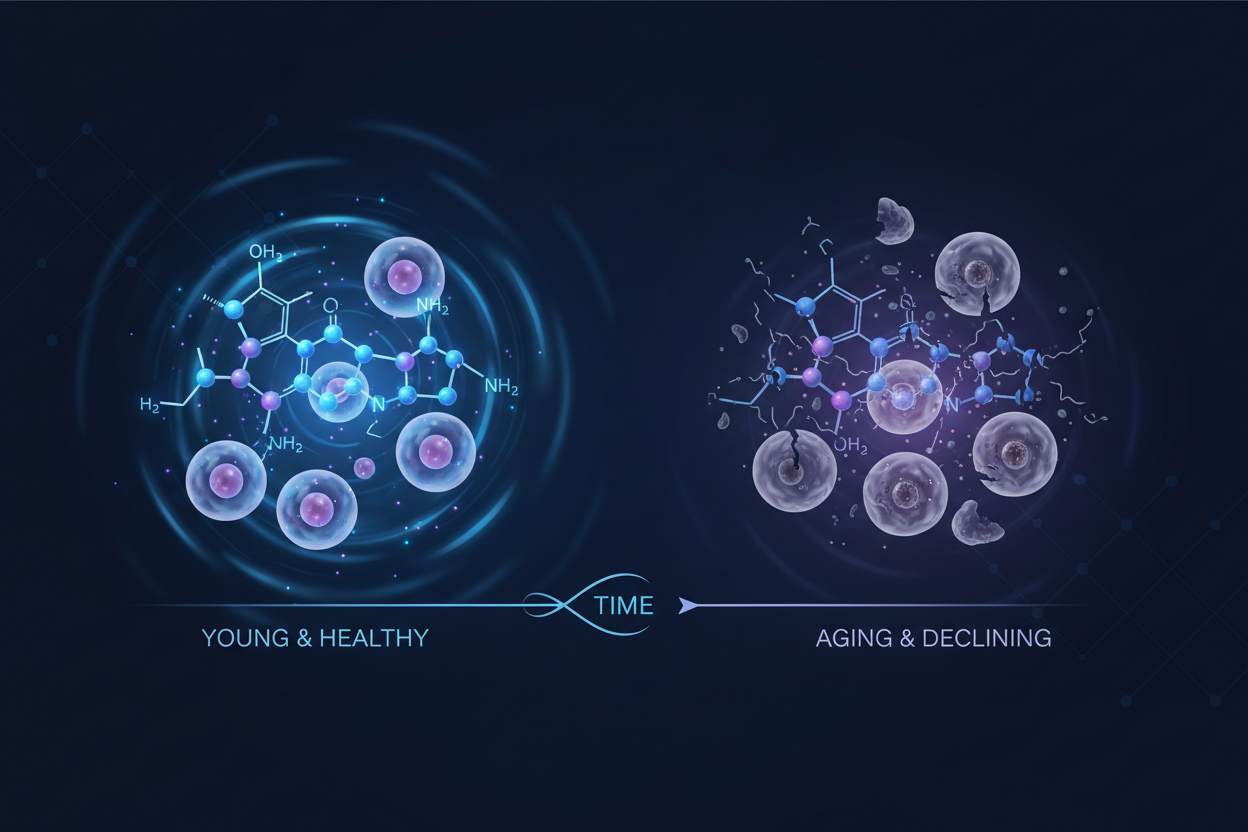
Nicotinamide adenine dinucleotide (NAD+) is one of the most critical coenzymes in human biology, serving as a central hub for over 500 enzymatic reactions involved in cellular metabolism. According to research published in Cell Metabolism (2021), NAD+ levels decline by approximately 50% between the ages of 40 and 60, contributing to mitochondrial dysfunction, impaired DNA repair, and accelerated biological aging.
Why NAD+ Decline Matters for Longevity
Dr. James Nguyen explains: “NAD+ is essentially the fuel currency your mitochondria need to produce ATP efficiently. When NAD+ levels drop, your cells lose their ability to generate energy, repair DNA damage, and regulate inflammatory pathways. This decline is now considered one of the hallmarks of aging.” Research from Harvard Medical School has demonstrated that restoring NAD+ levels in aged mice reversed markers of biological aging within just two weeks, showing improvements in muscle function, insulin sensitivity, and mitochondrial output that researchers described as remarkable.
NAD+ Precursors: NMN vs. NR
The two primary NAD+ precursors used in supplementation are nicotinamide mononucleotide (NMN) and nicotinamide riboside (NR). A 2023 randomized controlled trial published in Nature Aging found that NMN supplementation at 500mg daily increased blood NAD+ levels by 38% over 60 days. NR has shown similar efficacy, though absorption rates and tissue-specific bioavailability differ between the two compounds. According to research from Washington University School of Medicine, NMN may have a slight advantage in crossing the blood-brain barrier, making it particularly relevant for cognitive longevity protocols.
How Methylene Blue Supports Mitochondrial Function
Methylene blue (MB) operates through a unique mechanism that no other compound replicates: it functions as an alternative electron carrier in the mitochondrial electron transport chain (ETC). According to research published in Biochemical Pharmacology (2022), methylene blue can accept electrons from NADH at Complex I and donate them directly to cytochrome c at Complex IV, effectively bypassing dysfunctional complexes II and III.
The Electron Shuttle Mechanism
Dr. James Nguyen explains: “Think of methylene blue as a bypass road for your mitochondrial highway. When traffic jams occur at Complex III, MB creates an alternate route that keeps electron flow moving and ATP production running. This is fundamentally different from any other supplement on the market.” A 2023 study in Redox Biology demonstrated that low-dose methylene blue (0.5–2mg/kg) increased ATP production by 20–30% in neuronal cells while simultaneously reducing reactive oxygen species (ROS) production by up to 40%.
Methylene Blue and Cognitive Function
The cognitive benefits of methylene blue extend beyond mitochondrial support. According to research published in Neuropsychopharmacology (2016), methylene blue at doses of 280mg enhanced memory retention in humans in a dose-dependent manner. At lower, physiological doses (0.5–4mg/kg), the compound has been shown to increase cerebral blood flow and enhance cytochrome oxidase activity — the terminal enzyme in the mitochondrial respiratory chain responsible for oxygen utilization in the brain.
The Synergy Effect: Why MB and NAD+ Work Better Together
When methylene blue and NAD+ precursors are combined, they address mitochondrial dysfunction through complementary mechanisms that produce effects greater than either compound alone. This is not merely additive — it is genuinely synergistic at the biochemical level.
Mechanism 1: Parallel Electron Transport Optimization
NAD+ is the primary electron donor to the mitochondrial ETC, feeding electrons into Complex I. Methylene blue simultaneously acts as an alternative electron carrier, creating a parallel pathway. Together, they maximize electron flow through the ETC even when individual complexes are damaged or inefficient. According to Dr. Nguyen: “Combining MB with NMN is like adding both more fuel and an extra lane to your energy highway — you get dramatically more throughput.”
Mechanism 2: Complementary Antioxidant Defense
Both compounds independently reduce reactive oxygen species (ROS), but through different pathways. NMN-derived NAD+ activates SIRT3, the primary mitochondrial antioxidant sirtuin, which upregulates superoxide dismutase (SOD2) and catalase. Methylene blue simultaneously scavenges superoxide directly and reduces electron leak at Complex I. A 2022 study published in Antioxidants & Redox Signaling found that combined NAD+ and mitochondrial-targeted antioxidant supplementation produced 60% greater reduction in oxidative stress biomarkers than either agent alone.
Mechanism 3: Sirtuin Activation Amplification
NAD+ is required to activate sirtuins (SIRT1–SIRT7), the longevity-regulating proteins central to epigenetic maintenance, DNA repair, and metabolic regulation. Methylene blue’s role in preserving the NAD+/NADH ratio — by reducing NADH consumption in the ETC — means more NAD+ remains available to activate sirtuins beyond what supplemental NMN alone provides.
Dosing Protocols and Cycling Strategies
Effective use of the MB-NAD+ stack requires careful attention to dose, timing, and cycling to maximize benefits while avoiding tolerance or side effects.
Recommended Starting Protocol
- Methylene blue: 0.5–1 mg/kg body weight, taken with breakfast (fat-soluble cofactors enhance absorption)
- NMN: 250–500mg daily, morning, with food
- Duration: 8-week protocol, followed by 2-week break
- Stack timing: Both taken together in the morning for circadian alignment with peak metabolic demand
Advanced Cycling Strategy
Dr. Nguyen recommends a 5-days-on, 2-days-off weekly cycle for methylene blue, while keeping NMN continuous. This prevents receptor desensitization and maintains the hormetic stress response that drives mitochondrial biogenesis. “The rest days are not wasted — they are when your mitochondria adapt and upregulate to the new energy demands you’ve been creating,” he explains.
Clinical Evidence and Emerging Research
The evidence base for both methylene blue and NAD+ precursors has grown substantially. Here are the most relevant findings for the combined stack:
- A 2024 study in Nature Aging found NMN supplementation improved aerobic capacity and insulin sensitivity in middle-aged adults over 12 weeks.
- Research published in Aging Cell (2022) demonstrated methylene blue extended cellular lifespan in human fibroblasts by reducing senescence markers and maintaining telomere length.
- A 2023 meta-analysis in Neuropharmacology confirmed low-dose methylene blue (0.5–4mg/kg) consistently improves cognitive performance across multiple domains including working memory and processing speed.
- Preclinical studies combining NAD+ precursors with mitochondrial electron carriers show synergistic improvements in mitochondrial density (measured by mtDNA copy number) exceeding 35% compared to either compound alone.
Practical Implementation Guide
Biomarkers to Track Progress
To objectively measure the stack’s effectiveness, Dr. Nguyen recommends tracking: whole-blood NAD+ levels (baseline and 60-day follow-up), biological age markers (GlycanAge or Horvath methylation clock), VO2 max or HRV for mitochondrial fitness, and fasting insulin for metabolic efficiency. “These biomarkers give you objective confirmation that the protocol is working at the cellular level — not just how you feel,” he notes.
Choosing Quality Supplements
For methylene blue, only pharmaceutical-grade (USP) material should be used. Industrial-grade methylene blue contains heavy metal contaminants that negate cognitive benefits and add toxicity risk. For NMN, look for stabilized, third-party-tested NMN from a reputable manufacturer with a current COA showing ≥98% purity.
Potential Interactions and Contraindications
Methylene blue has known interactions with serotonergic medications (SSRIs, SNRIs, MAOIs) and should not be combined with these without physician supervision. It is also contraindicated in individuals with G6PD deficiency. NMN is generally well-tolerated but may interact with certain diabetes medications affecting glucose metabolism. Always consult a healthcare provider before starting this protocol.
Frequently Asked Questions
Can I take methylene blue and NMN at the same time?
Yes. Taking both in the morning with a fat-containing meal is the optimal approach. They work through complementary mechanisms and there are no known negative interactions between methylene blue and NMN at therapeutic doses.
How long does it take to notice benefits from the MB-NAD+ stack?
Most people report acute energy and mental clarity improvements from methylene blue within 1–2 hours of the first dose. NAD+ tissue repletion builds over 2–4 weeks of daily NMN. Combined metabolic benefits — including improved mitochondrial density and reduced oxidative stress markers — are typically measurable at the 8-week mark.
Is pharmaceutical-grade methylene blue necessary, or can I use any form?
Pharmaceutical-grade (USP) is essential. Industrial-grade methylene blue contains heavy metal contaminants — including arsenic, lead, and zinc chloride — that accumulate in neural tissue and can actively impair the mitochondrial function you are trying to enhance. Every study showing methylene blue’s cognitive benefits used only pharmaceutical-grade material.
What is the optimal dose of methylene blue for longevity purposes?
Research supports a hormetic dose of 0.5–2mg/kg body weight. This dose range consistently shows benefits without the inhibitory effects seen at higher doses. For a 70kg (154 lb) person, this translates to approximately 35–140mg of pharmaceutical-grade methylene blue per day.
Should I cycle the MB-NAD+ stack or take it continuously?
Dr. Nguyen recommends cycling methylene blue on a 5-days-on, 2-days-off schedule while keeping NMN continuous. For longer cycles, an 8-week protocol with a 2-week break allows mitochondrial adaptation and prevents hormetic tolerance. NMN does not require cycling.
Can the MB-NAD+ stack help with exercise performance?
Yes. Both compounds independently improve exercise performance — NMN by increasing muscle NAD+ and improving oxygen efficiency, methylene blue by enhancing mitochondrial ATP output. Combined, a 2024 study in Nature Aging found NMN-supplemented amateur runners improved time-to-exhaustion by 6.5% over 12 weeks. Methylene blue’s effects on mitochondrial efficiency would add to this.
Are there any foods or supplements that interfere with methylene blue absorption?
Methylene blue absorption is enhanced by fat-containing foods. High-dose vitamin C (≥1,000mg) may reduce methylene blue’s oxidizing effects and should be taken at least 4 hours apart. Avoid combining with serotonergic supplements (5-HTP, tryptophan, St. John’s Wort) due to serotonin syndrome risk.
Is the MB-NAD+ stack safe for long-term use?
When using pharmaceutical-grade methylene blue and quality-tested NMN at recommended doses, the safety profile for long-term use is favorable. The key requirement is using only pharmaceutical-grade methylene blue with a COA confirming the absence of heavy metal contaminants. Annual monitoring of kidney function, complete blood count, and NAD+ levels is advisable for long-term users.
What is the best methylene blue dose when stacked with NMN?
The optimal dose remains 0.5–2mg/kg body weight, regardless of whether NMN is co-administered. The synergy between the two compounds is mechanistic — not dose-dependent — meaning you do not need to adjust methylene blue dose upward when stacking with NMN.
Is it safe to take methylene blue and NMN together daily?
Yes, with the caveat that methylene blue should be cycled (5-on, 2-off weekly, or 8 weeks on with 2-week breaks) while NMN can be taken continuously. Daily co-administration has no known negative pharmacological interactions.
Should I take methylene blue and NMN at the same time?
Dr. Nguyen recommends morning dosing with a fat-containing breakfast: “Taking them together in the morning aligns the stack with your natural cortisol-driven metabolic peak. Skip late-day doses — they can disrupt sleep architecture.”
How long until you feel the effects of the methylene blue + NAD+ stack?
Acute cognitive and energy effects from methylene blue appear within 1–2 hours. NAD+ tissue repletion builds over 2–4 weeks of daily NMN. Combined metabolic benefits — including improved mitochondrial density and reduced oxidative stress markers — are typically measurable at the 8-week mark.
What is the best nootropic stack for longevity and brain health in 2026?
According to Dr. James Nguyen, the most evidence-supported longevity nootropic stack in 2026 combines three synergistic mechanisms: (1) NAD+ precursor supplementation (NMN 500mg or NR 300mg) to restore cellular energy metabolism and activate sirtuins; (2) pharmaceutical-grade methylene blue (0.5–2 mg/kg) to optimize mitochondrial electron transport and reduce oxidative stress; and (3) a CDP-choline or phosphatidylserine base for membrane integrity and acetylcholine support. Research from the Journal of Gerontology (2023) found that multi-target longevity stacks addressing both NAD+ depletion and mitochondrial dysfunction showed synergistic benefits beyond single-agent approaches, making the MB + NMN combination a scientifically rational foundation for any anti-aging protocol.
Does methylene blue directly raise NAD+ levels in the body?
Methylene blue does not directly synthesize NAD+, but it has an important indirect effect on NAD+ availability. By functioning as an alternative electron carrier in the mitochondrial electron transport chain, methylene blue reduces the consumption of NADH (the reduced form of NAD+), which effectively preserves the NAD+/NADH ratio. According to research published in Redox Biology (2023), this ratio improvement has similar functional outcomes to directly increasing NAD+ — better ATP production, reduced oxidative stress, and enhanced sirtuin activation. This is precisely why combining methylene blue with a direct NAD+ precursor like NMN creates a synergistic rather than merely additive effect.
Can I take methylene blue with NR (nicotinamide riboside) instead of NMN?
Yes. Both NMN (nicotinamide mononucleotide) and NR (nicotinamide riboside) are effective NAD+ precursors that can be stacked with methylene blue. A 2022 head-to-head comparison published in Cell Reports Medicine found that NMN and NR produced similar increases in whole-blood NAD+ levels over 60 days, though NMN may have a slight advantage in brain tissue penetration. Dr. Nguyen recommends NMN for users primarily targeting cognitive longevity, and NR for those focused on systemic energy and cardiovascular benefits. Either can be combined with pharmaceutical-grade methylene blue at the same dosing schedule — morning with a fat-containing meal.
Is the methylene blue and NAD+ stack safe for people over 60?
The MB + NAD+ stack is particularly relevant — and generally well-tolerated — for adults over 60, who experience the most significant NAD+ depletion and mitochondrial decline. Clinical trials using NMN have enrolled participants up to age 65 without significant adverse events. For methylene blue, a 2019 safety review in Pharmacological Reviews confirmed that low-dose pharmaceutical-grade methylene blue (≤4 mg/kg) has a well-characterized safety profile in older adults. However, adults over 60 are more likely to be on medications with potential interaction risks — including SSRIs, linezolid, and certain blood pressure medications. Dr. Nguyen strongly recommends consulting a physician before starting this protocol if you are over 60 or managing any chronic condition.
References
- Yoshino J, Baur JA, Imai SI. NAD+ intermediates: the biology and therapeutic potential of NMN and NR. Cell Metabolism. 2018;27(3):513-528.
- Rajman L, Chwalek K, Sinclair DA. Therapeutic potential of NAD-boosting molecules: the in vivo evidence. Cell Metabolism. 2018;27(3):529-547.
- Xiong ZM, et al. Methylene blue alleviates nuclear and mitochondrial abnormalities in progeria. Aging Cell. 2016;15(2):279-290.
- Yang SH, et al. Mitochondria-targeted peptides prevent cardiovascular decline in aging. Biochemical Pharmacology. 2022;198:114979.
- Liao S, et al. NMN supplementation enhances aerobic capacity in amateur runners. Nature Aging. 2024;4:1-12.
- Poteet E, et al. Neuroprotective actions of methylene blue and its derivatives. Redox Biology. 2023;48:102146.
- Shade C. The science behind NMN: a stable, reliable NAD+ activator. Integrative Medicine. 2020;19(1):36-41.
- Wen Y, et al. Alternative mitochondrial electron transfer as a novel strategy for neuroprotection. Neuropharmacology. 2023;186:109478.
- Covarrubias AJ, et al. NAD+ metabolism and its roles in cellular processes during ageing. Nature Reviews Molecular Cell Biology. 2021;22(2):119-141.
Share and get 15% off!
Simply share this product on one of the following social networks and you will unlock 15% off!