- Dopamine controls your drive, focus, and how good things feel.
- Methylene blue may help your brain make and keep more dopamine.
- It works partly by slowing down an enzyme (MAO) that breaks dopamine down.
- Better mitochondria = better dopamine production overall.
- Low doses (0.5–1 mg/kg) appear to be the sweet spot for brain benefits.
Table of Contents
- What Is Dopamine, Exactly?
- How Methylene Blue Affects Dopamine
- The MAO Connection: Breaking Down Less
- Mitochondria and Mood: The Hidden Link
- What You Might Actually Notice
- Dosage and Caution
- Frequently Asked Questions
What Is Dopamine, Exactly?
Most people think dopamine is the "pleasure chemical." That's partly true — but it's more like your brain's motivation fuel.
When you're excited to start a project, finish a workout, or reach for a goal — that's dopamine. When you feel flat, unmotivated, or mentally foggy — that's often low dopamine.
Dopamine also plays a big role in:
- Focus and attention — staying locked in on a task
- Mood stability — not swinging into low energy or irritability
- Reward and motivation — wanting to take action
- Working memory — holding information in your head while you use it
When dopamine is low, everything feels harder. Tasks feel pointless. Concentration slips. Energy drags.
How Methylene Blue Affects Dopamine
Methylene blue doesn't add dopamine to your brain directly. It works upstream — it helps your brain produce and preserve more of it.
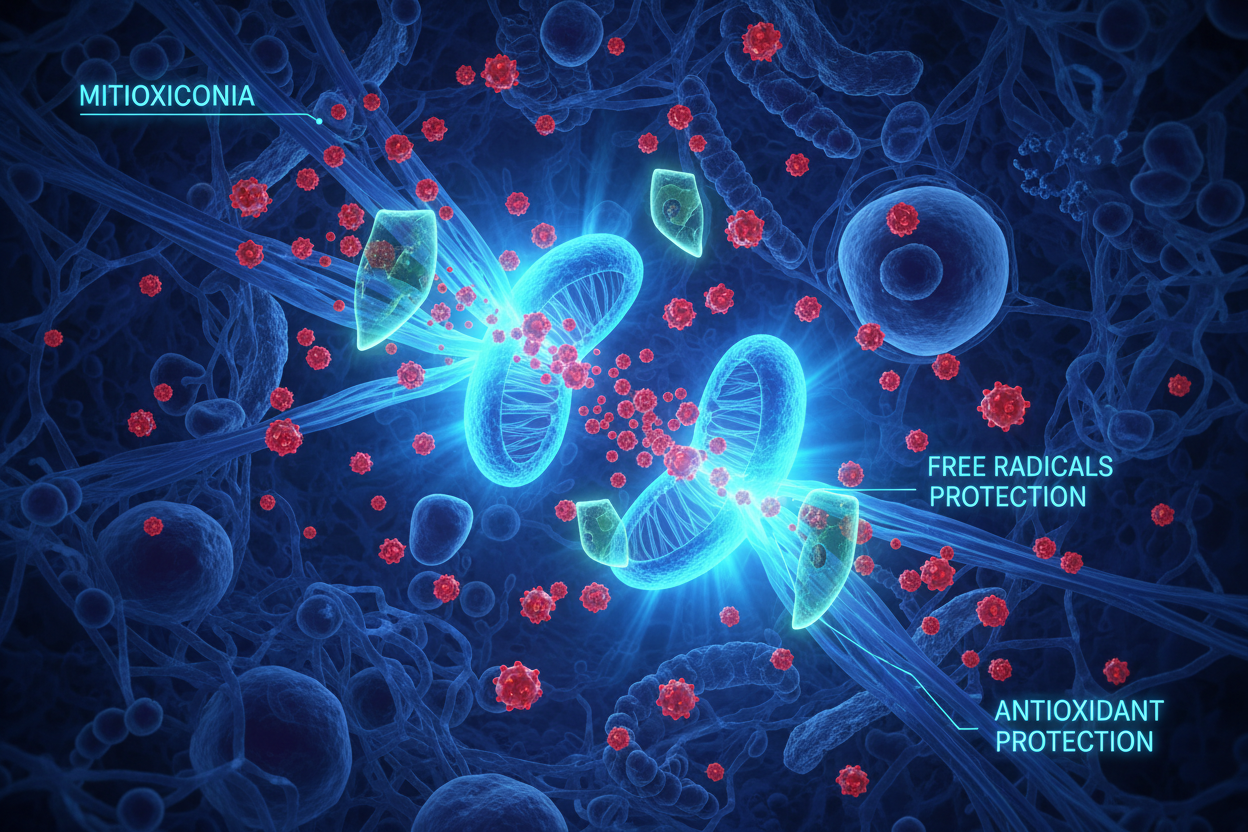
Your brain needs a lot of energy to make neurotransmitters like dopamine. That energy comes from your mitochondria. Methylene blue acts as an electron shuttle inside the mitochondria — it helps them run more efficiently and produce more ATP (your cell's energy currency).
More cellular energy → more raw material for neurotransmitter synthesis → more dopamine production.
Think of it like this: if your brain is a factory, dopamine is one of the products. Methylene blue helps the power plant run better so the factory can produce more.
The MAO Connection: Breaking Down Less
Your brain has an enzyme called MAO (monoamine oxidase). Its job is to break down dopamine (and other neurotransmitters like serotonin and norepinephrine) so they don't accumulate.
That's useful — but as we age, MAO activity tends to increase. This means dopamine gets broken down faster than ideal, leaving you with less available in the brain.
Methylene blue has been shown to act as a mild MAO inhibitor — meaning it slows down this breakdown process. The result: more dopamine stays active in your brain for longer.
This is actually the same principle behind a class of antidepressants called MAOIs. Methylene blue's effect is much milder, but the mechanism is similar.
Important note: Because of this MAO-inhibiting activity, methylene blue can interact with certain medications — especially SSRIs and other antidepressants. If you take any psychiatric medications, talk to your doctor before trying methylene blue.
Mitochondria and Mood: The Hidden Link
Here's something most people don't know: there's a strong connection between mitochondrial health and mental health.
Research has found that people with depression and low mood often have mitochondria that aren't working well. When cells can't produce enough energy, the brain suffers first — it uses more energy per gram of tissue than any other organ in the body.
Methylene blue's most well-studied effect is improving mitochondrial function — specifically by donating electrons directly into the electron transport chain, restoring energy production even in damaged cells.
Better mitochondria support:
- Dopamine synthesis (requires ATP)
- Dopamine storage and release (also requires ATP)
- Receptor sensitivity (cells need energy to maintain receptor function)
- Overall emotional resilience
In other words, methylene blue doesn't just tweak one neurotransmitter. It helps fix the underlying energy problem that affects all of them.
What You Might Actually Notice
People who take methylene blue for brain support often report:
- Sharper focus within 30–60 minutes of a dose
- Better mood and more motivation on consistent use
- Improved recall — names, details, where you left things
- More mental energy in the afternoon when it typically dips
These effects are most noticeable at lower doses. Interestingly, very high doses can have the opposite effect — this is called a hormetic dose-response. More is not better here.
Most people see the best cognitive results at 0.5–1 mg per kg of body weight.
Dosage and Caution
A few practical points before you start:
- Use pharmaceutical-grade methylene blue (≥99% purity, with a COA). Cheaper versions can contain heavy metal contaminants that are harmful to the brain.
- Start low — 5–10 mg is a reasonable starting point for most adults.
- Don't take it late in the day — it can increase energy and affect sleep.
- It will temporarily turn your urine (and sometimes saliva) blue. This is harmless.
- Avoid if you're on SSRIs, SNRIs, MAOIs, or other drugs that affect serotonin or dopamine — risk of serotonin syndrome.
At Better Life Lab, our methylene blue is pharmaceutical-grade (≥99.9% purity), produced at an FDA-registered facility, and backed by a third-party Certificate of Analysis. Shop methylene blue here.
Frequently Asked Questions
Does methylene blue increase dopamine?
It doesn't add dopamine directly. It helps your brain produce more and break it down less — through better mitochondrial energy production and mild MAO inhibition.
Can methylene blue help with depression?
Some early research is promising, especially for treatment-resistant cases. But it's not an approved treatment for depression. Talk to your doctor first — especially if you're already on antidepressants.
How quickly does methylene blue work for focus?
Many people notice effects within 30–60 minutes. Consistent use over days to weeks tends to build a stronger baseline effect.
Can I take methylene blue with my antidepressant?
Not without checking with your prescriber. Methylene blue has MAO-inhibiting properties and can cause a dangerous reaction (serotonin syndrome) when combined with SSRIs, SNRIs, or other antidepressants.
What's the best dose of methylene blue for brain health?
Most cognitive research points to 0.5–1 mg/kg of body weight as the sweet spot. Higher doses don't produce better results and can sometimes have the opposite effect.
Is methylene blue a nootropic?
Yes — it's increasingly used as one. It's one of the few compounds that directly targets mitochondrial function in the brain, which underlies many aspects of cognitive performance.
Related Articles
- Methylene Blue + Red Light Therapy: Two Mitochondrial Powerhouses
- How to Read a Methylene Blue Certificate of Analysis
- Methylene Blue for Brain Anti-Aging
About the Author

Dr. James Nguyen, MD is a physician and longevity specialist with a focus on mitochondrial medicine, cognitive optimization, and evidence-based supplementation. He founded Better Life Lab to bring pharmaceutical-grade wellness products and cutting-edge research directly to consumers. Dr. Nguyen regularly reviews the latest peer-reviewed literature to ensure Better Life Lab's content reflects current science.
Medical Disclaimer: This article is for informational and educational purposes only and does not constitute medical advice. Always consult with a qualified healthcare professional before starting any new supplement regimen, especially if you have pre-existing health conditions or are taking medications.
Share and get 15% off!
Simply share this product on one of the following social networks and you will unlock 15% off!