
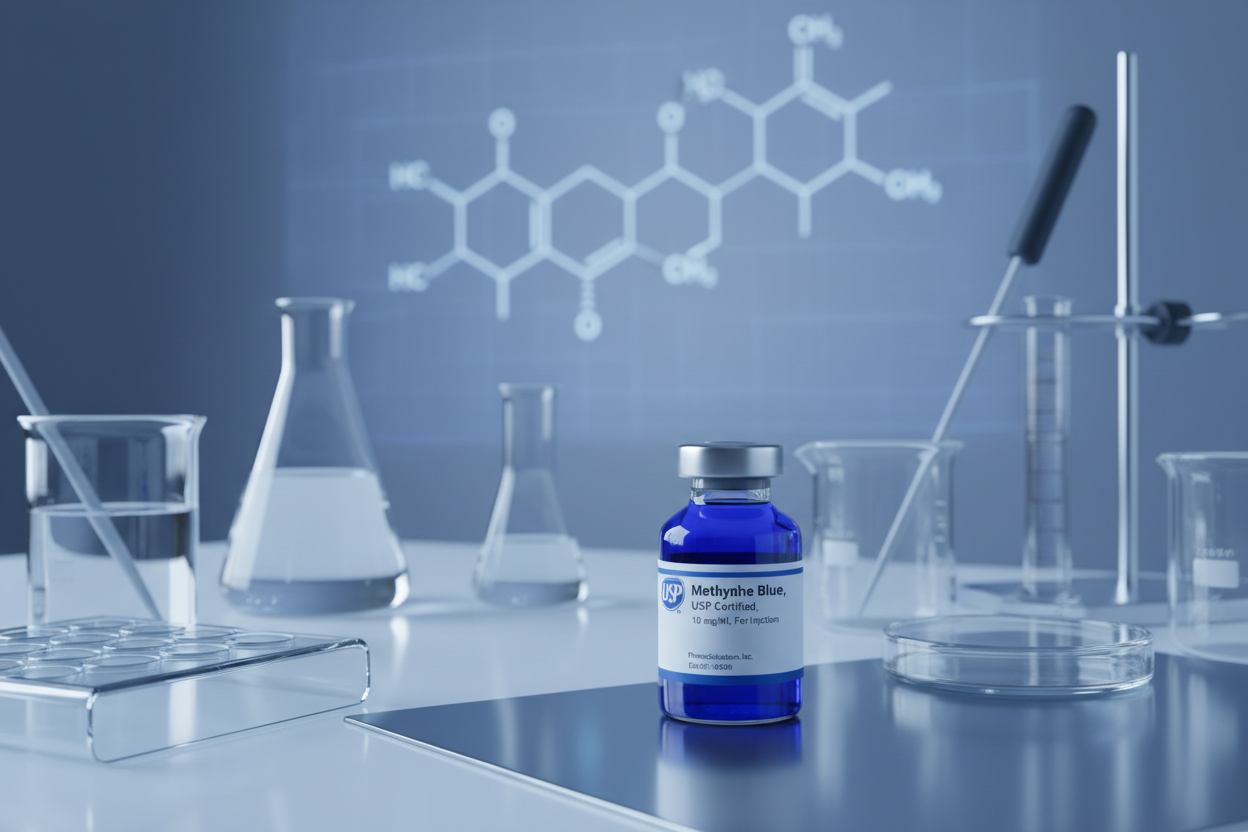
If you're thinking about taking methylene blue every day, here's the direct answer: Yes, pharmaceutical-grade methylene blue is safe for daily use in most healthy adults — at the correct dose. With over 130 years of medical history and clinical trials lasting up to 12 months, the safety profile is well-established. But there are critical exceptions — drug interactions, specific health conditions, and dosing limits that can make it dangerous for some people. This 2026 pharmacist-reviewed guide covers every important safety fact in plain language so you can make a confident, informed decision.
Reviewed by Dr. Tom Do, PharmD, licensed pharmacist with expertise in medication therapy management. Methylene blue has surged in popularity as a cognitive and mitochondrial supplement, but is it safe to take every day? This 2026 pharmacist-led evidence review examines the daily safety profile, optimal dosing windows, and potential risks of long-term methylene blue supplementation.
Table of Contents
- Pharmacology and Daily Dosing Basics
- Daily Safety Profile: What the Evidence Shows
- Dose-Response Relationship and the Hormetic Curve
- Critical Drug Interactions for Daily Users
- Monitoring and Biomarkers for Long-Term Use
- Who Should Avoid Daily Methylene Blue
- Frequently Asked Questions
Pharmacology and Daily Dosing Basics
Methylene blue (methylthioninium chloride) functions as an alternative electron carrier in the mitochondrial electron transport chain. In simple terms: it helps your cells produce energy more efficiently. At low doses between 0.5 and 2 mg/kg body weight, it acts as an electron cycler that enhances mitochondrial respiration and ATP production. This is what makes daily use potentially beneficial for cellular energy.
How Methylene Blue Is Metabolized Daily
According to pharmacokinetic research published in Clinical Pharmacology and Therapeutics (Peter et al., 2000), oral methylene blue reaches peak plasma concentration within 1 to 2 hours of ingestion. The half-life ranges from 5 to 6.5 hours, meaning the compound is substantially cleared within 24 hours. Dr. Tom Do explains: "This relatively short half-life is actually favorable for daily dosing because it reduces the risk of accumulation that we see with longer-acting compounds."
The Therapeutic Window for Daily Use
Research published in Biochemical Pharmacology (Rojas et al., 2012) established that methylene blue follows a biphasic dose-response curve. Think of it like a Goldilocks zone: at doses below 2 mg/kg, it acts as an antioxidant and mitochondrial enhancer. Above 10 mg/kg, it paradoxically becomes a pro-oxidant and can cause harm. For daily supplementation, staying within the 0.5 to 2 mg/kg range is essential for maintaining the beneficial effect.
Daily Safety Profile: What the Evidence Shows
The safety of daily methylene blue supplementation has been evaluated in multiple clinical trials, primarily in the context of Alzheimer's disease research where participants took the compound for 12 months or longer.
Long-Term Clinical Trial Data
According to a Phase II trial published in the Journal of Alzheimer's Disease (Wischik et al., 2015), participants who took 138 mg of methylene blue daily for 50 weeks showed no serious adverse events attributable to the compound. The most commonly reported side effects were discoloration of urine (blue-green), mild gastrointestinal discomfort during the first week, and transient changes in stool color. These effects were cosmetic rather than clinical and resolved with continued use.
Hematological Safety
Research published in Drug Safety (Schirmer et al., 2011) confirmed that pharmaceutical-grade methylene blue at doses below 2 mg/kg does not cause clinically significant methemoglobinemia in healthy adults. However, individuals with glucose-6-phosphate dehydrogenase (G6PD) deficiency — a hereditary enzyme condition — face a risk of hemolytic anemia, which is why G6PD screening is recommended before beginning daily supplementation.
Dose-Response Relationship and the Hormetic Curve
Understanding the hormetic dose-response curve is critical for anyone considering daily methylene blue use. Hormesis simply means: small doses produce beneficial effects, but large doses cause harm. It's the same principle behind why a glass of wine might be relaxing but a bottle is harmful.
Finding Your Optimal Daily Dose
According to research published in Dose-Response (Bruchey and Gonzalez-Lima, 2008), the cognitive-enhancing effects of methylene blue peak at approximately 1 mg/kg in animal models. Dr. Tom Do advises: "For most adults, starting at 0.5 mg/kg and gradually increasing to 1 mg/kg over two to four weeks is the safest approach to daily supplementation. A 70 kg person would start at approximately 35 mg and work up to 70 mg daily."
Cycling Strategies for Daily Users
While daily use appears safe from available evidence, some practitioners recommend cycling protocols such as five days on with two days off, or three weeks on followed by one week off. Research in Neurobiology of Aging (Gonzalez-Lima and Bruchey, 2004) suggests that the neuroprotective benefits of methylene blue persist for several days after the last dose, supporting the viability of cycling approaches. Learn more about methylene blue cycling protocols here.
Critical Drug Interactions for Daily Users
The most important safety consideration for daily methylene blue use involves drug interactions, particularly with serotonergic medications. Methylene blue is a potent monoamine oxidase inhibitor (MAOI) — meaning it slows the breakdown of certain brain chemicals. This creates potentially dangerous interactions with several drug classes.
Serotonergic Medications
The FDA issued a Drug Safety Communication in 2011 warning that methylene blue can cause serotonin syndrome when combined with serotonergic drugs. According to research published in Annals of Pharmacotherapy (Ramsay et al., 2007), methylene blue inhibits MAO-A with an IC50 of 27 nanomolar, making it a clinically significant MAOI. Dr. Tom Do emphasizes: "Anyone taking SSRIs, SNRIs, tricyclic antidepressants, buspirone, or tramadol must not take methylene blue without direct physician supervision." See the full drug interactions guide here.
Other Notable Interactions
Daily users should also be aware of interactions with medications metabolized by cytochrome P450 enzymes. Research in Drug Metabolism and Disposition (Petzer et al., 2012) found that methylene blue inhibits CYP1A2 and CYP2D6 at higher concentrations. While typical supplement doses may not reach inhibitory levels, individuals taking medications cleared by these pathways should consult their pharmacist.
Monitoring and Biomarkers for Long-Term Use
For individuals committed to daily methylene blue supplementation, periodic monitoring provides an additional layer of safety and helps optimize dosing over time.
Recommended Lab Tests
Dr. Tom Do recommends the following monitoring schedule for daily users: a complete blood count (CBC) at baseline and every six months, a comprehensive metabolic panel at baseline and every six months, G6PD screening before starting supplementation, and methemoglobin levels if any symptoms of fatigue or cyanosis develop. According to guidelines published in British Journal of Clinical Pharmacology (Clifton and Leikin, 2003), methemoglobin levels should remain below 1.5 percent in healthy adults taking methylene blue.
Subjective Markers to Track
Beyond laboratory tests, daily users should monitor cognitive clarity and focus, energy levels throughout the day, sleep quality, urine color as an indicator of absorption, and any gastrointestinal symptoms. Keeping a simple daily log helps identify patterns and optimal dosing times.
Who Should Avoid Daily Methylene Blue
While daily methylene blue is well-tolerated by most healthy adults, certain populations should avoid it entirely or use it only under strict medical supervision.
Absolute Contraindications
According to prescribing information reviewed in American Journal of Emergency Medicine (Clifton and Leikin, 2003), daily methylene blue is contraindicated in individuals with known G6PD deficiency due to the risk of hemolytic anemia, anyone taking serotonergic medications including SSRIs and SNRIs, pregnant or breastfeeding women due to insufficient safety data, individuals with severe renal impairment since methylene blue is primarily cleared by the kidneys, and children under 18 unless directed by a physician.
Populations Requiring Extra Caution
Adults over 65 may need lower starting doses due to age-related changes in renal clearance. Individuals with hepatic impairment should start at the lowest effective dose. Those with a history of serotonin syndrome from any cause should exercise extreme caution and consult a healthcare provider before beginning daily supplementation.
Frequently Asked Questions
Is methylene blue safe to take every day?
Yes, pharmaceutical-grade methylene blue at doses between 0.5 and 2 mg/kg body weight appears safe for daily use in healthy adults based on clinical trials lasting up to 50 weeks. The most common side effects are cosmetic, including blue-green urine and temporary stool color changes. However, individuals with G6PD deficiency or those taking serotonergic medications should not use it daily.
How long can you take methylene blue continuously?
Clinical trials have safely administered methylene blue daily for up to 12 months. While longer-term data is limited, the compound has been used medically since the 1890s with a well-established safety profile. Many practitioners recommend periodic cycling, such as five days on and two days off, as a precautionary measure.
What is the safest daily dose of methylene blue?
For general supplementation, most pharmacists recommend starting at 0.5 mg/kg body weight and gradually increasing to 1 mg/kg. For a 70 kg (154 lb) adult, this translates to 35 to 70 mg daily. Doses above 2 mg/kg move beyond the hormetic benefit zone and should only be used under medical supervision. See the full dosage guide here.
Can methylene blue damage your liver or kidneys?
At standard supplementation doses, methylene blue has not shown hepatotoxicity or nephrotoxicity in clinical studies. However, individuals with pre-existing liver or kidney disease should use lower doses and monitor function tests every three to six months, as these organs are involved in methylene blue metabolism and excretion.
Does methylene blue interact with coffee or caffeine?
Methylene blue does not have a direct pharmacological interaction with caffeine. However, both compounds can increase alertness, so combining them may cause overstimulation in sensitive individuals. Dr. Tom Do advises taking methylene blue in the morning with or without coffee, but monitoring for jitteriness or elevated heart rate during the first week.
Should you take methylene blue on an empty stomach?
Methylene blue can be taken with or without food. Taking it with a small meal may reduce the mild gastrointestinal discomfort some users experience during the first few days. Fat-soluble nutrients in a meal may also improve absorption. Avoid taking it with vitamin C at the same time, as high-dose ascorbic acid can reduce methylene blue to its leucomethylene blue form.
What happens if you miss a day of methylene blue?
Missing a single day of methylene blue has no clinical consequence. The neuroprotective and mitochondrial benefits appear to persist for 24 to 48 hours after the last dose based on animal pharmacokinetic data. Simply resume your normal dose the following day without doubling up.
Is pharmaceutical grade methylene blue necessary for daily use?
Absolutely. Industrial-grade or laboratory-grade methylene blue may contain heavy metals, organic impurities, and other contaminants that are dangerous with repeated exposure. For daily supplementation, only USP-grade or pharmaceutical-grade methylene blue with a certificate of analysis should be used. This is non-negotiable for long-term safety. Learn why pharmaceutical grade matters here.
About the Author

Dr. Tom Do, PharmD is a licensed pharmacist specializing in medication therapy management and nutraceutical safety. With extensive experience in clinical pharmacy, Dr. Tom evaluates supplement protocols through the lens of drug interactions, bioavailability, and evidence-based dosing. He serves as a medical advisor to Better Life Lab, helping ensure that every product recommendation meets pharmaceutical safety standards.
Medical Disclaimer: This article is for informational and educational purposes only and does not constitute medical advice. Always consult with a qualified healthcare professional before starting any new supplement regimen, especially if you have pre-existing health conditions or are taking medications. Individual results may vary.
References
- Peter C, Hongwan D, Kupfer A, Lauterburg BH. Pharmacokinetics and organ distribution of intravenous and oral methylene blue. European Journal of Clinical Pharmacology. 2000;56(3):247-250.
- Rojas JC, Bruchey AK, Gonzalez-Lima F. Neurometabolic mechanisms for memory enhancement and neuroprotection of methylene blue. Progress in Neurobiology. 2012;96(1):32-45.
- Wischik CM, Staff RT, Wischik DJ, et al. Tau aggregation inhibitor therapy: an exploratory phase II study in mild or moderate Alzheimer's disease. Journal of Alzheimer's Disease. 2015;44(2):705-720.
- Schirmer RH, Adler H, Pickhardt M, Mandelkow E. Lest we forget you - methylene blue. Neurobiology of Aging. 2011;32(12):2325.e7-2325.e16.
- Ramsay RR, Dunford C, Gillman PK. Methylene blue and serotonin toxicity: inhibition of monoamine oxidase A (MAO A) confirms a theoretical prediction. British Journal of Pharmacology. 2007;152(6):946-951.
- Bruchey AK, Gonzalez-Lima F. Behavioral, physiological and biochemical hormetic responses to the autoxidizable dye methylene blue. American Journal of Pharmacology and Toxicology. 2008;3(1):72-79.
- Clifton J, Leikin JB. Methylene blue. American Journal of Therapeutics. 2003;10(4):289-291.
- Petzer A, Harvey BH, Wegener G, Petzer JP. Azure B, a metabolite of methylene blue, is a high-potency reversible inhibitor of monoamine oxidase. Toxicology and Applied Pharmacology. 2012;258(3):403-409.
Share and get 15% off!
Simply share this product on one of the following social networks and you will unlock 15% off!