Key Takeaways
- HBOT delivers 100% pure oxygen at 1.5–3x normal atmospheric pressure, flooding tissues with 10–15x more oxygen than regular breathing
- A landmark Tel Aviv University study showed HBOT lengthened telomeres by 20% and reduced senescent (aging) cells by 37% — reversing two key biological aging markers
- After 60 HBOT sessions, healthy adults over 64 showed significant improvements in attention, processing speed, and executive function
- FDA approves HBOT for 14 medical conditions; emerging research covers brain health, cognitive enhancement, and longevity
- HBOT, methylene blue, and red light therapy work through complementary mechanisms that may amplify each other's effects
- Clinical sessions cost $100–$300 each; home mild chambers range from $5,000–$20,000
Hyperbaric oxygen therapy is moving rapidly from hospital treatment rooms into elite wellness centers — and the science explains exactly why. A landmark study from Tel Aviv University showed HBOT can lengthen telomeres by 20% and reduce senescent cells by 37%, effectively reversing two key biological markers of aging at the cellular level. Separate clinical trials demonstrated measurable cognitive improvements in healthy adults over 64 after just 60 sessions. This 2026 guide, reviewed by Dr. James Nguyen, MD (Yale-trained, board-certified neurosurgeon), explains what HBOT is, what the science actually shows, and how it fits into a comprehensive mitochondrial health protocol alongside methylene blue and red light therapy.
Table of Contents
- What Is Hyperbaric Oxygen Therapy?
- The Science: How Pressurized Oxygen Heals
- FDA-Approved and Emerging Clinical Applications
- HBOT and Brain Health: Neurological Benefits
- HBOT and Anti-Aging: The Telomere Evidence
- Athletic Recovery and Performance
- Who Should Consider HBOT?
- Safety, Side Effects, and Contraindications
- The Synergy Stack: HBOT + Methylene Blue + Red Light
- Frequently Asked Questions
What Is Hyperbaric Oxygen Therapy?
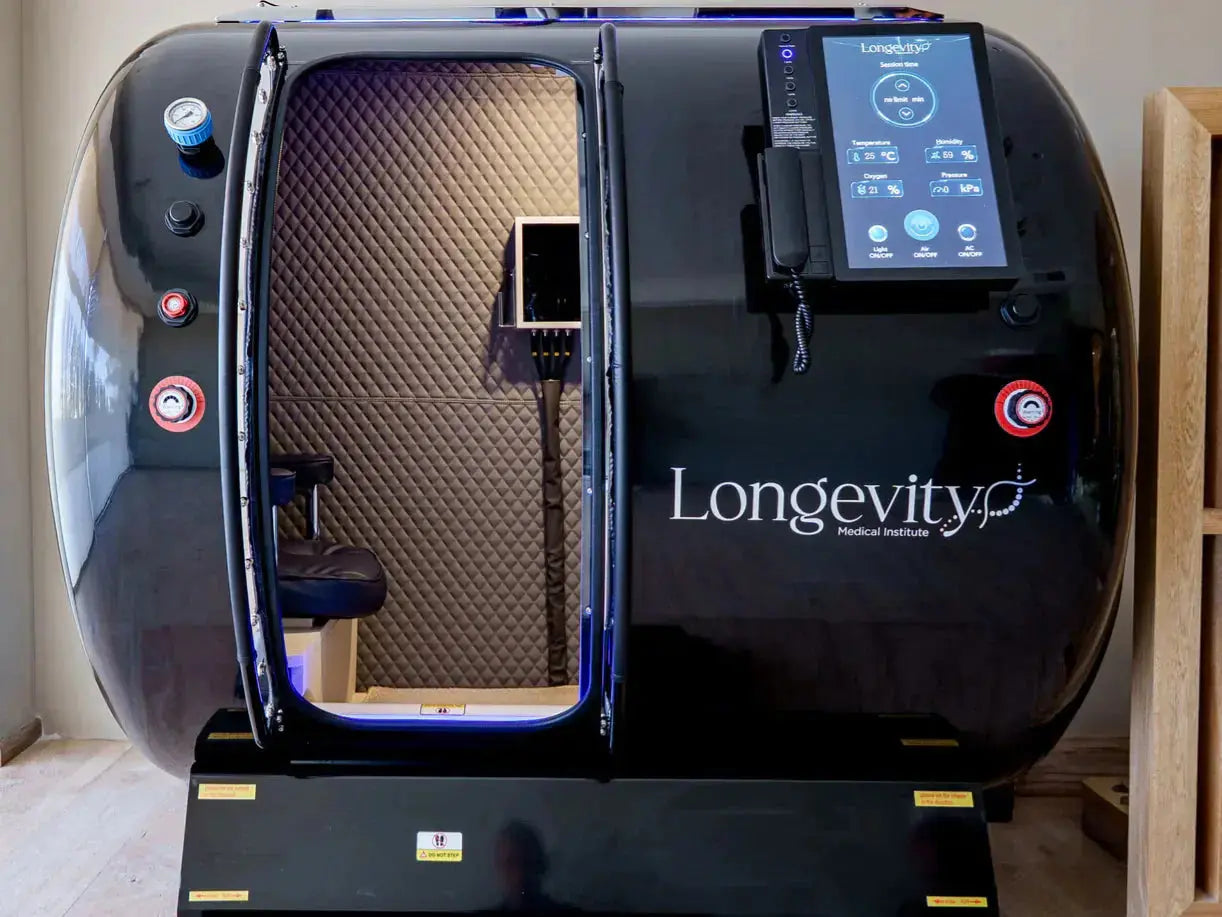
Hyperbaric oxygen therapy involves breathing 100% pure oxygen inside a pressurized chamber at 1.5 to 3 times normal atmospheric pressure. Under these conditions, oxygen dissolves directly into your blood plasma — not just into red blood cells — enabling oxygen delivery to tissues at concentrations 10–15 times higher than normal breathing. This means oxygen can reach damaged, inflamed, or oxygen-starved tissues that normal circulation cannot adequately supply.
According to the Undersea and Hyperbaric Medical Society (UHMS), this elevated oxygen delivery triggers powerful healing responses at the cellular level including new blood vessel formation, stem cell mobilization, and anti-inflammatory cascades that drive healing across dozens of conditions.
A Brief History
HBOT has been used medically since the 1930s, originally developed for decompression sickness in deep-sea divers. Today the FDA recognizes HBOT for 14 specific medical conditions. In recent years, mild hyperbaric chambers operating at 1.3–1.5 atmospheres have brought HBOT into wellness clinics and longevity centers — making it accessible far beyond hospital settings. Over 15,000 published scientific papers investigate HBOT's mechanisms and applications.
Why 2026 Is a Pivotal Year
Research from Tel Aviv University, Stanford, and major academic medical centers has generated renewed scientific interest in HBOT for cognitive enhancement and healthy aging. Dr. James Nguyen explains: "We are witnessing HBOT transition from a specialized medical treatment to a mainstream wellness modality — backed by a growing body of rigorous clinical evidence showing benefits that go well beyond its original applications."
The Science: How Pressurized Oxygen Heals
Henry's Law and Dissolved Oxygen — The Simple Explanation
Henry's Law states that the amount of gas dissolved in a liquid increases with pressure. Under normal conditions, hemoglobin carries 97–99% of blood oxygen. Under hyperbaric pressure, dramatically more oxygen dissolves directly into blood plasma — reaching tissues that were previously oxygen-starved because hemoglobin could not reach them. This is the core mechanism behind HBOT's ability to heal wounds that conventional treatment cannot touch.
Hyperoxia-Hypoxia Paradox: The Healing Signal
Research published in Biomolecules (Hadanny & Efrati, 2020) demonstrates that the alternating hyperoxia (high oxygen during sessions) and relative hypoxia (between sessions) created by an HBOT protocol triggers powerful biological responses:
- Stem cell mobilization — HBOT causes up to 8x more stem cells to release from bone marrow into circulation
- Growth factor release — VEGF and other growth factors drive new blood vessel formation
- Anti-inflammatory cascades — reduced TNF-α and inflammatory cytokines systemically
- Angiogenesis — new capillary growth in oxygen-deprived tissue
- Collagen synthesis stimulation — enhanced wound and tissue repair
FDA-Approved and Emerging Clinical Applications
FDA-Approved Conditions
The FDA currently approves HBOT for 14 conditions including: decompression sickness (the bends), carbon monoxide poisoning, non-healing diabetic wounds, radiation tissue damage, gas gangrene, osteomyelitis, and severe anemia. These approvals represent decades of clinical evidence establishing both efficacy and safety at pressures of 2.0–2.4 ATA.
Active Research Areas (Off-Label)
Active research includes: traumatic brain injury recovery, post-stroke rehabilitation, long COVID neurological symptoms, fibromyalgia and chronic fatigue syndrome, cognitive decline and dementia prevention, sports injury recovery, and healthy aging and longevity. Studies published in peer-reviewed journals including Aging, NeuroImage, and Journal of Neurotrauma demonstrate promising results across these applications.
The Tel Aviv Aging Study — A Landmark Finding
A landmark study published in Aging (Hachmo et al., 2020) from Tel Aviv University demonstrated that a structured 60-session HBOT protocol increased telomere length by 20% and reduced senescent cell populations by 37% in aging adults — effectively reversing two key biological markers of cellular aging. These are changes that no other single intervention has demonstrated at this magnitude. This research generated significant scientific and mainstream attention for HBOT's anti-aging potential.
HBOT and Brain Health: Neurological Benefits
Cognitive Enhancement in Healthy Older Adults
A randomized controlled trial published in Aging (Hadanny et al., 2020) demonstrated significant improvements in attention, information processing speed, and executive function in adults over 64 following a 60-session HBOT protocol (5 sessions/week for 12 weeks). Neuroimaging showed increased cerebral blood flow and improved microstructural integrity in brain regions most associated with age-related cognitive decline — the hippocampus and prefrontal cortex.
Traumatic Brain Injury Recovery
Research in Journal of Neurotrauma shows HBOT can reduce secondary brain damage following TBI by improving oxygen delivery to compromised neural tissue, reducing cerebral edema, and supporting mitochondrial recovery in injured neurons. Veterans with TBI who received HBOT showed 30% improvements in cognitive testing and meaningful reductions in PTSD symptoms in some trials.
Neuroplasticity: Growing New Brain Connections
HBOT stimulates neuroplasticity — the brain's ability to reorganize and form new neural connections. Research published in NeuroImage (Tal et al., 2020) demonstrated increased white matter integrity and new neural pathway formation following structured HBOT protocols. Dr. James Nguyen explains: "We see measurable structural brain changes on imaging after HBOT — new white matter pathways forming in regions that had been damaged or degraded. This is not a subtle effect; it's visible on MRI."
HBOT and Anti-Aging: The Telomere Evidence
Telomeres are the protective caps on the ends of chromosomes — like the plastic tips on shoelaces. As we age, they shorten. Shorter telomeres are associated with biological aging, cellular senescence, and increased disease risk. The Tel Aviv study showed that 60 HBOT sessions increased telomere length by 20% — an effect never previously demonstrated by any other single intervention at this scale.
Reducing Senescent Cells
Senescent cells (zombie cells that have stopped dividing but won't die) accumulate with age and drive inflammation and tissue dysfunction. The same Tel Aviv study found a 37% reduction in senescent T-helper cells and a 11% reduction in senescent cytotoxic T-cells following the HBOT protocol. Clearing senescent cells is a key target in longevity medicine — and HBOT appears to be one of the most effective tools available for it.
Mitochondrial Anti-Aging Mechanisms
HBOT supports mitochondrial function by increasing oxygen availability for the electron transport chain, reducing reactive oxygen species damage to mitochondrial DNA, and stimulating mitochondrial biogenesis. These mechanisms overlap with and complement pharmaceutical-grade methylene blue's support for mitochondrial electron transport efficiency.
Athletic Recovery and Performance
Accelerated Sports Recovery
Research in British Journal of Sports Medicine demonstrates reduced inflammation markers, accelerated muscle repair, and faster return-to-play timelines when HBOT is integrated into athletic recovery protocols. Elite athletes in the NFL, NBA, and Olympic programs have used HBOT for accelerated injury recovery. The therapy's ability to deliver high-concentration oxygen to damaged tissue accelerates the ATP-dependent cellular repair processes that follow intense training or injury.
Reduced Inflammation
HBOT reduces pro-inflammatory cytokines while enhancing immune cell function. Post-exercise inflammation markers (CRP, IL-6) show measurable reductions following HBOT sessions compared to passive recovery. For athletes managing training loads, this anti-inflammatory effect can compress recovery timelines meaningfully.
Who Should Consider HBOT?
HBOT has broad applicability, but these populations see the most significant benefits based on current evidence:
- Adults over 50 — telomere lengthening and reduced senescent cells address core aging mechanisms
- People with TBI or stroke history — strong evidence for neurological recovery and neuroplasticity
- Athletes recovering from injury — accelerated tissue healing and reduced inflammation
- People with non-healing wounds — FDA-approved indication with strong clinical evidence
- Those with cognitive decline or brain fog — measurable improvements in attention and processing speed
- People using methylene blue and red light therapy — HBOT provides complementary oxygen-based support for the same mitochondrial pathways
- Long COVID patients — emerging evidence for neurological symptom improvement
HBOT is less appropriate for people seeking quick, low-cost interventions. It requires a significant time and financial commitment, with most research protocols involving 40–60 sessions over 8–12 weeks.
Safety, Side Effects, and Contraindications
Safety Profile
HBOT has an excellent safety profile when administered according to established protocols. Across thousands of clinical sessions in peer-reviewed studies, serious adverse events are rare. The most commonly reported side effects are minor: temporary ear pressure or discomfort from pressure changes (similar to changing altitude), and mild sinus congestion.
Contraindications
HBOT is contraindicated for individuals with:
- Untreated pneumothorax (collapsed lung)
- Active middle ear infections or unresolved ear surgery
- Certain chemotherapy drugs (bleomycin, cisplatin) that interact dangerously with high oxygen levels
- Severe claustrophobia (for enclosed chamber designs)
- Uncontrolled fever or certain lung conditions
Dr. James Nguyen recommends: "Anyone beginning HBOT should have a complete medical screening first — especially those combining it with other mitochondrial therapies like methylene blue. The combination is generally safe, but contraindications must be ruled out individually."
The Synergy Stack: HBOT + Methylene Blue + Red Light
Three Complementary Mechanisms, One Target
HBOT increases oxygen availability throughout the body. Pharmaceutical-grade methylene blue enhances how efficiently mitochondria use that oxygen via the electron transport chain. Red light therapy activates cytochrome c oxidase — the final enzyme in the electron transport chain. Together, these three therapies address mitochondrial energy production from complementary angles:
- HBOT — provides more oxygen fuel
- Methylene blue — makes the mitochondrial engine more efficient
- Red light therapy — activates the ignition system (cytochrome c oxidase)
According to research in Frontiers in Cellular Neuroscience (Gonzalez-Lima, 2015), the combination of methylene blue and near-infrared light already produces synergistic cognitive benefits beyond either alone. Adding HBOT's systemic oxygen enhancement to this stack creates what Dr. Nguyen calls "the most comprehensive mitochondrial optimization protocol available to the general public."
Practical Integration
Dr. James Nguyen recommends: "For those with access to all three modalities, a practical protocol would include daily pharmaceutical-grade methylene blue supplementation, red light therapy 3–5 times per week, and HBOT sessions 1–2 times per week. Each modality amplifies the others through distinct but synergistic mechanisms — the combined effect on mitochondrial efficiency, oxygen utilization, and neuroprotection is greater than the sum of parts."
Frequently Asked Questions
Is hyperbaric oxygen therapy safe?
Yes, HBOT has an excellent safety profile when administered according to established protocols. Common side effects include temporary ear pressure and mild sinus discomfort from pressure changes. Serious complications are rare. Clinical HBOT is administered by trained medical professionals; mild home chambers operate at lower pressures (1.3 ATA) with correspondingly lower risk profiles. Always complete a medical screening before beginning any HBOT protocol.
How many HBOT sessions are needed to see results?
Acute conditions like wounds may respond within 5–10 sessions. Chronic conditions and cognitive enhancement typically require 40–60 sessions over 8–12 weeks. The landmark Tel Aviv cognitive enhancement study used 60 sessions (5 per week for 12 weeks) and demonstrated significant, measurable improvements in both cognitive performance and brain imaging. Anti-aging effects on telomeres and senescent cells also followed this 60-session protocol.
Can I do HBOT at home?
Mild hyperbaric chambers (1.3 ATA) are available for home use, starting at approximately $5,000. They deliver lower pressures than clinical chambers (2.0–2.4 ATA) used in research studies. While home chambers are convenient and have a reasonable safety profile, the clinical evidence base was generated using medical-grade chambers at higher pressures. The benefits from home chambers are real but may be less pronounced. Consult a physician before purchasing.
Does HBOT really reverse aging?
The Tel Aviv University study demonstrated reversal of specific biological aging markers — 20% telomere lengthening and 37% reduction of senescent cells — in aging adults following a structured HBOT protocol. These are meaningful, measurable cellular changes that no other single intervention has matched at this scale. Whether these cellular improvements translate to functional longevity improvements over decades requires more long-term research, but the cellular evidence is among the strongest in the anti-aging field.
Can I combine HBOT with methylene blue supplementation?
Yes. HBOT and pharmaceutical-grade methylene blue work through complementary mechanisms — HBOT increases oxygen availability while methylene blue optimizes how mitochondria use that oxygen through the electron transport chain. There are no known contraindications to combining these therapies, and many longevity practitioners actively recommend this combination. Adding red light therapy creates a comprehensive three-part mitochondrial optimization protocol.
How much does HBOT cost?
Clinical HBOT sessions at medical facilities typically range from $100–$300 per session. Health insurance covers HBOT for FDA-approved indications (diabetic wounds, radiation damage, CO poisoning, etc.) but generally not for wellness or longevity uses. Home mild hyperbaric chambers range from approximately $5,000–$20,000 depending on size and pressure rating. Some longevity clinics offer HBOT memberships that reduce per-session costs significantly.
Who should NOT do HBOT?
HBOT is contraindicated for individuals with untreated pneumothorax (collapsed lung), active middle ear infections, and people taking certain chemotherapy drugs including bleomycin and cisplatin, which interact dangerously with high oxygen levels. Severe claustrophobia may be a barrier in enclosed chamber designs. Uncontrolled high fever and specific lung conditions are also relative contraindications. A thorough pre-HBOT medical screening is essential, particularly for those combining HBOT with other therapies like methylene blue.
How does HBOT compare to red light therapy for brain health?
HBOT and red light therapy both support mitochondrial function through distinct mechanisms. HBOT works systemically — flooding the bloodstream with dissolved oxygen under increased atmospheric pressure, raising tissue oxygen 10–15 times above normal breathing. Red light therapy works locally at the cellular level, activating cytochrome c oxidase in the electron transport chain to boost ATP production in exposed tissue. The two are powerfully complementary: HBOT provides the oxygen fuel, red light activates the mitochondrial machinery, and methylene blue keeps electrons flowing efficiently through the chain. Many longevity practitioners combine all three in a comprehensive protocol.
What is the difference between mild HBOT (1.3 ATA) and clinical HBOT (2.0+ ATA)?
Clinical HBOT (2.0–2.4 ATA) is what was used in the landmark Tel Aviv anti-aging studies and FDA-approved medical applications. It delivers a much higher dissolved oxygen concentration and is administered in medical facilities. Mild HBOT (1.3–1.5 ATA) in home or wellness clinic chambers delivers meaningful benefits but at lower intensity. The research on telomere lengthening and cognitive enhancement was conducted at clinical pressures, so extrapolating those specific results to home mild chambers requires caution. That said, mild HBOT still produces real physiological benefits at a significantly lower cost and risk profile.
How long does an HBOT session take?
Most clinical HBOT sessions last 60–90 minutes including pressurization and depressurization time. Add 15–20 minutes for arrival, preparation, and monitoring. Mild home chamber sessions follow similar timing. Most protocols involve 5 sessions per week in the clinical research, though wellness protocols often use 2–3 sessions per week. Consistent use over weeks produces cumulative benefits — individual sessions produce some acute effects but the significant anti-aging and cognitive benefits require the full multi-week protocol.
About the Author

Dr. James Nguyen, MD is a Yale-trained, board-certified neurosurgeon and medical advisor at Better Life Lab. His research focuses on neurological health, mitochondrial medicine, and evidence-based protocols for cognitive longevity. Dr. Nguyen brings clinical expertise from both neurosurgery and integrative medicine to translate cutting-edge research into practical wellness strategies that the average person can implement.
Medical Disclaimer: This article is for informational and educational purposes only and does not constitute medical advice. Always consult with a qualified healthcare professional before beginning HBOT or any new supplement regimen, especially if you have pre-existing health conditions or are taking medications.
References
- Hadanny, A., & Efrati, S. (2020). The Hyperoxic-Hypoxic Paradox. Biomolecules, 10(6), 958. doi: 10.3390/biom10060958
- Hachmo, Y., et al. (2020). Hyperbaric oxygen therapy increases telomere length and decreases immunosenescence in isolated blood cells. Aging, 12(22), 22445–22456. doi: 10.18632/aging.202188
- Hadanny, A., et al. (2020). Cognitive enhancement of healthy older adults using hyperbaric oxygen. Aging, 12(13), 13740–13761. doi: 10.18632/aging.103571
- Gonzalez-Lima, F., & Auchter, A. (2015). Protection against neurodegeneration with low-dose methylene blue and near-infrared light. Frontiers in Cellular Neuroscience, 9, 179.
- Tal, S., et al. (2020). HBOT can induce neuroplasticity and improve cognitive functions in patients suffering from anoxic brain damage. NeuroImage, 220, 117121.
- Huang, L., & Bhatt, D.L. (2016). Hyperbaric oxygen therapy for sports injuries and recovery. British Journal of Sports Medicine, 50(4), 195–198.
- Hamblin, M.R. (2018). Mechanisms and mitochondrial redox signaling in photobiomodulation. Frontiers in Neuroscience, 12, 170. doi: 10.3389/fnins.2018.00170
Shop Related Products
- Methylene Blue Drops — USP pharmaceutical grade, third-party tested by Better Life Lab
- Methylene Blue Capsules — 50mg pharmaceutical grade by Better Life Lab
- Amino Mine — Advanced amino acid support for recovery and cellular health
Related Articles
- Red Light Therapy: Complete 2026 Science Guide for Recovery, Brain & Anti-Aging
- Methylene Blue and Red Light Therapy: A Powerful Synergistic Protocol (2026)
- Methylene Blue for Brain Health: A Neurosurgeon's Evidence-Based Guide
- ATP and Cellular Energy for Athletes: The Complete Performance & Recovery Guide (2026)
Share and get 15% off!
Simply share this product on one of the following social networks and you will unlock 15% off!