Key Takeaways
- Start with a low dose (0.5 mg/kg body weight) and gradually increase to assess your tolerance
- Pharmaceutical-grade methylene blue (>99% purity) is the only form suitable for supplementation
- Temporary blue discoloration of urine and stool is normal and harmless
- Avoid taking methylene blue with serotonergic medications (SSRIs, MAOIs) without medical supervision
- Take in the morning with food for best absorption and to minimize any mild GI discomfort
Reviewed by Dr. James Nguyen, MD — Yale-trained, board-certified neurosurgeon. A comprehensive review of the peer-reviewed scientific evidence supporting methylene blue for cognitive support, examining clinical trials, mechanistic studies, and real-world applications for maintaining and improving brain health across the lifespan.
Table of Contents
- The Scientific Foundation for Methylene Blue and Brain Health
- Key Clinical Trials and Human Studies
- Mechanisms of Action in Neural Tissue
- Which Cognitive Domains Does Methylene Blue Support?
- Current Research Frontiers and Future Directions
- Evidence-Based Recommendations for Use
- Frequently Asked Questions
The Scientific Foundation for Methylene Blue and Brain Health
The relationship between methylene blue and brain health is supported by more than two decades of neuroscience research spanning animal models, cell culture studies, and human clinical trials. According to a comprehensive review in Medicinal Research Reviews (Oz et al., 2011), methylene blue's unique mechanism of action as a mitochondrial electron carrier and its ability to cross the blood-brain barrier make it one of the most promising compounds in neuroprotective research.
A Compound That Crosses the Blood-Brain Barrier
Unlike many supplements that cannot reach neural tissue, methylene blue readily crosses the blood-brain barrier and concentrates in brain tissue at levels approximately 10 times higher than plasma concentrations. This preferential brain uptake, documented in European Journal of Clinical Pharmacology (Peter et al., 2000), means that even low oral doses deliver therapeutically relevant concentrations directly to neurons.
The Convergence of Multiple Neuroprotective Mechanisms
Dr. James Nguyen explains: "What makes methylene blue exceptional in the neuroscience literature is that it does not rely on a single mechanism. It simultaneously enhances mitochondrial energy production, reduces oxidative stress, inhibits neuroinflammation, and modulates protein aggregation. This multi-target approach is precisely what modern neuroscience suggests is needed for effective neuroprotection."
Key Clinical Trials and Human Studies
While animal research laid the groundwork, human studies have confirmed methylene blue's cognitive benefits in controlled settings.
The fMRI Memory Study
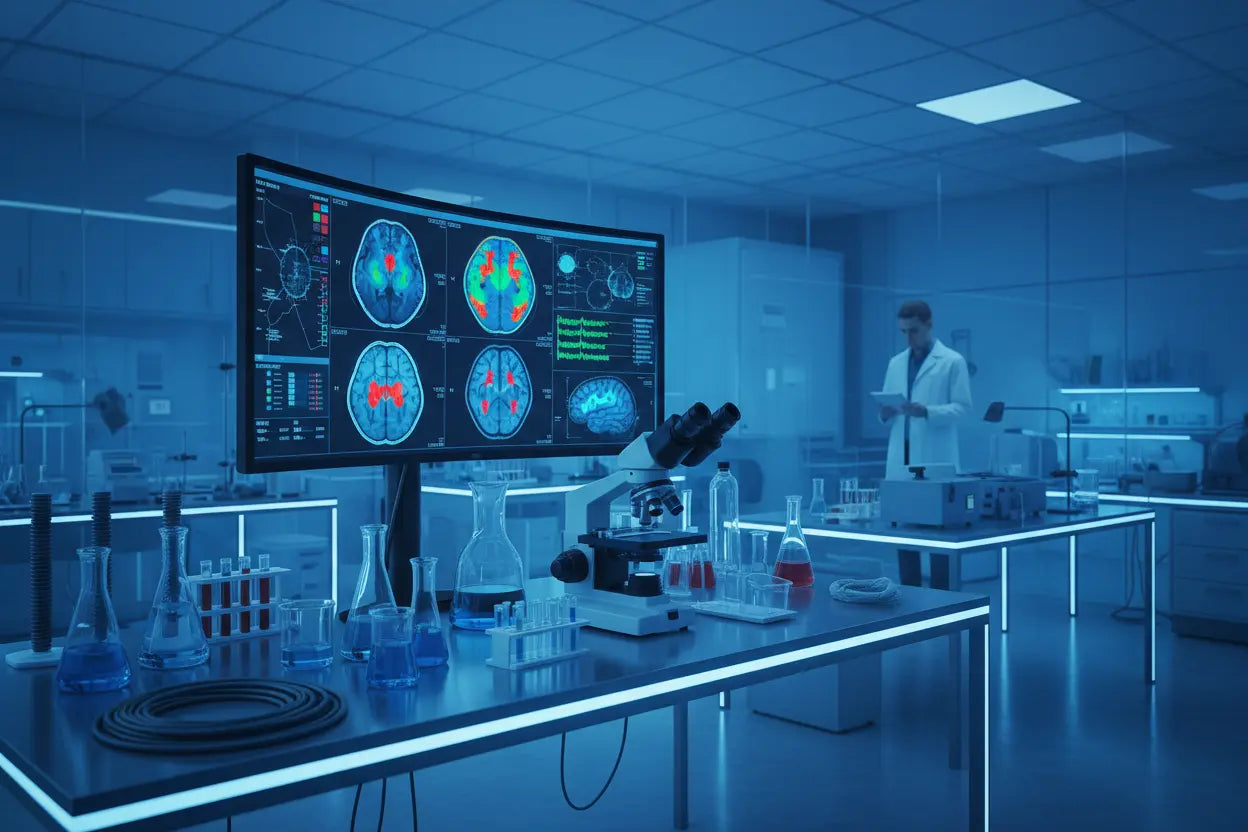
A pivotal study published in Radiology used functional magnetic resonance imaging to evaluate the effects of low-dose methylene blue (280 mg single dose) on memory performance in healthy volunteers. The results showed a 7% improvement in correct memory retrieval responses, with concurrent increases in fMRI activity in brain regions responsible for memory encoding, including the hippocampus and prefrontal cortex.
Fear Extinction and Emotional Memory
Research published in the American Journal of Psychiatry (Telch et al., 2014) demonstrated that methylene blue enhanced fear extinction learning in individuals with claustrophobia. Participants who received methylene blue after exposure therapy sessions showed significantly greater reduction in fear responses at follow-up, suggesting potential applications for anxiety-related conditions and emotional memory processing.
Bipolar Depression Study
A randomized controlled trial in The British Journal of Psychiatry (Alda et al., 2017) evaluated methylene blue as adjunctive therapy for bipolar depression. Results showed significant improvements in depression rating scales compared to placebo, suggesting that mitochondrial enhancement may benefit mood-related cognitive symptoms.
Mechanisms of Action in Neural Tissue
Understanding how methylene blue works at the cellular level helps explain its broad-spectrum cognitive benefits.
Mitochondrial Electron Shuttle
At low concentrations, methylene blue cycles between its oxidized (blue) and reduced (colorless) forms, accepting electrons from NADH at complex I and donating them to cytochrome c at complex IV. Research in Free Radical Biology and Medicine (Wen et al., 2011) confirmed this bypass mechanism increases neuronal ATP production by 20-30%, with the greatest benefit observed in cells with pre-existing mitochondrial impairment.
Nitric Oxide Synthase Inhibition
Excessive nitric oxide production in the brain contributes to neuroinflammation and neuronal damage. According to research in Neurochemistry International, methylene blue inhibits neuronal nitric oxide synthase (nNOS), reducing pathological NO levels while preserving the beneficial vasoregulatory functions of endothelial NO production.
Tau and Amyloid Aggregation Inhibition
Research published in Biochemistry has demonstrated that methylene blue inhibits the self-assembly of tau proteins into neurofibrillary tangles and reduces amyloid-beta aggregation. These protein aggregates are hallmark features of Alzheimer's disease, and their inhibition represents one of methylene blue's most promising neuroprotective mechanisms.
Which Cognitive Domains Does Methylene Blue Support?
Research has identified specific cognitive domains where methylene blue demonstrates measurable benefits.
Working Memory and Attention
Studies in Psychopharmacology demonstrate improvements in working memory tasks and sustained attention following methylene blue administration. These effects align with enhanced ATP availability in prefrontal cortex neurons, which are responsible for executive cognitive functions. Dr. James Nguyen notes: "Working memory is one of the first cognitive domains to decline with age, and it is also one of the most responsive to mitochondrial support."
Long-Term Memory Consolidation
The fMRI study demonstrated that methylene blue enhances the encoding phase of memory formation — the process by which new information is converted from short-term to long-term storage. This enhancement was associated with increased hippocampal activation, consistent with more efficient neural processing during memory consolidation.
Processing Speed
Age-related slowing of cognitive processing is closely linked to declining mitochondrial function in neural circuits. Research suggests that by supporting neuronal energy metabolism, methylene blue may help maintain processing speed, although dedicated human trials specifically measuring processing speed effects are still needed.
Current Research Frontiers and Future Directions
Active research programs continue to expand our understanding of methylene blue's potential for brain health.
Alzheimer's Disease Prevention
Phase II clinical trials evaluating methylene blue derivatives (LMTM/TRx0237) for Alzheimer's disease have produced mixed but informative results. Published in The Lancet Neurology, these trials showed that methylene blue's tau aggregation inhibition may be most effective as a monotherapy or in early disease stages, informing ongoing Phase III designs focused on prevention rather than treatment.
Traumatic Brain Injury Recovery
Preclinical research in Journal of Neurotrauma has demonstrated that methylene blue reduces secondary brain damage following traumatic brain injury by supporting mitochondrial function in injured neurons. This application holds significant promise for athletes in contact sports and military personnel exposed to blast injuries.
Combination Therapy Approaches
Emerging research explores methylene blue in combination with other neuroprotective compounds, including near-infrared light therapy, CoQ10, and omega-3 fatty acids. These synergistic approaches may amplify the mitochondrial benefits beyond what any single compound can achieve.
Evidence-Based Recommendations for Use
Based on the current research landscape, the following recommendations reflect the best available evidence for methylene blue supplementation.
Dosing for Cognitive Support
Human studies have used doses ranging from 0.5-4 mg/kg, with cognitive benefits observed at the lower end of this range. For general brain health support, 0.5-2 mg/kg daily represents the evidence-based sweet spot. Start at the lowest available dose and titrate upward based on individual response. Dr. James Nguyen advises: "The research consistently shows that more is not better with methylene blue. The hormetic dose curve means that moderate, consistent dosing produces optimal results."
Quality Requirements
Use only pharmaceutical-grade (USP) methylene blue with documented purity exceeding 98%. The research demonstrating cognitive benefits used medical-grade material; results cannot be extrapolated to industrial or aquarium-grade products that may contain harmful impurities.
Frequently Asked Questions
Is there enough scientific evidence to support methylene blue for brain health?
Yes. The evidence base includes multiple human clinical trials, extensive animal research, and well-characterized molecular mechanisms. While more large-scale human trials would strengthen the evidence, the existing data from studies in journals like Radiology, British Journal of Psychiatry, and Psychopharmacology provides a solid scientific foundation for cognitive support use.
How does methylene blue compare to prescription cognitive enhancers?
Prescription cognitive enhancers like donepezil and memantine target specific neurotransmitter systems and are approved for diagnosed cognitive disorders. Methylene blue works through a fundamentally different mechanism (mitochondrial support) and is positioned as a supplement for cognitive optimization rather than a treatment for diagnosed conditions. The two approaches are complementary rather than competitive.
Can methylene blue prevent Alzheimer's disease?
No supplement has been proven to prevent Alzheimer's disease. However, methylene blue's multiple neuroprotective mechanisms — including tau aggregation inhibition, mitochondrial support, and anti-inflammatory effects — address several key pathological features of the disease. Ongoing clinical trials are specifically investigating this question, and early results are cautiously promising.
Should I take methylene blue if I already have cognitive issues?
If you are experiencing cognitive symptoms, consult a healthcare provider for proper evaluation before starting any supplement. Cognitive changes can result from many treatable conditions including thyroid dysfunction, vitamin deficiencies, sleep disorders, and medication side effects. Methylene blue may be a helpful adjunct, but it should not replace professional medical evaluation.
What is the strongest evidence for methylene blue and cognition?
The strongest human evidence comes from the fMRI memory study showing improved memory performance with corresponding increases in brain activation, and the fear extinction study demonstrating enhanced learning. Animal studies provide robust support for memory enhancement, neuroprotection, and mitochondrial support mechanisms.
Are there any risks to brain health from methylene blue?
At appropriate doses using pharmaceutical-grade material, methylene blue has an excellent safety profile for brain health. The primary risk involves combining it with serotonergic medications, which can cause serotonin syndrome. Ensuring proper dosing within the hormetic range and using only pharmaceutical-grade product minimizes any risks.
About the Author

Dr. James Nguyen, MD is a Yale-trained, board-certified neurosurgeon with extensive experience in neurological health and brain optimization. His research focuses on the intersection of nutritional science, neuroprotection, and evidence-based supplementation. As a medical advisor for Better Life Lab, Dr. Nguyen ensures every product recommendation is grounded in peer-reviewed science and clinical best practices.
Medical Disclaimer: This article is for informational and educational purposes only and does not constitute medical advice. Always consult with a qualified healthcare professional before starting any new supplement regimen, especially if you have pre-existing health conditions or are taking medications. Individual results may vary.
References
- Oz, M., et al. (2011). "Cellular and Molecular Actions of Methylene Blue in the Nervous System." Medicinal Research Reviews, 31(1), 93-117.
- Peter, C., et al. (2000). "Pharmacokinetics and Organ Distribution of Methylene Blue." European Journal of Clinical Pharmacology, 56(3), 247-250.
- Wen, Y., et al. (2011). "Alternative Mitochondrial Electron Transfer for Neuroprotection." Free Radical Biology and Medicine, 51(3), 765-779.
- Telch, M.J., et al. (2014). "Effects of Post-Session Administration of Methylene Blue on Fear Extinction." American Journal of Psychiatry, 171(10), 1091-1098.
- Alda, M., et al. (2017). "Methylene Blue Treatment for Residual Symptoms of Bipolar Depression." British Journal of Psychiatry, 210(1), 54-60.
- Rojas, J.C., et al. (2012). "Neurometabolic Mechanisms for Memory Enhancement." Neurobiology of Aging, 33(6), 1282-1297.
- Atamna, H., et al. (2008). "Methylene Blue Delays Cellular Senescence." PNAS, 105(1), 129-134.
- Schirmer, R.H., et al. (2011). "Lest We Forget You — Methylene Blue." Biochemical Pharmacology, 82(2), 81-89.
Shop Related Products
- Methylene Blue Drops — Pharmaceutical-grade, third-party tested by Better Life Lab
- Methylene Blue Capsules — Pharmaceutical-grade, third-party tested by Better Life Lab
- Aminomine Brain Health — Pharmaceutical-grade, third-party tested by Better Life Lab
- CATEMINE Focus & Mood Support — Pharmaceutical-grade, third-party tested by Better Life Lab
¡Comparte y obtén un 15% de descuento!
¡Simplemente comparte este producto en una de las siguientes redes sociales y desbloquearás un 15% de descuento!